

Diltiazem Versus Nitroglycerin Ointment for Fissures
September 16, 2026
Specialty Clinic vs Hospital Treatment for Hemorrhoids
September 20, 2026
A painful, firm lump near the anus can be alarming, especially when it appears suddenly. So, can hemorrhoids cause blood clots? They can cause a local clot within an external hemorrhoid, a condition called a thrombosed hemorrhoid. This is not the same as a blood clot in the leg or lung, but it can cause intense pain, swelling, and significant discomfort that deserves prompt medical attention.
Hemorrhoids are common, and there is no reason to feel embarrassed about seeking care. The right diagnosis matters because rectal pain, bleeding, or a new lump can have more than one cause. A focused evaluation can identify what is happening and help you get relief without automatically moving toward traditional surgery.
Can Hemorrhoids Cause Blood Clots?
Yes, an external hemorrhoid can develop a blood clot. External hemorrhoids form under the sensitive skin around the anal opening. When blood pools in one of these swollen veins and clots, the result is a thrombosed external hemorrhoid.
The clot creates pressure inside the swollen vein. That pressure is why thrombosed hemorrhoids often hurt much more than typical hemorrhoids. Some people notice the pain after a difficult bowel movement, heavy lifting, prolonged sitting, or straining. Others wake up with symptoms and cannot identify a clear trigger.
A thrombosed hemorrhoid is localized. It does not mean that a hemorrhoid has sent a clot through the bloodstream or that it is likely to cause a deep vein thrombosis, stroke, or pulmonary embolism. Those conditions involve different blood vessels and require different evaluation.
Internal hemorrhoids, which develop inside the rectum, are more likely to cause painless bright-red bleeding, mucus, itching, or a feeling of tissue protruding during a bowel movement. They are less likely to produce the dramatic, painful clot seen with an external thrombosed hemorrhoid.
What Does a Thrombosed Hemorrhoid Feel Like?
The hallmark symptom is a sudden, tender lump at the edge of the anus. It may look bluish-purple or dark red because of the trapped blood beneath the skin. Pain can range from bothersome to severe, particularly while sitting, walking, or having a bowel movement.
Swelling and a feeling of pressure are also common. Small amounts of bleeding can occur if the skin over the hemorrhoid becomes irritated or breaks down. However, bleeding alone does not confirm a thrombosed hemorrhoid. Internal hemorrhoids, anal fissures, inflammation, polyps, and other conditions can also cause rectal bleeding.
Pain from an anal fissure can sometimes be confused with hemorrhoid pain. Fissures are small tears in the anal lining and often cause sharp pain during or after bowel movements, sometimes with bright-red blood on toilet paper. The treatments are different, which is one reason an in-person diagnosis is worth the time.
Why Do Blood Clots Form in Hemorrhoids?
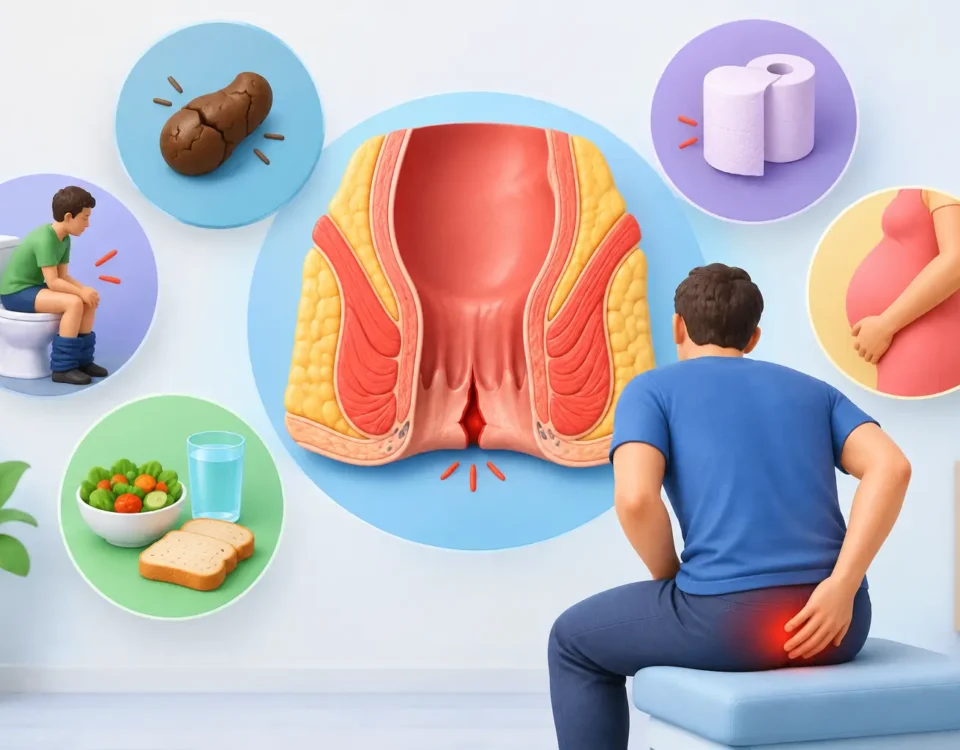
Pressure is usually part of the picture. Straining due to constipation is a frequent contributor, but loose stools and repeated bathroom trips can also irritate the area. Pregnancy, heavy lifting, long periods of sitting, and age-related changes in supporting tissue may increase the likelihood of hemorrhoid symptoms.
A thrombosed hemorrhoid can still occur in someone who eats well, stays active, and does not have chronic constipation. It is not a sign that you did something wrong. Still, once the immediate symptoms are addressed, reducing strain can help lower the chance of future flare-ups.
That may include keeping stools soft with adequate fluid and fiber, responding to the urge to have a bowel movement rather than waiting, and avoiding prolonged time on the toilet. If you regularly strain despite these changes, a clinician can help identify a practical bowel-management plan.
When a Hemorrhoid Blood Clot Needs Prompt Care
A painful external lump should be evaluated, particularly if the pain is severe, new, or worsening. Timing can matter. In the first few days after a thrombosed hemorrhoid develops, a clinician may discuss options to relieve the pressure and pain more quickly. After that early window, symptoms may begin to improve as the body gradually reabsorbs the clot, though the process can take days to weeks.
The best approach depends on the size of the clot, your pain level, how long symptoms have been present, your medical history, and whether another problem is involved. Not every thrombosed hemorrhoid needs a procedure. Some improve with careful symptom management, including warm sitz baths, stool-softening strategies, and clinician-recommended medication.
Seek urgent medical attention for heavy or ongoing rectal bleeding, dizziness, fainting, fever, drainage, rapidly spreading redness, severe abdominal pain, or black, tar-like stool. These symptoms are not typical of uncomplicated hemorrhoids and should not be managed at home.
You should also tell your provider if you take blood thinners, have a bleeding disorder, are pregnant, or have inflammatory bowel disease. Do not stop prescribed blood-thinning medication on your own because of hemorrhoid bleeding or a suspected clot.
How Thrombosed Hemorrhoids Are Treated
Treatment starts with confirming the diagnosis. A specialist can distinguish a thrombosed external hemorrhoid from an anal fissure, abscess, skin condition, prolapse, or another source of pain and bleeding. This avoids spending weeks trying remedies that do not address the real problem.
For a small clot or symptoms that are already improving, conservative treatment may be appropriate. The goal is to reduce pain, prevent constipation, and allow the body to heal. Over-the-counter products may provide temporary comfort, but they do not remove a clot, and some should not be used for extended periods without medical guidance.
For a very painful thrombosed external hemorrhoid seen early, an office-based procedure may be considered to remove the clot and relieve pressure. This is different from hemorrhoid banding. Banding is most often used for internal hemorrhoids and works by cutting off blood flow to the treated hemorrhoid so it shrinks over time. It is not typically used on painful external hemorrhoids because the external area is highly sensitive.
If you have recurring bleeding, prolapse, itching, or swelling from internal hemorrhoids, minimally invasive office treatment may provide a more definitive solution than repeatedly relying on creams and temporary measures. At Hemorrhoid Centers of America, board-certified providers evaluate the specific hemorrhoid type and recommend a non-surgical treatment pathway designed around your symptoms and schedule.
Do Hemorrhoids Cause Dangerous Blood Clots Elsewhere?
No. A clot inside a hemorrhoid is confined to that swollen hemorrhoidal vein. It is not generally considered a source of clots that travel to the lungs, heart, or brain.
That distinction can be reassuring, but it should not lead you to dismiss serious symptoms elsewhere. Leg swelling on one side, chest pain, shortness of breath, coughing up blood, sudden weakness, or confusion require emergency evaluation. These are not expected symptoms of hemorrhoids.
Avoid Delaying Care Because of Embarrassment
Many patients wait because they hope the lump, pain, or bleeding will disappear. Sometimes it does improve. But persistent symptoms can interfere with work, sleep, exercise, and daily comfort, while untreated bleeding should never be assumed to be hemorrhoids without an evaluation.
A specialty hemorrhoid visit is private, focused, and designed to address a condition clinicians treat every day. In many cases, evaluation and treatment can be handled in an office setting without anesthesia, a hospital stay, or a lengthy recovery.
If a painful lump has appeared suddenly, getting an accurate diagnosis can replace uncertainty with a clear plan. Relief often begins with knowing exactly what you are treating and choosing care that fits the severity of your symptoms.