

Rubber Band Ligation Review: What to Expect
May 29, 2026
A lot of people assume any pain in the rectal area must be hemorrhoids. That is not always true. Still, if you are asking, can hemorrhoids cause rectal pain, the answer is yes – but the type, severity, and timing of that pain often depend on which kind of hemorrhoid is involved and whether another condition is also present.
That distinction matters. Some hemorrhoids cause pressure, itching, or bleeding more than pain. Others can become sharply painful very quickly. And in some cases, what feels like a hemorrhoid is actually an anal fissure or another anorectal problem that needs a different treatment approach.
Can hemorrhoids cause rectal pain in all cases?
Not in all cases. Hemorrhoids are swollen veins in the lower rectum or anus, and they do not all behave the same way. Internal hemorrhoids are located inside the rectum and often cause painless bleeding, fullness, or tissue prolapsing during bowel movements. Because they are higher in the rectum, they usually do not produce significant pain unless they prolapse, become irritated, or develop complications.
External hemorrhoids are different. They form under the skin around the anus, where there are more pain-sensitive nerve endings. These are much more likely to cause soreness, irritation, swelling, and pain, especially when sitting, wiping, or having a bowel movement.
A thrombosed external hemorrhoid is one of the most painful forms. This happens when a blood clot forms in an external hemorrhoid. Patients often describe sudden, intense pain and a firm lump near the anus. The area may feel tender, swollen, and hard to ignore.
So yes, hemorrhoids can cause rectal pain, but not every hemorrhoid does, and severe pain should not be brushed off as routine.
What hemorrhoid pain usually feels like
Rectal pain from hemorrhoids is often easiest to recognize by when it happens and how it feels. Many patients notice discomfort during or after bowel movements. Others feel aching or burning after prolonged sitting. External swelling can also create a raw, irritated sensation that gets worse with friction or straining.
Pain from hemorrhoids may feel like pressure, throbbing, tenderness, or sharp discomfort around the anal opening. If a hemorrhoid prolapses, meaning it pushes outside the anus, it may feel swollen or difficult to clean, and that can add irritation. If a clot is present, pain tends to be more acute and localized.
Bleeding may or may not happen at the same time. Bright red blood on toilet paper or in the bowl is common with hemorrhoids, but pain with heavy bleeding, fever, drainage, or severe swelling deserves prompt medical evaluation.
When rectal pain may be something other than hemorrhoids
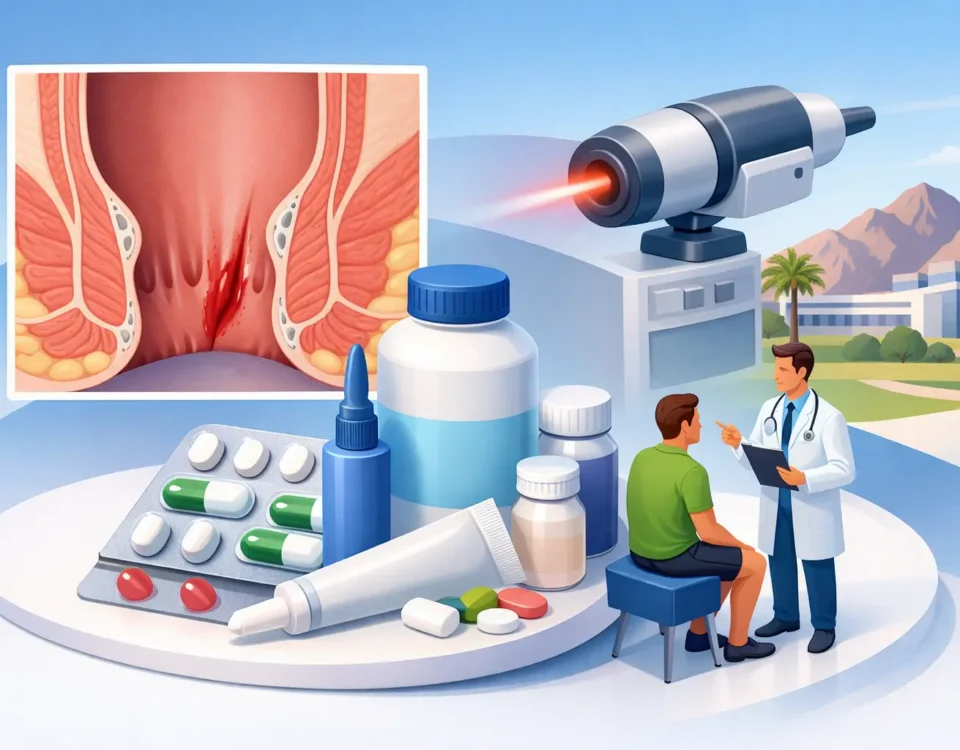
This is where many people get stuck. They self-treat for hemorrhoids for weeks, but the real problem is something else. One of the most common examples is an anal fissure, which is a small tear in the lining of the anus. Fissures often cause sharp, cutting pain during bowel movements, followed by lingering burning or spasms. A small amount of bleeding can happen too, which is why fissures are often confused with hemorrhoids.
Abscesses, fistulas, skin irritation, rectal inflammation, and other anorectal conditions can also cause pain. Even prolapsed tissue may not always be simple hemorrhoidal swelling. The symptom overlap is real, which is why persistent or worsening pain should be evaluated by a specialist rather than guessed at from home.
A useful rule of thumb is this: mild itching or occasional spotting can fit a hemorrhoid pattern, but severe pain, ongoing pain, or pain that does not improve with basic care should raise the question of whether a fissure or another condition is involved.
Can internal hemorrhoids cause rectal pain?
They can, but usually not early on. Internal hemorrhoids are often more associated with bleeding than pain. Patients may see bright red blood or notice tissue bulging during a bowel movement without much discomfort at first.
Pain becomes more likely when internal hemorrhoids prolapse and remain outside the anus, where they can swell and become irritated. If blood supply is compromised or the tissue becomes trapped, pain can increase significantly. That said, if someone has intense pain and assumes it is an internal hemorrhoid, there is a good chance another condition, especially a fissure, may also be present.
This is one reason a proper diagnosis matters. The treatment for a prolapsing internal hemorrhoid may be very different from the treatment for a fissure, even if both can cause pain in the same general area.
什么会加重痔疮疼痛
Straining is one of the biggest triggers. Hard stools, constipation, and long periods on the toilet increase pressure in the anal and rectal veins. That can worsen swelling and make painful hemorrhoids more inflamed. Repeated wiping, heavy lifting, and prolonged sitting can also aggravate symptoms.
Pregnancy, low-fiber diets, dehydration, and chronic diarrhea can all contribute. Some patients notice a cycle – bowel movements become uncomfortable, they start avoiding them, stools get harder, and the next bowel movement causes even more pain.
Over-the-counter products can help in some cases, but they do not fix every cause of anorectal pain. If symptoms keep returning or never fully improve, temporary relief may be masking a problem that needs more targeted treatment.
When to seek treatment for rectal pain
If the pain is new and mild, short-term self-care may make sense while you monitor symptoms. But there are clear situations where waiting is not the best move. Severe pain, a painful lump, ongoing bleeding, prolapsing tissue, or symptoms that last more than a few days should be evaluated. The same is true if you have tried creams, wipes, sitz baths, or stool softeners without lasting relief.
Prompt evaluation is especially helpful because hemorrhoids and anal fissures are both common, both treatable, and often confused with each other. Getting the diagnosis right means getting the right treatment faster.
For many patients, the biggest relief is simply hearing that effective care does not always mean surgery. Office-based treatment can often address symptomatic hemorrhoids without anesthesia, without a hospital setting, and without a long recovery.
How specialists evaluate hemorrhoid-related pain
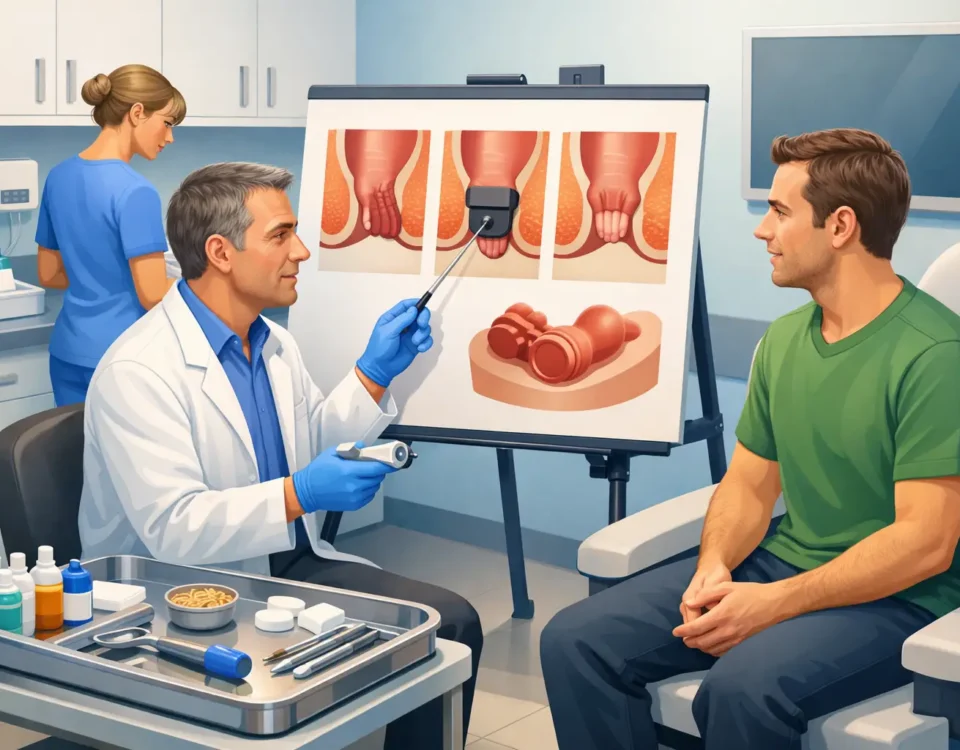
A focused anorectal exam can often identify whether pain is coming from an external hemorrhoid, a thrombosed hemorrhoid, prolapsing internal hemorrhoids, or a fissure. The goal is not to put patients through a complicated process. It is to quickly determine what is actually causing the symptoms and which treatment is most likely to provide relief.
That matters because treatment is not one-size-fits-all. A painful external hemorrhoid may need a different plan than bleeding internal hemorrhoids. A fissure may respond better to medication designed to reduce spasm and help the tissue heal. If internal hemorrhoids are the main problem, non-surgical hemorrhoid banding may be the most efficient option.
At Hemorrhoid Centers of America, that kind of focused evaluation is central to care. Patients who have delayed treatment out of embarrassment or fear of surgery are often surprised to learn that many hemorrhoid procedures are done in the office and allow a return to normal activity the same day.
Treatment depends on the cause of the pain
If hemorrhoids are causing the pain, treatment may include reducing straining, improving stool consistency, and using medications or office-based procedures to address the swollen tissue directly. If the pain is driven by thrombosis, timing matters, since some clots are best managed differently depending on how long symptoms have been present.
If an anal fissure is the source, the goal shifts. In that case, treatment focuses on relaxing the anal sphincter, improving blood flow to the tear, and allowing healing while minimizing re-injury from bowel movements. This is why self-diagnosis can keep people uncomfortable longer than necessary.
The key point is simple: rectal pain has a cause, and the best treatment starts with knowing exactly what that cause is.
Can hemorrhoids cause rectal pain that comes and goes?
Yes. Some patients have symptoms that flare after constipation, travel, dehydration, or heavy lifting and then improve for a while. Intermittent symptoms are common, especially with hemorrhoids that become irritated under pressure and settle down when the trigger is removed.
But recurring pain is still worth attention. When pain repeatedly returns, it usually means the underlying issue has not been fully resolved. That could be hemorrhoids, a fissure, or a combination of both. Either way, ongoing flare-ups are a sign to stop guessing and get a specialist’s opinion.
If you are asking whether hemorrhoids can cause rectal pain, you are already asking the right question. The next one is even more useful: what is actually causing your pain right now? Once that is clear, relief usually becomes much more straightforward.