
A Guide to Prolapsed Hemorrhoid Care
May 15, 2026
Anal Fissure vs Hemorrhoid Pain
May 19, 2026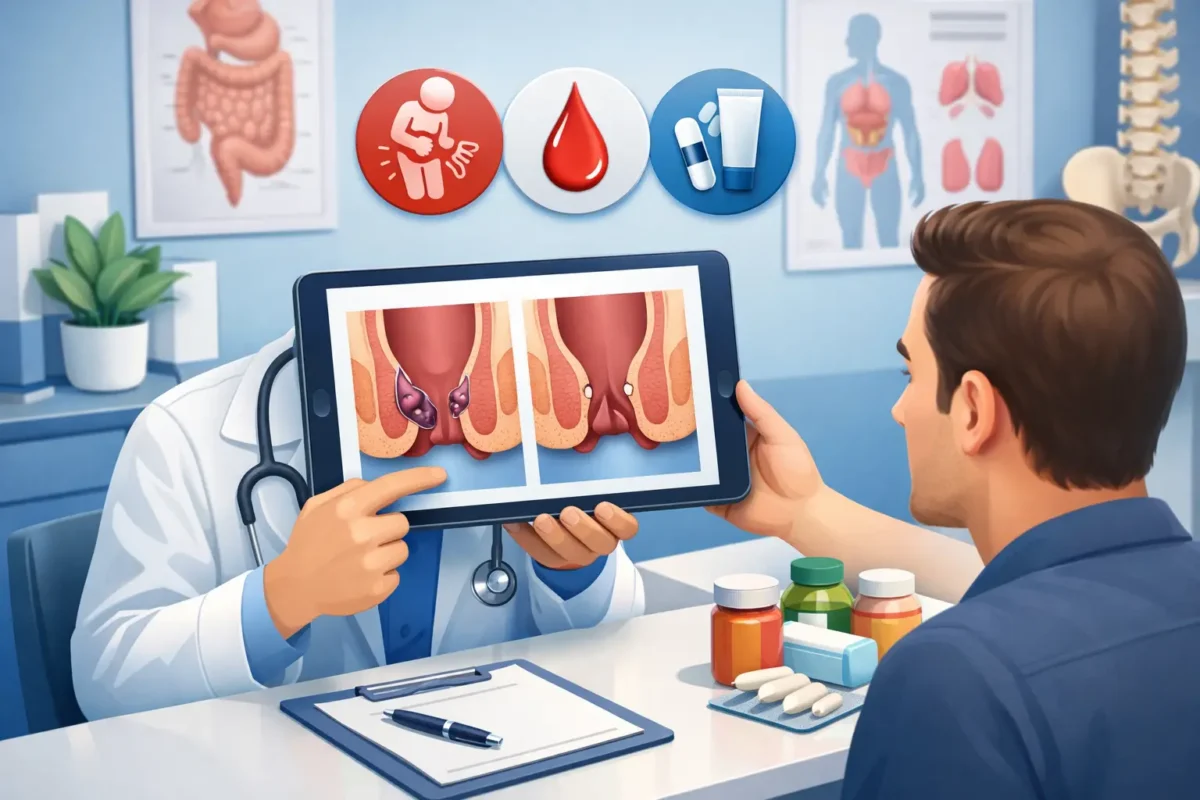
A lot of people assume rectal pain or bleeding must be hemorrhoids. That guess is common, but it is not always right. When comparing hemorrhoid symptoms vs anal fissure, the difference often comes down to the type of pain, when it happens, and what the bleeding looks like.
Both conditions can cause discomfort, irritation, and bright red blood. Both can also make bowel movements stressful enough that people start avoiding them, which usually makes symptoms worse. The good news is that these are highly treatable conditions, and identifying the likely source of symptoms is often the first step toward faster relief.
Hemorrhoid symptoms vs anal fissure: what is the difference?
Hemorrhoids are swollen veins in or around the rectum and anus. They can be internal, external, or both. Anal fissures are small tears in the lining of the anus, usually caused by trauma from passing hard stool, straining, or repeated irritation.
That difference in tissue matters because it changes how symptoms feel. Hemorrhoids often cause pressure, swelling, itching, irritation, and painless bleeding, especially internal hemorrhoids. Anal fissures are more likely to cause sharp, tearing pain during a bowel movement, followed by burning or spasms that can last for minutes or even hours.
If someone says, “I see blood but it does not really hurt,” hemorrhoids move higher on the list. If they say, “It feels like passing glass,” a fissure becomes much more likely. Still, symptoms can overlap enough that self-diagnosis is not always reliable.
How hemorrhoid symptoms usually feel
Hemorrhoid symptoms vary depending on whether the hemorrhoid is internal or external. Internal hemorrhoids are inside the rectum, so they often bleed without causing much pain. Many patients notice bright red blood on toilet paper, in the toilet bowl, or coating the stool. They may also feel tissue bulging during a bowel movement or a sense of incomplete cleaning afterward.
External hemorrhoids sit under the skin around the anus. These are more likely to itch, swell, feel tender, or cause discomfort when sitting. If a clot forms in an external hemorrhoid, pain can become sudden and intense, with a firm lump near the anal opening.
Hemorrhoids can also cause mucus, irritation, and recurring flare-ups. Some people do well for weeks, then symptoms return after constipation, prolonged sitting, heavy lifting, pregnancy, or travel. That on-and-off pattern is common.
How an anal fissure usually feels
An anal fissure tends to announce itself more dramatically. The classic symptom is sharp pain during a bowel movement. Patients often describe it as cutting, tearing, or burning pain. Unlike hemorrhoid discomfort, fissure pain frequently continues after the bowel movement ends.
That lingering pain happens because the anal sphincter can spasm around the tear. The result is a cycle of pain, tightness, and poor healing. A small amount of bright red blood may appear on toilet paper or on the outside of the stool, but the amount is often less than people expect.
Fissures can also cause itching and irritation, which is one reason they get confused with hemorrhoids. But severe pain with bowel movements is the clue that usually points in a different direction.
Bleeding, pain, and itching: the clues that matter most
When people search for hemorrhoid symptoms vs anal fissure, they are usually trying to make sense of three things: bleeding, pain, and itching.
Bleeding from either condition is often bright red. Dark blood, maroon stool, or black stool is different and should not be assumed to be a hemorrhoid or fissure problem. Bright red blood from hemorrhoids is often more noticeable and may occur with relatively little pain. With fissures, the blood is usually lighter in amount and appears alongside significant pain.
Pain is where the distinction becomes more useful. Hemorrhoids can hurt, especially external or prolapsed hemorrhoids, but internal hemorrhoids often bleed without much pain at all. Fissures are typically painful right away and in a very specific way – sharp pain during stool passage, then burning or throbbing afterward.
Itching can happen with both. Hemorrhoids often itch because of moisture, mucus, or protruding tissue that irritates the skin. Fissures may itch as the tear becomes inflamed or begins to heal. On its own, itching does not clearly separate the two.
Why these conditions are often confused
The location is one reason. Both affect the anal area, and most people are not able to examine the area clearly or comfortably at home. On top of that, many symptoms overlap. A person can have bleeding, pain, swelling, and irritation without being able to tell which condition started the problem.
It also gets more complicated because some patients have both. Constipation and straining can trigger hemorrhoids and cause a fissure at the same time. A prolapsing hemorrhoid can irritate the area enough to make everything feel worse. A fissure can lead to muscle spasm and fear of bowel movements, which then leads to harder stool and more pressure.
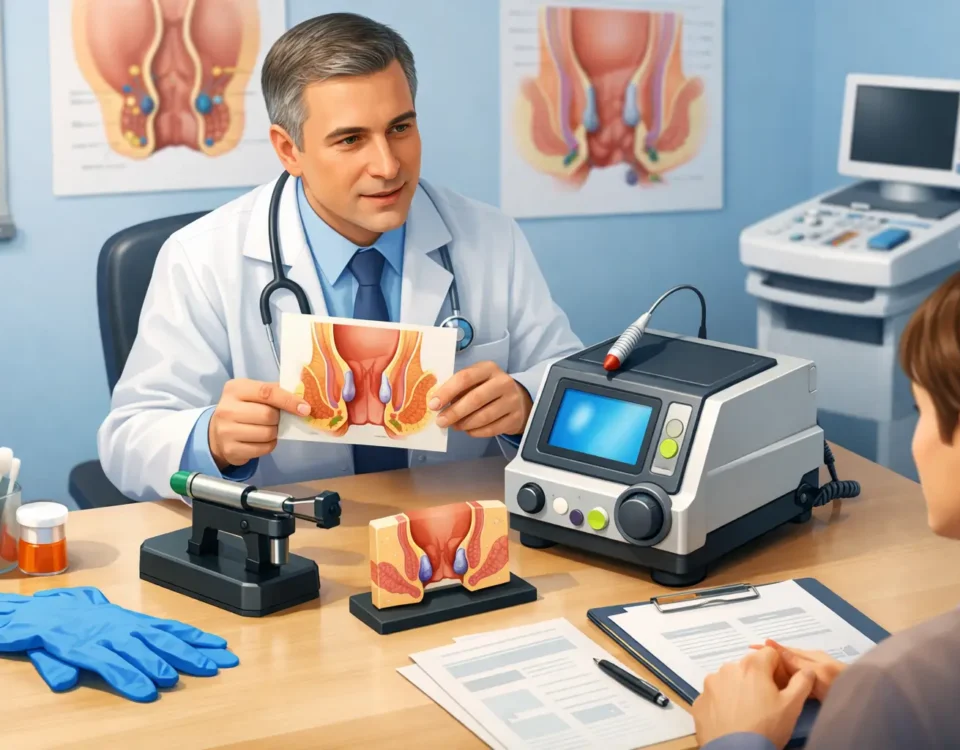
This is why a focused exam matters. In anorectal care, the right diagnosis drives the right treatment. What helps one condition may not be enough for the other.
What causes hemorrhoids and fissures?
Hemorrhoids are usually driven by increased pressure in the rectal veins. Common triggers include chronic constipation, straining, prolonged sitting on the toilet, pregnancy, heavy lifting, low-fiber diets, and aging. For many adults, the issue builds gradually over time.
Anal fissures are more often caused by local trauma. Passing a large or hard stool is the classic cause, but repeated diarrhea, childbirth, anal spasm, and chronic irritation can also create or worsen a tear. In some cases, a fissure becomes chronic because the muscle remains tight and cuts off the blood supply needed for healing.
That difference matters because long-term care is not just about stopping symptoms today. It is about removing the reason symptoms keep coming back.
When symptoms need medical attention
Any rectal bleeding should be evaluated if it is new, recurrent, or unexplained. While hemorrhoids and fissures are common, they are not the only possible causes of bleeding or pain. Assuming the cause without an exam can delay the right treatment.
You should also seek care if pain is severe, bowel movements are becoming difficult because of fear or spasm, or symptoms are not improving with hydration, fiber, and simple home care. A lump, persistent swelling, drainage, fever, or worsening symptoms also deserves prompt attention.
For many patients, the biggest delay is embarrassment. That is understandable, but it often means living with a treatable problem much longer than necessary. These conditions are common, and specialized care is designed to address them discreetly and efficiently.
How treatment differs
Hemorrhoid treatment depends on the type and severity. Mild cases may improve with stool softening, hydration, fiber, and reducing straining. But when symptoms persist, office-based procedures can treat the source directly without the disruption of traditional surgery. For internal hemorrhoids, banding is a common non-surgical option that can relieve bleeding and prolapse with minimal downtime.
Anal fissure treatment usually focuses first on relaxing the area and allowing the tear to heal. That may include custom medication protocols, stool management, and reducing sphincter spasm. The goal is not just temporary numbing. It is to break the cycle of pain and re-injury so healing can actually occur.
This is where specialist care can make a real difference. A patient treated for hemorrhoids when the real problem is a fissure may not get relief. The reverse is also true. At Hemorrhoid Centers of America, patients are evaluated with that distinction in mind so treatment can be targeted, non-surgical, and efficient.
The bottom line on hemorrhoid symptoms vs anal fissure
If bleeding happens with little pain, hemorrhoids are often the more likely cause. If bowel movements trigger sharp, tearing pain followed by burning or spasm, an anal fissure is more likely. But there is enough overlap that a confident answer usually comes from an exam, not a guess.
No one should have to organize their day around pain, bleeding, itching, or anxiety about the bathroom. The right diagnosis can turn a frustrating, private problem into a straightforward treatment plan – and often much faster relief than most people expect.