

How to Stop Bleeding Hemorrhoids Safely
March 11, 2026
Swollen Hemorrhoid Treatment Options That Work
March 13, 2026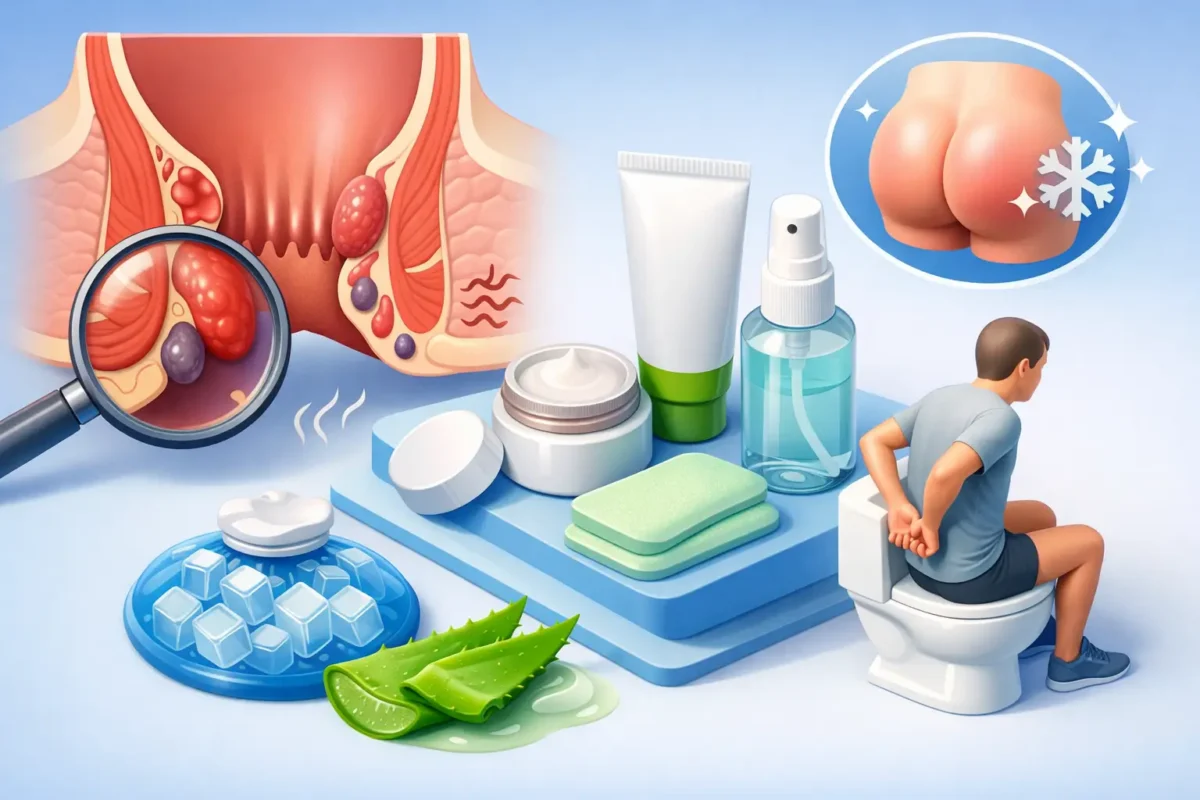
Itching from hemorrhoids has a way of taking over your attention. It can interrupt sleep, make sitting through work difficult, and leave you stuck in a cycle of wiping, irritation, and more itching. Many people wait too long to get help because the symptom feels embarrassing or minor. In reality, persistent anal itching often means the tissue is irritated and needs more than guesswork.
Hemorrhoids itching relief options that help fast
The right treatment depends on why the itching is happening. Hemorrhoids can itch when swollen veins create irritation around the anal area, but the itch is often made worse by moisture, mucus leakage, friction, or aggressive cleaning. That is why some home remedies help a little, while others actually keep the problem going.
For mild symptoms, conservative care can calm the area. Warm sitz baths, gentle cleansing with water, and keeping the skin dry after bowel movements can reduce irritation. Some patients get short-term relief from over-the-counter creams or witch hazel pads. These can be useful when symptoms are new or occasional.
The trade-off is that symptom relief is not the same as treating the cause. If internal hemorrhoids are prolapsing slightly or producing mucus, the itching may return as soon as the cream wears off. If the problem has lasted for weeks, or keeps coming back, it usually makes sense to move past temporary measures and get an exam.
Why itching can be so persistent
The skin around the anus is sensitive. Even small amounts of swelling, discharge, or residue after a bowel movement can trigger a strong itch. Then the area gets rubbed, wiped, or scratched, and that creates more inflammation. Patients often think they need to clean more aggressively when the opposite is true.
This is also why not every itchy hemorrhoid responds the same way. External hemorrhoids can itch because the skin is irritated directly. Internal hemorrhoids may itch indirectly because they leak mucus or make it harder to clean the area completely. Anal fissures, yeast irritation, dermatitis, and other conditions can also feel similar. A correct diagnosis matters.
Home care for hemorrhoid itching relief options
If the itching is mild and you have no heavy bleeding, severe pain, or a new lump that is rapidly worsening, home care is a reasonable first step. The goal is to reduce irritation without damaging the skin barrier.
Start with gentle hygiene. After a bowel movement, rinse with warm water or use soft, unscented wipes sparingly if they do not sting. Dry the area by patting, not rubbing. Tight clothing and trapped sweat can keep the skin damp, so breathable underwear and changing out of exercise clothes promptly can help.
Warm sitz baths are simple but effective. Sitting in warm water for 10 to 15 minutes a few times a day can calm inflamed tissue and make the area more comfortable. This will not shrink every hemorrhoid, but it often reduces the urge to scratch.
Short-term use of a hemorrhoid cream may help with itching, burning, or swelling. The key phrase is short-term. Some medicated creams, especially those containing steroids, can thin or further irritate the skin if used too long. If you are applying a product repeatedly and symptoms keep returning, that is a sign the underlying issue may need procedural treatment instead.
Fiber and hydration also matter more than patients expect. Straining, incomplete bowel movements, and repeated wiping all make itching worse. Softer, easier bowel movements reduce pressure on hemorrhoids and minimize friction afterward. A fiber supplement can be useful if your diet is inconsistent, but it should be introduced gradually and paired with enough water.
What tends to make the itch worse
Common triggers include scented soaps, harsh toilet paper, prolonged sitting, sweating, constipation, diarrhea, and overuse of topical products. Even “natural” products can irritate sensitive skin. If the area is already inflamed, less is often more.
Scratching is the hardest habit to stop because it briefly feels helpful. Unfortunately, it usually creates microtrauma and extends the cycle. If itching is strong enough that you are losing sleep or thinking about it throughout the day, home care has probably reached its limit.
When relief requires more than over-the-counter care
The most important question is not whether you can temporarily soothe the itch. It is whether the hemorrhoid problem itself is still active. If there is ongoing bleeding, swelling, prolapse, mucus leakage, or recurrent irritation, the source of the itch may remain in place even if surface symptoms improve for a day or two.
This is where specialized evaluation makes a real difference. A focused anorectal exam can identify whether itching is coming from internal hemorrhoids, external hemorrhoids, a fissure, skin irritation, or a combination of issues. Patients often arrive assuming they need a stronger cream and learn that the better solution is targeted treatment.
For internal hemorrhoids in particular, office-based banding is often one of the most effective non-surgical approaches. By treating the hemorrhoid directly, banding can reduce the swelling and tissue prolapse that contribute to itching, bleeding, and irritation. It addresses the cause rather than asking you to keep managing flare-ups indefinitely.
Why non-surgical treatment appeals to many patients
Most people who finally seek care have already spent weeks or months trying to control symptoms on their own. They are not looking for a hospital experience or a long recovery. They want relief that fits into normal life.
That is why office-based, minimally invasive care is often such a strong option. Treatment is typically fast, does not require traditional surgery or anesthesia, and usually allows patients to return to regular activity quickly. For someone balancing work, family, and everyday responsibilities, that matters.
At Hemorrhoid Centers of America, this type of focused care is designed around quick diagnosis, non-surgical treatment, and getting patients back to normal life without unnecessary disruption.
Signs it is time to schedule an exam
If itching has lasted more than a week or two despite basic home care, it is reasonable to get evaluated. The same is true if the itching keeps returning, wakes you up, or comes with bleeding, pain, swelling, or tissue that seems to bulge during bowel movements.
You should also be seen if the diagnosis is not clear. Many patients assume hemorrhoids are the cause of every anorectal symptom, but fissures, skin conditions, infections, and other concerns can overlap. An accurate diagnosis saves time and prevents using the wrong treatment.
For patients in Arizona, Georgia, Idaho, or Illinois, seeing a provider who treats hemorrhoids every day can make the process more efficient and more reassuring. This is a sensitive issue, and specialized care often means fewer delays and more direct answers.
What to expect from a specialist visit
Patients often worry that evaluation will be painful or lead automatically to surgery. In most cases, the visit is straightforward. The provider will review your symptoms, examine the area, and explain whether your itching is likely being driven by hemorrhoids, another condition, or both.
If treatment is recommended, the conversation usually focuses on what will give you the best chance of durable relief with the least disruption. That may include medication, office-based banding, or a combined plan based on the severity of symptoms. The best option depends on whether the issue is mostly skin irritation, active hemorrhoid disease, or another anorectal condition.
Relief from hemorrhoid itching should not require constant trial and error. If the problem keeps pulling your attention back every day, that is a good reason to stop managing it in circles and get a treatment plan built to actually resolve it.