

What to Expect From Hemorrhoid Banding
March 11, 2026
Hemorrhoid Itching Relief That Works
March 12, 2026
Seeing bright red blood after a bowel movement can be alarming. Many people assume hemorrhoids are the cause, and often they are, but bleeding from the rectal area should never be brushed off without some care and judgment.
If you are trying to figure out how to treat bleeding hemorrhoids, the right approach depends on how much bleeding you have, how often it happens, and whether other symptoms are showing up at the same time. Mild bleeding may improve with conservative care. Ongoing, heavy, or painful bleeding deserves prompt evaluation, especially when you want relief without surgery.
How to treat bleeding hemorrhoids at home
Bleeding hemorrhoids usually happen when swollen veins in or around the rectum become irritated by straining, hard stool, frequent wiping, or prolonged time on the toilet. The first goal is simple – reduce pressure and irritation so the tissue can settle down.
Start with your bowel habits. If stools are hard or difficult to pass, bleeding is more likely to continue. Increasing fiber through food or a fiber supplement can make stools softer and easier to pass. Drinking more water matters too. Fiber without enough fluid can backfire and leave you more constipated.
It also helps to stop straining. Many patients sit on the toilet longer than they need to, often while scrolling on their phone. That extra time increases pressure in the hemorrhoidal tissue. Try going when you feel the urge, avoid pushing, and get up if nothing is happening after a few minutes.
Warm sitz baths can calm irritation and help with swelling. They do not remove hemorrhoids, but they can make the area feel better and reduce some of the inflammation that contributes to bleeding. Gentle cleaning is also important. Harsh wiping can keep the area irritated, so soft toilet paper, unscented wipes, or rinsing with water can be a better choice.
Some over-the-counter creams and suppositories may give temporary symptom relief, especially for itching or irritation. They can be reasonable for short-term use, but they are not always enough when bleeding keeps returning. If you have already tried these products and the bleeding still shows up, that is often a sign that the problem needs a more targeted treatment plan.
When bleeding hemorrhoids need medical attention
A small amount of bright red blood on the toilet paper or in the bowl can happen with hemorrhoids, but there is a line between mild and something that should be checked soon. If bleeding happens repeatedly, becomes heavier, or comes with significant pain, swelling, or a lump, it is time to get evaluated.
The same is true if you are not sure the bleeding is really from hemorrhoids. Rectal bleeding can also come from anal fissures, inflammation, polyps, or other gastrointestinal conditions. Hemorrhoids are common, but they should not be diagnosed by guesswork when bleeding is involved.
You should seek prompt care if you feel dizzy, weak, or notice large amounts of blood. Black or tarry stool is also not typical of hemorrhoids and needs medical attention. Those situations call for a different level of urgency than the occasional spot of bright red blood.
For many patients, the issue is not a single episode. It is the pattern. The bleeding improves for a few days, then comes back. That cycle often points to internal hemorrhoids that are not going to fully resolve with home care alone.
Why bleeding keeps coming back
Bleeding hemorrhoids are often internal hemorrhoids. These sit inside the rectum, where they may not cause much pain at first, but they can bleed easily during bowel movements. Because the underlying swollen tissue remains in place, symptoms tend to recur.
This is where the trade-off between home treatment and office treatment becomes clear. Conservative care can reduce irritation and support healing, but it may not address the tissue that is causing repeat bleeding. If you want a more definitive answer, especially after weeks or months of recurring symptoms, a specialist can determine whether procedural treatment is the better fit.
That matters for busy adults who do not want repeated flare-ups disrupting work, travel, exercise, or sleep. It also matters for people who have delayed care because they fear surgery. Many hemorrhoid cases can be treated effectively without traditional surgery, anesthesia, or a long recovery.
How specialists treat bleeding hemorrhoids without surgery
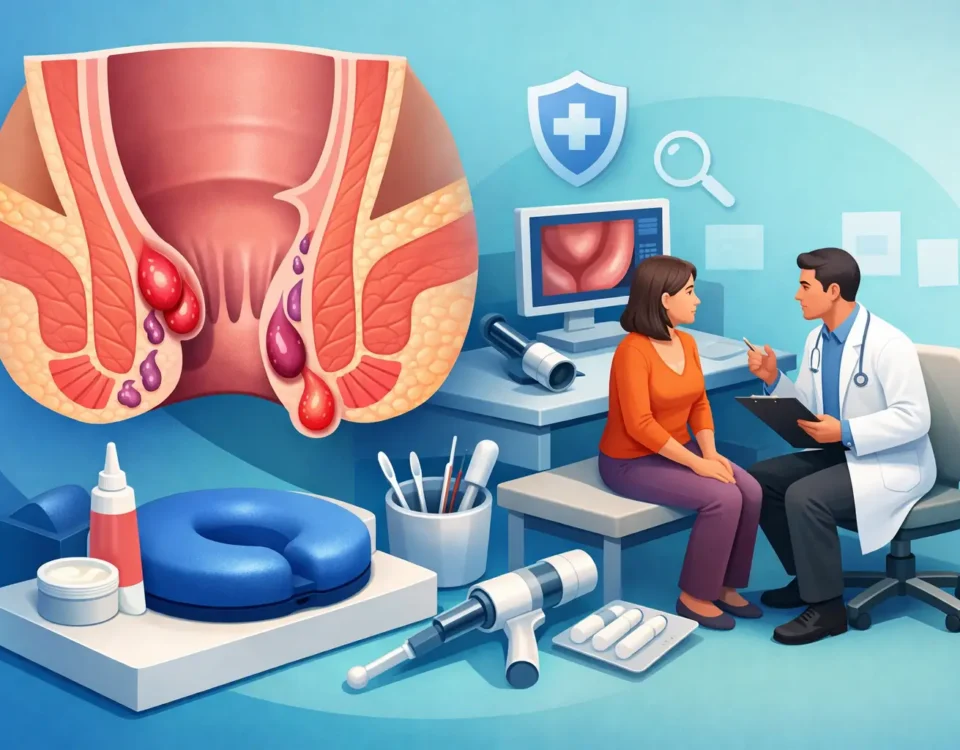
When home care is not enough, non-surgical treatment can often stop the cycle of bleeding more effectively. One of the most common options for internal hemorrhoids is hemorrhoid banding, an office-based procedure that places a small band around the hemorrhoid tissue. This cuts off blood flow to the targeted tissue so it shrinks and resolves over time.
For the right patient, this approach is efficient and practical. It is typically done in the office, does not require the kind of hospital-based surgical process many patients want to avoid, and usually involves minimal downtime. Patients often return to normal daily activity quickly.
That does not mean every bleeding case should be banded. It depends on whether the hemorrhoids are internal or external, how advanced they are, and whether another condition such as an anal fissure is contributing to the bleeding. A specialist evaluation is what separates temporary symptom management from a treatment plan built around the actual source of the problem.
Custom medication protocols may also be part of care, especially when inflammation, irritation, or overlapping fissure symptoms are present. The best treatment is not always one-size-fits-all. It is based on the type of hemorrhoid, the pattern of bleeding, and how long symptoms have been going on.
How to treat bleeding hemorrhoids without making them worse
People often mean well and still aggravate the problem. Repeated use of strong topical products, aggressive wiping, and chronic use of stimulant laxatives can all keep the area irritated. Even exercise choices matter for some patients. Heavy lifting can increase pressure and make flare-ups more noticeable, at least temporarily.
Diet changes should be practical, not extreme. A sudden jump in fiber can cause bloating and gas, which makes some people quit before it helps. A gradual increase is usually easier to tolerate. The goal is regular, soft bowel movements, not dramatic changes overnight.
It is also worth being realistic about timing. If you just started fiber, increased fluids, and improved bathroom habits yesterday, you may not see immediate results. But if you have done these things consistently and still have bleeding, continuing to wait may only prolong the problem.
What to expect at a hemorrhoid evaluation
A lot of patients put off care because they expect a painful or embarrassing experience. In a specialized hemorrhoid practice, the process is usually much more straightforward than people imagine. The visit is focused, discreet, and designed to identify whether hemorrhoids, a fissure, or another issue is causing the bleeding.
The benefit of seeing a provider who treats these conditions every day is precision. General assumptions lead to general advice. A focused exam leads to a treatment pathway. If your symptoms fit office-based, non-surgical care, you can often move toward relief quickly instead of cycling through more creams and guesswork.
For patients in Arizona, Georgia, Idaho, or Illinois, Hemorrhoid Centers of America offers specialized evaluation and non-surgical treatment designed around that exact need – fast, effective care without unnecessary surgery.
FAQs about how to treat bleeding hemorrhoids
Can bleeding hemorrhoids heal on their own?
Sometimes, yes. Mild bleeding can improve if you reduce straining, soften stool, and avoid irritating the area. But recurring bleeding often means the hemorrhoid tissue is still active and may need office treatment.
Is bright red blood always hemorrhoids?
No. Bright red blood is common with hemorrhoids, but anal fissures and other rectal or gastrointestinal conditions can also cause bleeding. If you are unsure, an exam is the safest next step.
Should I go to the ER for bleeding hemorrhoids?
If the bleeding is heavy, you feel lightheaded, weak, or faint, or the stool is black or tarry, seek urgent medical care. Those symptoms are not typical of a routine hemorrhoid flare.
How long should I try home treatment first?
If symptoms are mild and improving, a short trial of conservative care can make sense. If bleeding persists, returns frequently, or comes with pain or prolapse, it is reasonable to schedule a specialist visit sooner rather than later.
Bleeding hemorrhoids are common, but they are not something you have to keep managing in silence. The right care can be simple, targeted, and much less disruptive than most people expect.