
What to Expect From Hemorrhoid Banding
March 11, 2026
If you are dealing with bleeding, itching, swelling, or pain during bowel movements, the question usually becomes very simple, very fast: how do I make this stop without surgery?
That is exactly why many patients look for non surgical hemorrhoid treatment. They want real relief, not another round of temporary creams or a hospital-based procedure with anesthesia and a long recovery. In many cases, that is a realistic goal. Hemorrhoids can often be treated effectively in an office setting with minimally invasive care that gets you back to normal life quickly.
What non surgical hemorrhoid treatment actually means
Non surgical hemorrhoid treatment refers to medical care that addresses hemorrhoids without traditional surgery. That usually means no operating room, no general anesthesia, no cutting, and far less downtime than a surgical hemorrhoidectomy.
This matters because not every hemorrhoid needs surgery. In fact, many internal hemorrhoids respond well to office-based procedures and targeted medical treatment. The right approach depends on your symptoms, the type of hemorrhoid, and how long the problem has been going on.
For patients, the biggest difference is practical. Non-surgical care is designed to relieve symptoms while minimizing disruption to your day. That can be especially important if you have work responsibilities, family obligations, or have simply put off treatment because you were worried about pain or recovery.
When home remedies stop being enough
A lot of people start with the same routine. They try over-the-counter creams, wipes, sitz baths, stool softeners, or dietary changes. Those steps can help, especially early on. They may reduce irritation and make bowel movements easier.
But they do not always solve the underlying issue. If your hemorrhoids keep bleeding, keep prolapsing, or keep flaring up, symptom management alone may not be enough. That is usually the point when non surgical hemorrhoid treatment becomes worth discussing with a specialist.
Persistent symptoms are not something you should have to normalize. Ongoing rectal bleeding, pain, or swelling deserves a proper evaluation, partly because hemorrhoids are common, but also because not every symptom in that area is caused by hemorrhoids.
The most effective office-based option for many patients
Hemorrhoid banding
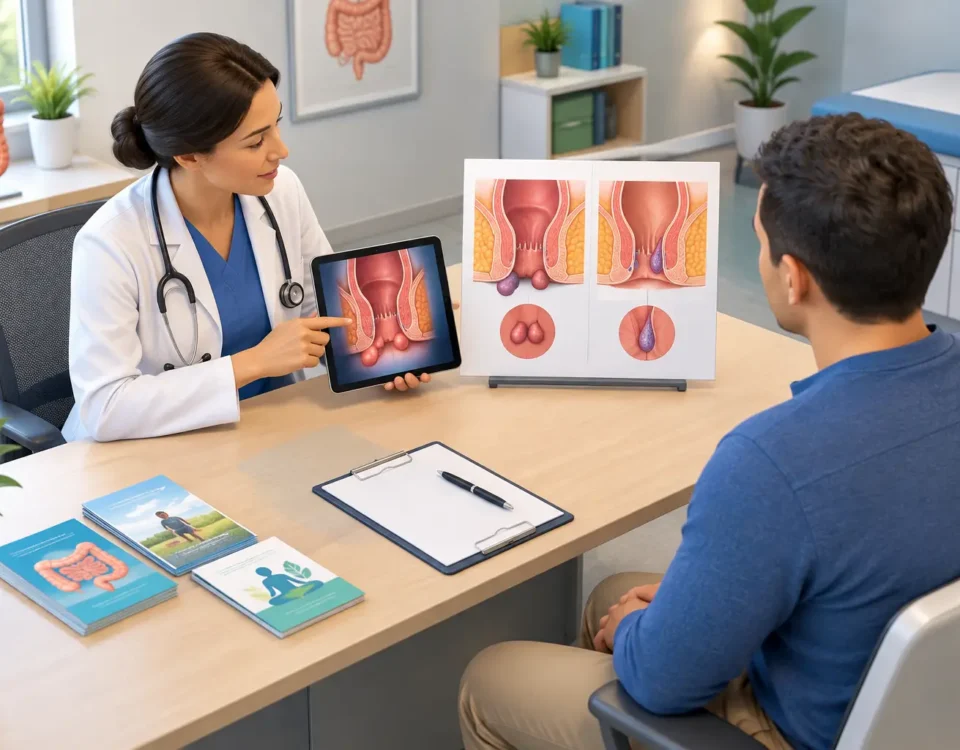
For many internal hemorrhoids, rubber band ligation, often called hemorrhoid banding, is one of the most effective non-surgical treatments available. During this office procedure, a small band is placed at the base of the internal hemorrhoid. That cuts off its blood supply, causing the tissue to shrink and eventually fall away.
The appeal is straightforward. Banding is quick, does not require traditional surgery, and often allows patients to return to their normal activities the same day. It is commonly used for internal hemorrhoids that bleed, prolapse, or repeatedly cause irritation.
Banding is not ideal for every situation. External hemorrhoids are treated differently, and some advanced cases may need another approach. But for the right patient, it can provide meaningful relief without the burden of surgery.
What it feels like
Patients often expect any hemorrhoid procedure to be painful. That fear keeps a lot of people from getting care. In reality, office-based banding is typically much more manageable than people imagine. Most patients describe pressure or a sense of fullness rather than severe pain.
There can be some mild discomfort afterward, and your provider may give you specific instructions about bowel habits, activity, and symptom monitoring. The key point is that recovery is generally much easier than recovery from hemorrhoid surgery.
Other forms of non surgical hemorrhoid treatment
Banding gets a lot of attention because it works well for many internal hemorrhoids, but it is not the only tool. A specialized treatment plan may also include prescription medications, anti-inflammatory treatment, or a custom approach based on whether the issue is hemorrhoids, an anal fissure, or a combination of both.
That distinction matters. Patients often self-diagnose based on bleeding or pain, but anal fissures can cause sharp pain and bleeding too. Treatment for a fissure is different from treatment for hemorrhoids, so getting the diagnosis right is an important first step.
For some patients, medical therapy is enough. For others, medication helps calm symptoms while a procedure addresses the root cause. The best treatment is not always the most aggressive one. It is the one that matches what is actually happening.
Who is a good candidate for non surgical hemorrhoid treatment?
If your main goal is relief without a hospital-based procedure, you may be a strong candidate. Many adults with internal hemorrhoids, recurrent bleeding, itching, prolapse, or irritation can benefit from an office-based evaluation and treatment plan.
You may be especially well suited for non-surgical care if you have already tried home remedies and symptoms continue to return. It is also a good fit for patients who want to avoid anesthesia, minimize time away from work, and get treated in a more convenient setting.
That said, not every case can or should be handled the same way. Large external hemorrhoids, thrombosed hemorrhoids, severe prolapse, or more complex anorectal conditions may require a different path. A trustworthy specialist should tell you clearly whether a non-surgical option is likely to work or whether another treatment would be more appropriate.
Why specialization makes a difference
Hemorrhoids are common, but that does not mean every practice approaches them with the same level of focus. Specialized hemorrhoid care tends to move faster from diagnosis to treatment because the process is built around these conditions.
That benefits patients in a few ways. First, it reduces guesswork. Second, it helps ensure that the treatment recommendation fits the exact type and severity of your condition. Third, it often means you can be treated without being routed through a broader surgical system designed for much more invasive care.
At a focused center like Hemorrhoid Centers of America, that specialization is built around office-based, non-surgical relief delivered by board-certified surgeons. For patients who want expertise without the hospital experience, that model can be a major advantage.
What to expect at your visit
Evaluation comes first
The first step is not the procedure. It is the diagnosis. Your provider will review your symptoms, ask how long they have been happening, and determine whether the issue is internal hemorrhoids, external hemorrhoids, anal fissures, or something else.
This part is important because bleeding and pain are symptoms, not diagnoses. Once the cause is confirmed, your provider can explain whether non surgical hemorrhoid treatment is appropriate and what kind of results you can reasonably expect.
Treatment and recovery
If you are a candidate for office-based treatment, the procedure is often brief. Many patients are surprised by how efficient the visit is. Recovery instructions usually focus on keeping bowel movements soft, avoiding strain, and understanding what mild post-procedure symptoms are normal.
Most people are primarily concerned about downtime. The answer depends on the treatment, your symptoms, and the nature of your work, but many patients return to regular activities quickly. That is one of the biggest reasons these treatments appeal to busy adults who have delayed care.
When to stop waiting
There is a common pattern with hemorrhoids. People hope the problem will fade, feel embarrassed to bring it up, and keep trying to manage it quietly. Weeks turn into months. Sometimes longer.
But if you are having repeated bleeding, ongoing pain, prolapse, or symptoms that interfere with daily life, waiting usually does not make the process easier. It just extends the discomfort and uncertainty. Prompt care can bring relief sooner and may help you avoid more complicated treatment later.
There is also peace of mind in getting a clear answer. Even when the problem is hemorrhoids, many patients feel better just knowing what they are dealing with and what can be done about it.
The real goal is getting your life back
The best non surgical hemorrhoid treatment is not defined only by what happens in the exam room. It is defined by what happens after. Less pain. Less bleeding. Less disruption. A faster return to work, family routines, exercise, travel, and the small daily moments that become stressful when hemorrhoids are acting up.
If you have been putting off care because you assumed surgery was the only serious option, it may be time to reconsider that assumption. Relief can be more direct, more convenient, and far less disruptive than many people expect.
You do not need to keep arranging your day around symptoms you are tired of managing.