

How to Choose a Hemorrhoid Specialist Near You
August 19, 2026
Hemorrhoid Banding Versus Infrared Coagulation
August 23, 2026
Hemorrhoid cream versus banding is not simply a choice between an over-the-counter product and a medical procedure. The right option depends on what is causing your symptoms, how long they have lasted, and whether you need temporary comfort or more definitive relief. If itching, burning, swelling, or bleeding keeps returning, it may be time to move beyond the medicine cabinet.
Many people delay care because hemorrhoids are uncomfortable to discuss or because they assume treatment means surgery and a long recovery. That is not always the case. Office-based treatment can often address qualifying internal hemorrhoids without anesthesia, hospital admission, or significant downtime.
Hemorrhoid Cream Versus Banding: The Key Difference
Hemorrhoid creams are designed to ease symptoms. Depending on the product, they may soothe itching, reduce minor irritation, numb discomfort, or temporarily reduce swelling. They can be useful during a short flare-up, particularly when symptoms are mild and recent.
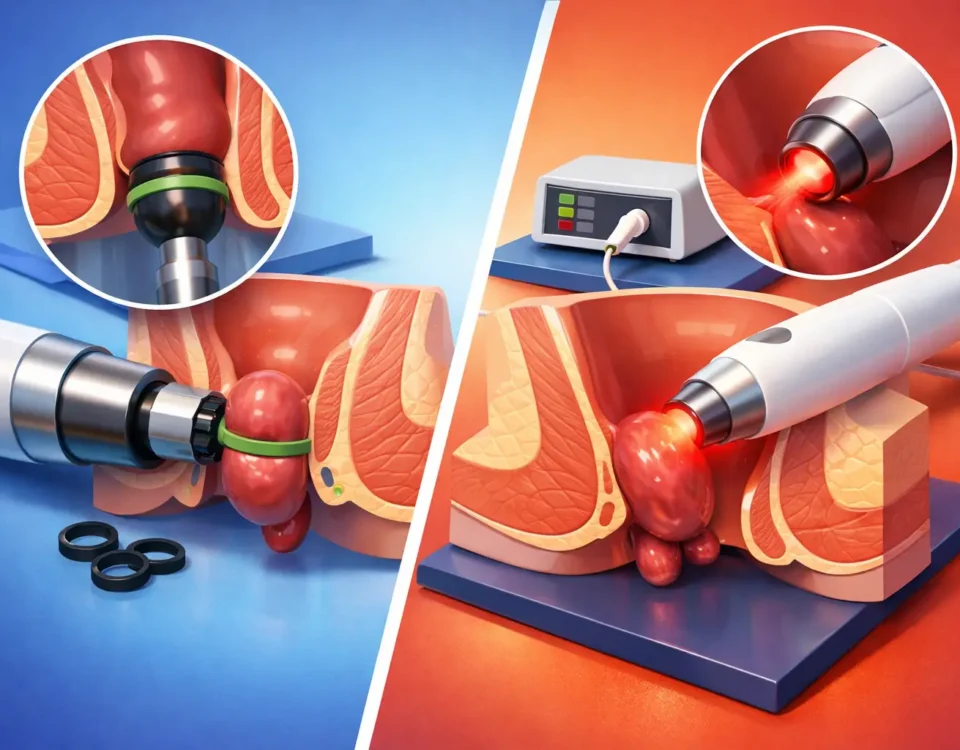
Banding, also called rubber band ligation, treats the hemorrhoid itself. A clinician places a small band around the base of an internal hemorrhoid, cutting off its blood supply. The treated tissue shrinks and typically falls away over time. The goal is not just to make symptoms more tolerable for a few days, but to address the enlarged internal hemorrhoid causing bleeding, prolapse, or persistent irritation.
That difference matters. Cream may help you get through a difficult day. Banding may be the more appropriate next step when the same symptoms continue to interrupt work, exercise, travel, sleep, or time with family.
When Hemorrhoid Cream Can Make Sense
For mild symptoms that have just started, a short course of hemorrhoid cream may provide reasonable relief. It can be helpful for temporary itching, burning, or irritation after constipation, diarrhea, straining, or long periods of sitting. Warm baths, adequate fluids, fiber, and avoiding prolonged time on the toilet can also reduce irritation and help prevent another flare-up.
Cream has limits. It does not remove internal hemorrhoids, correct prolapse, or reliably stop recurring bleeding. Some products contain steroids or numbing agents that should not be used for extended periods unless a clinician advises it. Prolonged use can irritate sensitive skin or mask a condition that needs a proper diagnosis.
It is also worth remembering that not every anal symptom is a hemorrhoid. An anal fissure, skin irritation, infection, inflammatory condition, or another source of rectal bleeding can feel similar. Bright red blood on toilet paper is often associated with hemorrhoids, but it should not be automatically self-diagnosed, especially if bleeding is new, heavy, recurrent, or accompanied by changes in bowel habits, abdominal pain, unexplained weight loss, weakness, or dark stools.
When Banding May Be a Better Option
Banding is commonly used for internal hemorrhoids that bleed, swell, or protrude during bowel movements. These hemorrhoids are located inside the rectum, where there are fewer pain-sensitive nerves. That is one reason rubber band ligation can usually be performed in an office setting without general anesthesia.
You may be a candidate for banding if you have tried creams, wipes, dietary changes, or other home measures and still experience recurring symptoms. Patients often seek treatment because they are tired of planning around bleeding, carrying supplies, avoiding exercise, or worrying about an urgent trip to the restroom.
A banding visit is typically brief. Your provider examines the area, confirms the likely source of symptoms, and determines whether banding is appropriate. During the procedure, some patients feel pressure, fullness, or the urge to have a bowel movement. More than one hemorrhoid, or more than one treatment session, may be needed depending on the number, size, and location of hemorrhoids.
Most patients return to normal daily activity the same day. You may receive specific guidance about exercise, bowel movements, fiber, hydration, and what to expect as the treated tissue heals. Mild discomfort or a feeling of rectal fullness can occur, but severe or worsening pain is not something to ignore.
Cream Does Not Treat Every Type of Hemorrhoid
One of the most common misunderstandings is assuming that any hemorrhoid can be banded. External hemorrhoids develop under the skin around the anus and may cause tenderness, itching, or a noticeable lump. Because this area is highly sensitive, external hemorrhoids are generally not treated with standard rubber band ligation.
Internal hemorrhoids may not be visible from the outside, yet they can cause painless bleeding, mucus, itching, or tissue that protrudes during a bowel movement. A careful evaluation distinguishes internal hemorrhoids from external hemorrhoids, anal fissures, and other conditions. That distinction protects you from pursuing a treatment that does not match the problem.
For some patients, a custom medication approach may be more appropriate than banding, particularly when symptoms are related to an anal fissure or significant inflammation. For others, lifestyle adjustments and limited topical treatment are enough. The value of a specialty evaluation is having treatment based on your actual diagnosis, not on guesswork.
Comparing Relief, Recovery, and Results
Cream is easy to purchase, private, and inexpensive upfront. It can be a sensible first measure for mild symptoms, but its results are usually temporary. If your symptoms improve and stay away after addressing constipation or straining, you may not need anything more.
Banding requires an office appointment and a clinical exam, but it is designed for a different purpose: resolving qualifying internal hemorrhoids rather than repeatedly calming them down. For patients with recurrent bleeding or prolapse, that can mean fewer flare-ups and less dependence on creams, pads, and home remedies.
Neither option should be selected based only on embarrassment or convenience. The most convenient choice in the short term can become frustrating if symptoms return every few weeks. On the other hand, an office procedure is not necessary for every episode of irritation. The practical question is whether your symptoms are mild and improving, or persistent enough to deserve a more direct solution.
Questions to Ask Before Choosing Treatment
A focused appointment can make the decision clearer. Ask whether your symptoms appear to come from internal hemorrhoids, external hemorrhoids, an anal fissure, or another condition. Ask whether banding is appropriate for the location and severity of your hemorrhoids, how many treatments may be needed, and what recovery should look like for your schedule.
You should also tell your provider about blood thinners, bleeding disorders, pregnancy, immune conditions, prior anorectal procedures, and any new or concerning bowel symptoms. These details can affect the safest treatment plan.
At Hemorrhoid Centers of America, patients are evaluated by board-certified providers focused on non-surgical hemorrhoid and fissure care. The aim is straightforward: identify the source of symptoms and recommend the least invasive treatment likely to provide meaningful relief.
If you have reached the point where cream offers only a brief pause before symptoms return, you do not have to keep managing discomfort in private. A prompt evaluation can give you clarity, a treatment plan that fits your condition, and a path back to normal routines with confidence.