

Hemorrhoid Banding vs Surgery
March 24, 2026
How Office Hemorrhoid Banding Works
March 28, 2026
Seeing bright red blood after a bowel movement can be alarming, especially if it keeps happening. If you are searching for how to stop hemorrhoid bleeding, the first step is to stay calm, reduce irritation right away, and know when home care is reasonable versus when you need prompt medical treatment.
Hemorrhoids are swollen veins in or around the rectum and anus. When they become irritated from straining, hard stools, prolonged sitting, or repeated wiping, they can bleed. In many cases, the bleeding is mild and short-lived. But even when hemorrhoids are the cause, bleeding should not be ignored if it is frequent, heavy, or paired with significant pain or other symptoms.
How to stop hemorrhoid bleeding at home
If the bleeding is light and you already know you have hemorrhoids, simple steps can often help settle the area down. The goal is to reduce pressure on the veins, avoid further trauma, and make bowel movements easier.
Start by keeping stools soft. Constipation is one of the most common reasons hemorrhoids continue to bleed. Drink more water, increase fiber gradually through food or a fiber supplement, and avoid straining when you use the bathroom. If you sit on the toilet for long stretches, cut that habit short. More time on the toilet usually means more pressure on irritated hemorrhoids.
A warm sitz bath can also help. Sitting in a few inches of warm water for 10 to 15 minutes may reduce irritation and relax the area. This does not cure hemorrhoids, but it can calm symptoms enough to help the bleeding stop.
You should also be gentler with hygiene. Dry toilet paper and aggressive wiping can keep the tissue irritated. Unscented wipes or damp toilet paper are often better tolerated. Patting instead of rubbing matters more than many people realize.
For some patients, short-term use of over-the-counter hemorrhoid creams or suppositories may provide relief. These products can reduce itching and inflammation, but they are not a long-term fix for persistent bleeding. If you have been trying creams for days or weeks and the bleeding keeps returning, that is usually a sign you need a more definitive evaluation.
What not to do when hemorrhoids are bleeding
When people are uncomfortable, they often try everything at once. That can make the area more irritated.
Avoid straining to finish a bowel movement. Avoid frequent checking, rubbing, or cleaning the area excessively. Skip heavily scented products, harsh soaps, and any home remedy that causes burning. If you lift heavy weights or do activities that sharply increase abdominal pressure, it may help to scale back until the bleeding settles.
It is also worth being careful with assumptions. Not all rectal bleeding is from hemorrhoids. Bright red blood is commonly associated with hemorrhoids, but anal fissures, inflammation, polyps, and other conditions can also cause bleeding.
When bleeding means you should see a specialist
A small streak of blood on the toilet paper once may not be an emergency. Bleeding that keeps happening is different.
You should schedule a medical evaluation if bleeding is recurring, if you see blood in the toilet bowl regularly, if symptoms are disrupting your routine, or if you also have swelling, prolapse, itching, or pressure. If you are over 45, have a personal or family history of colon polyps or colon cancer, or have never had bleeding evaluated before, it is especially important not to self-diagnose.
Some symptoms need faster attention. Heavy bleeding, dizziness, weakness, black or maroon stool, severe pain, fever, or bleeding with unexplained weight loss should not be managed at home. Those symptoms may point to something more serious than hemorrhoids.
Why hemorrhoid bleeding keeps coming back
Bleeding often returns because the underlying hemorrhoid has not actually been treated. Home care can reduce irritation, but it does not remove enlarged internal hemorrhoids or correct ongoing pressure from constipation and straining.
This is where many patients get stuck. They try creams, wipes, baths, and diet changes. Some get partial relief. Then the bleeding returns during a hard bowel movement, after travel, during pregnancy, or after sitting too long at work. If that pattern sounds familiar, it may be time to move beyond symptom management.
How to stop hemorrhoid bleeding with office-based treatment
For patients with ongoing internal hemorrhoid bleeding, office-based treatment is often the most effective next step. One of the most common non-surgical options is hemorrhoid banding.
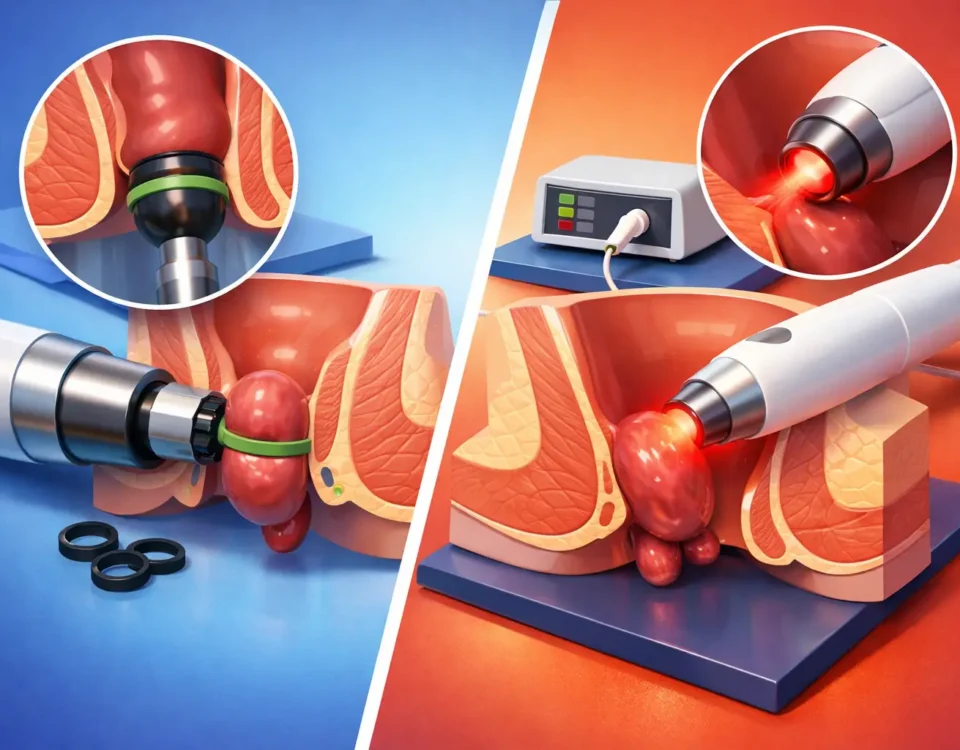
Banding works by placing a small band at the base of the internal hemorrhoid. This cuts off its blood supply so the hemorrhoid shrinks and resolves over time. Because internal hemorrhoids are a common source of painless bleeding, banding can directly address the problem rather than temporarily masking symptoms.
For the right patient, this approach offers several advantages. It is performed in the office, does not require traditional surgery, and usually involves little downtime. Many people return to normal activity the same day. That matters if you have been putting off care because you cannot take time away from work, family responsibilities, or daily routines.
It depends, of course, on what is actually causing your symptoms. External hemorrhoids, anal fissures, and mixed hemorrhoids may require a different plan. That is why an accurate exam matters. The right treatment starts with confirming the diagnosis instead of guessing based on internet searches alone.
What to expect at a hemorrhoid evaluation
A focused hemorrhoid specialist will typically review your bleeding pattern, bowel habits, pain level, and prior treatment attempts. Then they perform an exam to determine whether you are dealing with internal hemorrhoids, external hemorrhoids, an anal fissure, or another issue.
This visit is usually more straightforward than patients expect. Many people delay care because they feel embarrassed or assume they will be sent directly to surgery. In a specialized practice, the goal is often the opposite: identify the least invasive treatment that can solve the problem effectively.
At Hemorrhoid Centers of America, patients are evaluated for non-surgical treatment options designed to relieve bleeding, swelling, itching, and discomfort without the recovery demands of traditional surgery. For people who want fast, expert care and a prompt return to daily life, that focused approach can make a meaningful difference.
Can diet alone stop hemorrhoid bleeding?
Diet can help, but it is not always enough.
If constipation is driving your symptoms, improving hydration and fiber intake may reduce bleeding episodes by making bowel movements easier. Fruits, vegetables, beans, oats, and fiber supplements can all help. The key is consistency. Large swings between low-fiber eating and sudden high-fiber intake can cause bloating without solving the problem.
Still, diet does not shrink every problematic hemorrhoid. If bleeding has become a recurring issue, especially over weeks or months, relying on diet alone may prolong the problem. The better question is not whether fiber is good. It is whether fiber by itself is enough for your case.
A few signs the problem may be more than hemorrhoids
Hemorrhoids are common, but they are not the only cause of rectal bleeding. Pain during bowel movements may suggest an anal fissure. Ongoing abdominal symptoms, changes in bowel habits, dark stool, or unexplained fatigue may point in another direction.
That does not mean every case is serious. It does mean repeated bleeding deserves a real diagnosis. Patients often feel relief just from knowing what they are dealing with and having a plan that is designed for that exact condition.
The most practical next step
If the bleeding is light and new, start with stool-softening habits, less straining, warm baths, and gentler hygiene. If the bleeding keeps happening, do not spend months cycling through temporary fixes.
Persistent hemorrhoid bleeding is treatable, and many patients can get relief without surgery, anesthesia, or a long recovery. The right care is often faster and simpler than expected. If you are ready to stop wondering and start addressing the cause, a focused hemorrhoid evaluation is a smart next move.
You do not have to keep working around bleeding, discomfort, or embarrassment. Getting it checked is not overreacting. It is how problems like this finally get solved.