
Hemorrhoid Symptoms vs Anal Fissure
May 17, 2026
Same Day Hemorrhoid Treatment Benefits
May 21, 2026
A lot of patients wait longer than they should because they are trying to answer one uncomfortable question at home: is this anal fissure vs hemorrhoid pain? The confusion is understandable. Both can cause rectal pain, bleeding, and irritation. But the pattern of symptoms is often different, and that difference matters because the right treatment can bring relief much faster.
Anal fissure vs hemorrhoid pain: what feels different?
The simplest distinction is this: anal fissure pain is usually sharp, tearing, or cutting, while hemorrhoid pain is more often pressure, swelling, throbbing, or soreness.
An anal fissure is a small tear in the lining of the anus. Because that tissue is sensitive, a fissure often causes intense pain during a bowel movement and then lingering pain afterward. Some patients describe it as passing glass or feeling a knife-like sting. The pain may last minutes or even hours after using the bathroom.
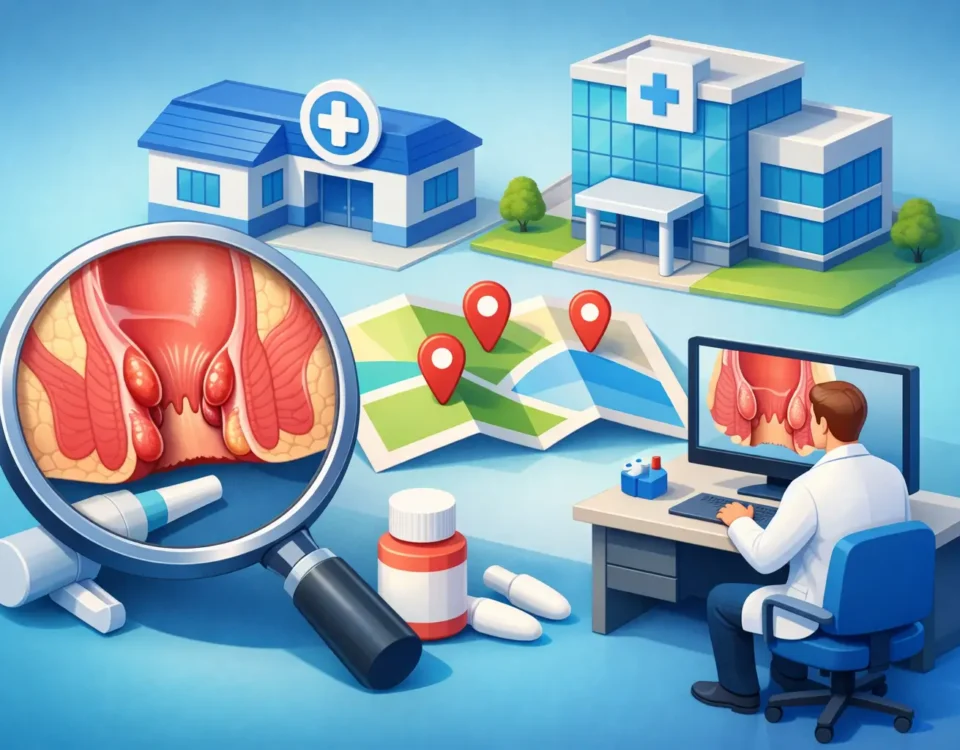
Hemorrhoids are swollen veins in or around the rectum and anus. They do not always cause pain. In fact, many internal hemorrhoids bleed without hurting much at all. When hemorrhoids do become painful, the discomfort tends to feel more like pressure, fullness, irritation, or a tender lump, especially with external hemorrhoids or thrombosed hemorrhoids.
That is why the timing of pain can tell you a lot. If pain peaks during a bowel movement and continues as a burning or spasm-like ache afterward, a fissure becomes more likely. If you feel swelling, itching, pressure, or tenderness around the anus, hemorrhoids may be the better fit.
How symptoms usually show up
What anal fissure pain typically feels like
Fissure pain is usually very specific. It often starts with constipation, straining, or passage of a hard stool. Patients may notice bright red blood on toilet paper, but the amount is usually small. The pain is often out of proportion to the visible bleeding.
Another clue is muscle spasm. A fissure can trigger the anal sphincter to tighten, which reduces blood flow to the tear and makes healing harder. That can create a cycle of pain, tightness, and repeated injury with each bowel movement.
Many people with fissures become anxious about going to the bathroom because they expect pain every time. That pattern is less common with typical hemorrhoids.
What hemorrhoid pain typically feels like
Hemorrhoid symptoms vary based on the type. Internal hemorrhoids are inside the rectum and often cause painless bleeding, moisture, or a sensation of tissue bulging during bowel movements. External hemorrhoids are under the skin around the anus and can itch, swell, or feel tender.
Pain becomes more noticeable when an external hemorrhoid is irritated or when a blood clot forms inside it. A thrombosed hemorrhoid can cause sudden, significant pain and a firm lump near the anus. Even then, the pain usually feels more like pressure and swelling than a tearing sensation.
With hemorrhoids, itching and prolapse are also common. Patients may say they feel something protruding, especially after straining. That symptom points more toward hemorrhoids than fissures.
Bleeding can look similar, but the context matters
Both fissures and hemorrhoids can cause bright red blood. That is one reason people mix them up. The color is often the same because the bleeding comes from the lower part of the digestive tract.
The difference is how the bleeding happens. A fissure usually causes a small streak of bright red blood on toilet paper or on the surface of the stool, paired with sharp pain. Hemorrhoids can also cause bright red blood, but internal hemorrhoids in particular may bleed with little or no pain.
If bleeding is heavy, recurrent, or happening without a clear explanation, it should be evaluated. Rectal bleeding should never be dismissed automatically as hemorrhoids, especially in adults who have not had a proper exam.
Why self-diagnosis goes wrong
The anal area has a limited range of symptoms. Pain, burning, itching, bleeding, and swelling can overlap across multiple conditions. A fissure and a hemorrhoid can also occur at the same time, which makes symptom-matching even less reliable.
Patients often assume any anorectal discomfort is hemorrhoids because that is the condition they have heard about most. But a fissure may be the main source of pain, especially if the pain is severe during bowel movements. On the other hand, someone may focus on bleeding and miss the fact that prolapsing internal hemorrhoids are driving the problem.
This is where a focused exam matters. A specialist can usually distinguish the cause quickly and recommend treatment based on what is actually happening, not just what sounds familiar online.
Causes and triggers are not identical
Fissures and hemorrhoids both become more likely with constipation and straining, but they develop differently.
Fissures usually come from trauma to the anal lining. Hard stools are a common trigger, but diarrhea, childbirth, and repeated irritation can also contribute. Once a fissure forms, ongoing muscle tightness can prevent healing.
Hemorrhoids develop when veins in the anorectal area become enlarged or swollen. Straining, prolonged sitting on the toilet, chronic constipation, pregnancy, and heavy lifting can all play a role. Age can also contribute as supporting tissues weaken over time.
The overlap in triggers is real, but the underlying problem is different. One is a tear. The other is swollen vascular tissue. That distinction affects the best treatment approach.
When pain points to a fissure instead of hemorrhoids
Signs that favor a fissure
If your pain is sharp and intense with bowel movements, lingers afterward, and is paired with small amounts of bright red blood, a fissure is more likely. If you also feel tightness or spasm rather than a lump or swollen tissue, that leans even more toward fissure.
Pain from a fissure is often severe enough to change behavior. Patients may delay bowel movements, dread using the bathroom, or become stuck in a constipation cycle because they are trying to avoid pain.
Signs that favor hemorrhoids
If your main symptoms are swelling, itching, a feeling of fullness, protruding tissue, or bleeding with less dramatic pain, hemorrhoids become more likely. A visible or palpable lump near the anus, especially if tender, may suggest an external hemorrhoid. A sudden painful lump can indicate a thrombosed hemorrhoid.
That said, symptoms do not always read like a textbook. Some hemorrhoids are more painful than expected, and some fissures present with less obvious tearing pain. That is why persistent symptoms deserve an exam.
Treatment depends on the diagnosis
This is the part patients care about most: what will actually help, and how quickly?
For fissures, treatment often aims to reduce pain, relax the sphincter muscle, and allow the tear to heal. That may include stool softening, hydration, dietary adjustments, and prescription topical medications. If a fissure becomes chronic, office-based treatment may be recommended to break the cycle of pain and poor healing.
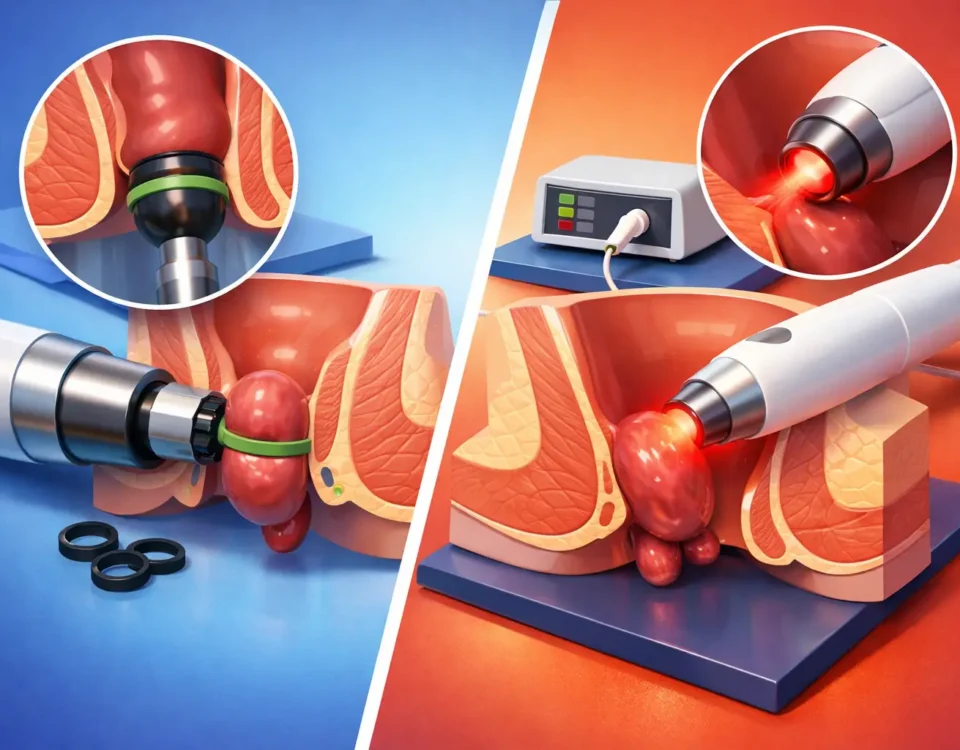
For hemorrhoids, treatment depends on whether they are internal, external, bleeding, prolapsing, or thrombosed. Some improve with conservative care, but ongoing bleeding, swelling, or prolapse often needs more targeted treatment. For many internal hemorrhoids, office-based banding can treat the source without traditional surgery, anesthesia, or a long recovery.
This is one reason specialized care makes such a difference. The treatment that helps a fissure is not the same as the treatment that helps a prolapsing internal hemorrhoid. Using the wrong approach can delay relief.
When to stop waiting and get evaluated
If symptoms have lasted more than a week or two, if pain is significant, or if bleeding keeps happening, it is time to be seen. You should also seek prompt evaluation if there is a painful lump, worsening symptoms, or any uncertainty about what is causing the bleeding.
Many patients delay care because they fear surgery, anesthesia, or a difficult recovery. In reality, not every anorectal problem requires an operating room. At Hemorrhoid Centers of America, patients are evaluated by board-certified surgeons who focus on non-surgical treatment options for hemorrhoids and anal fissures, with care designed to fit normal life as much as possible.
There is also a practical reason not to wait. Chronic fissures can become harder to heal, and hemorrhoids that continue to bleed or prolapse usually do not resolve just because time passes. Early treatment is often simpler and faster.
The bottom line on anal fissure vs hemorrhoid pain
If the pain feels sharp, tearing, and closely tied to bowel movements, think fissure. If it feels swollen, itchy, tender, or associated with bulging tissue, think hemorrhoids. But because symptoms overlap, the safest and fastest path to relief is not guessing perfectly at home. It is getting the right diagnosis and moving toward treatment that matches the actual cause.
You do not need to keep managing pain, bleeding, or irritation by trial and error. When the diagnosis is clear, relief usually feels much more within reach.