

Guide to Hemorrhoid Banding Candidates
April 29, 2026
Non Surgical Hemorrhoid Treatment Review
May 3, 2026
If hemorrhoids keep coming back, the problem is usually no longer just a bad week or a one-time flare-up. Recurrent symptoms often mean the underlying hemorrhoid tissue is still there, still irritated, and still likely to cause more bleeding, itching, swelling, or pain. That is why the best options for recurrent hemorrhoids are not always the same as the best options for a first episode.
Many people spend months or years rotating through creams, wipes, fiber supplements, and home remedies. Those measures can help, especially during mild flare-ups, but recurring hemorrhoids often need a more targeted plan. The right treatment depends on what type of hemorrhoids you have, how often symptoms return, and whether the main issue is bleeding, prolapse, itching, or discomfort.
What recurrent hemorrhoids usually mean
Hemorrhoids are swollen vascular tissue in and around the rectum and anus. They can be internal, external, or a combination of both. When symptoms come back repeatedly, it often means the veins and supporting tissue have remained enlarged or weakened, even if symptoms temporarily improved.
That matters because recurrent bleeding is different from occasional irritation after constipation, and repeated swelling or prolapse may not respond well to over-the-counter care alone. Some patients also assume they are dealing with hemorrhoids when the real problem is an anal fissure, skin irritation, or another anorectal condition. A focused evaluation helps make sure you are treating the right cause.
Best options for recurrent hemorrhoids at different stages
The best options for recurrent hemorrhoids usually fall into three categories: symptom control, prevention, and office-based treatment. For many patients, the most effective approach includes all three.
Conservative care can still help, but it has limits
If symptoms are mild and infrequent, conservative care may reduce irritation enough to keep a flare-up from getting worse. This typically includes increasing fiber, drinking more water, avoiding straining, and limiting long periods of sitting on the toilet. Warm baths may also calm irritation, and short-term use of topical medication may reduce itching or inflammation.
The trade-off is that these steps manage symptoms more than they remove the source. If hemorrhoids keep bleeding or prolapsing, lifestyle changes alone may not solve the problem. Patients often notice a pattern: they feel better for a few days, then symptoms return with the next episode of constipation, travel, heavy lifting, or prolonged sitting.
Medication may be part of the answer
For some patients, custom medication protocols can reduce inflammation, pain, and irritation more effectively than standard drugstore products. This can be useful when recurrent hemorrhoids are causing persistent discomfort or when there is overlapping irritation from fissures or skin inflammation.
Still, medication is usually supportive rather than definitive for recurring hemorrhoids. It can improve comfort and help tissue heal, but it may not stop repeated bleeding or prolapse if enlarged internal hemorrhoids remain untreated.
Office-based hemorrhoid banding is often the most effective next step
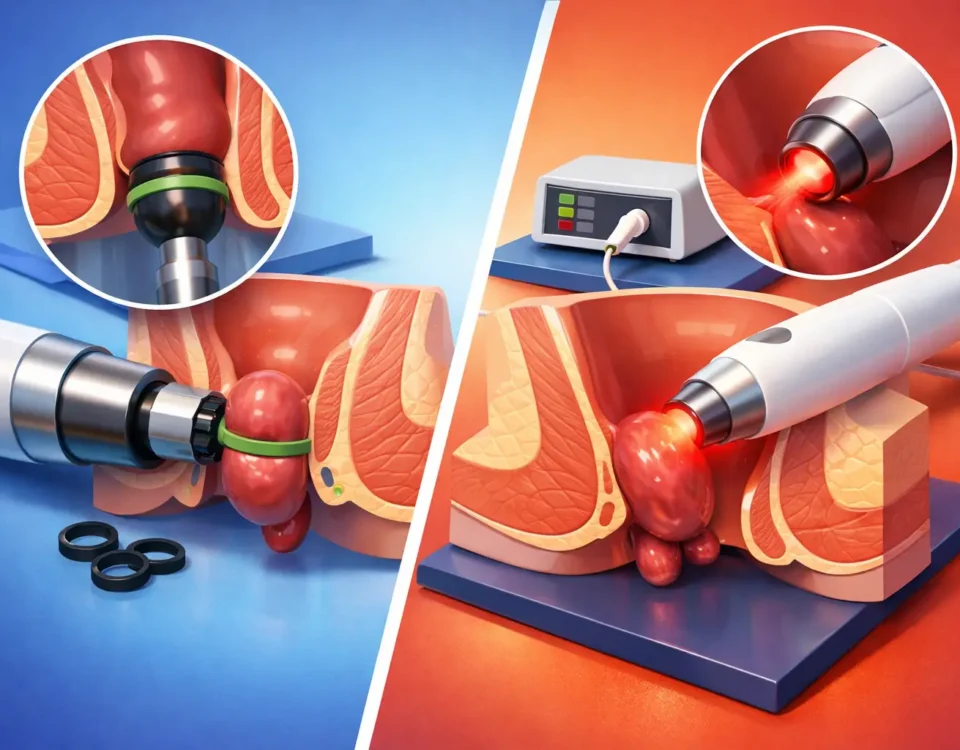
When hemorrhoids recur despite home treatment, office-based banding is often one of the best options. This approach is commonly used for internal hemorrhoids that bleed, swell, or protrude. During the procedure, a small band is placed around the hemorrhoid tissue to cut off its blood supply. The tissue then shrinks and resolves over time.
For the right patient, banding offers a practical middle ground between repeated self-treatment and formal surgery. It is performed in the office, does not require anesthesia, and typically involves little downtime. Many patients return to normal activity the same day, which matters when symptoms are disruptive but life and work cannot stop.
This is also where specialist care makes a real difference. Recurrent hemorrhoids are not just about symptom relief in the moment. The goal is to identify which hemorrhoids are driving the problem and treat them in a way that reduces the cycle of repeat flare-ups.
When home remedies are no longer enough
A good rule is to stop relying on self-treatment alone if symptoms keep returning, if bleeding is happening more than once, or if the problem is affecting daily life. Recurrent hemorrhoids can interfere with work, exercise, sleep, and even simple things like sitting comfortably.
There are also situations where symptoms sound like hemorrhoids but should not be assumed to be hemorrhoids. Rectal bleeding always deserves proper evaluation. Pain that is severe or sharp may suggest a fissure or a thrombosed external hemorrhoid. A lump that does not improve, changes in bowel habits, or ongoing drainage should also be assessed directly.
Waiting too long can turn a manageable office issue into a longer, more frustrating problem. Many patients delay care because they expect surgery, anesthesia, or an embarrassing hospital experience. In reality, non-surgical treatment is often available and much easier than they expected.
How doctors decide on the best options for recurrent hemorrhoids
Treatment should match the symptoms, not just the label. A patient with repeated bright red bleeding from internal hemorrhoids may be an excellent candidate for banding. Someone with mostly irritation and hygiene difficulty from external tissue may need a different plan. If constipation is the main trigger, prevention becomes a central part of treatment.
Severity matters too. Mild recurrence may improve with habit changes and medication support. Moderate or frequent recurrence often points toward office-based procedural care. More advanced cases can require a broader discussion, but that does not mean surgery is automatically the next step.
A specialized hemorrhoid practice is often better positioned to sort through these distinctions quickly. Instead of viewing treatment as a one-size-fits-all pathway, the evaluation focuses on the exact source of bleeding, pain, swelling, or prolapse and on the least disruptive way to treat it.
What patients usually want to know most
Most adults dealing with recurrent hemorrhoids are not asking for a long medical lecture. They want to know three things: Will this work, will it hurt, and how fast can I get back to normal?
Those are reasonable questions. The answer depends on the treatment, but non-surgical office care is designed around those concerns. Compared with hospital-based surgery, office procedures are generally far less disruptive. They avoid anesthesia, usually involve minimal recovery, and are intended to resolve symptoms without putting daily life on hold.
That does not mean every patient feels exactly the same afterward. Some have only mild pressure or temporary discomfort. Others may need staged treatment if multiple hemorrhoids are involved. The important point is that recurrent hemorrhoids often respond well to targeted office treatment, especially when the issue is internal hemorrhoid bleeding or prolapse.
Preventing the next recurrence after treatment
Even after a successful procedure, prevention still matters. Hemorrhoid tissue is affected by pressure and straining, so the habits that triggered earlier flares can still work against you if they continue.
The most useful prevention steps are usually simple and consistent: keep stools soft, avoid prolonged toilet sitting, do not strain, stay hydrated, and respond to the urge to have a bowel movement instead of delaying it. If long hours of sitting are part of your job, regular movement breaks can help reduce pressure.
Patients sometimes assume treatment means they never need to think about bowel habits again. In reality, the best long-term results come from combining effective treatment with practical prevention. That combination is what helps reduce the pattern of repeat symptoms.
Why specialized care changes the experience
Hemorrhoids are common, but effective treatment still depends on accuracy and experience. A specialized center sees these conditions every day and is built around treating them efficiently, discreetly, and without unnecessary escalation. That matters when you are tired of temporary fixes and want a clear plan.
At Hemorrhoid Centers of America, that focused model is designed around non-surgical relief, office-based care, and rapid return to normal activity. For patients with recurrent symptoms, that kind of streamlined treatment pathway can feel very different from a general referral process that leads straight to surgery discussions.
If hemorrhoids keep coming back, you do not have to keep managing the same symptoms on repeat. The most helpful next step is often a direct evaluation that identifies the real cause and matches it with treatment that is built to last.