


Best Options for Recurrent Hemorrhoids
May 1, 2026
How to Heal Anal Fissure Fast
May 5, 2026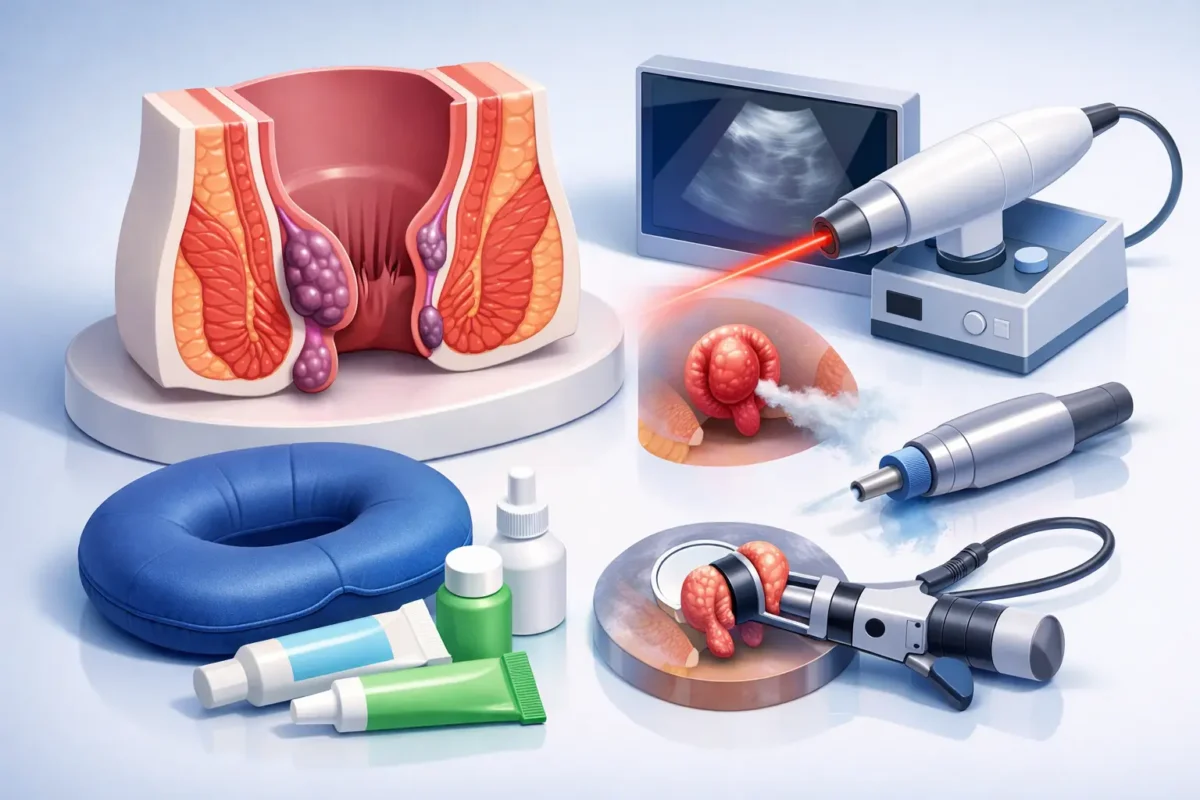
If you are reading a non surgical hemorrhoid treatment review, chances are you are not looking for theory. You want to know what actually helps with bleeding, itching, swelling, or pain, and whether you can get relief without surgery, anesthesia, or a long recovery. That is a practical question, and the answer depends on your symptoms, the type of hemorrhoid, and how long you have been dealing with it.
For many patients, the biggest surprise is that not all non-surgical treatments do the same job. Some options are meant for short-term symptom relief. Others are designed to treat the hemorrhoid itself. Knowing that difference can save time, money, and a lot of frustration.
Non surgical hemorrhoid treatment review: what patients should compare
Most non-surgical hemorrhoid care falls into three broad categories: at-home symptom management, prescription-based medical treatment, and office-based procedures. They are often discussed together, but they are not interchangeable.
At-home care includes creams, suppositories, wipes, sitz baths, stool softeners, and fiber support. These can reduce irritation and make bowel movements easier. For mild flare-ups, they may be enough. The trade-off is that they usually do not remove or permanently shrink internal hemorrhoids that continue to bleed or prolapse.
Prescription treatment can help more than over-the-counter products when inflammation is more severe or when a clinician identifies a related issue such as an anal fissure. A custom medication plan may calm tissue irritation, reduce spasm, and improve comfort. This approach is still conservative, but it is more targeted than self-treatment from the drugstore.
Office-based procedures are different because they aim to treat the source of the problem, not just the symptoms. The most established example is hemorrhoid banding for internal hemorrhoids. This is typically done in the office, without general anesthesia, and with minimal downtime. For the right patient, it can offer faster and more lasting relief than repeated cycles of creams and waiting.
How over-the-counter options really perform
Creams and suppositories are often the first thing people try, especially when symptoms start suddenly. They can be useful for itching, mild swelling, and irritation around the anus. Products with topical anesthetics may temporarily ease discomfort, while hydrocortisone-based treatments may reduce inflammation for a short period.
The limitation is that symptom relief is not the same as resolution. If you have recurrent bleeding, tissue that bulges during bowel movements, or pressure that keeps coming back, over-the-counter products may only be masking a condition that needs a more definitive evaluation. Some patients also overuse steroid creams, which can irritate or thin sensitive tissue if used longer than directed.
This does not make these products bad. It just means they work best as short-term support, not as a long-term plan for ongoing hemorrhoid disease.
Prescription care can bridge the gap
Prescription treatment is often overlooked in a basic non surgical hemorrhoid treatment review, but it matters. Patients do not always have hemorrhoids alone. Some have inflammation, fissures, skin irritation, constipation-related strain, or pelvic floor tension that makes symptoms worse.
In those cases, tailored medication can improve pain control and help tissue heal. That is especially important when the main symptom is pain, since painful symptoms are not always caused by internal hemorrhoids alone. A focused exam helps distinguish what is actually happening.
The strength of prescription care is specificity. The weakness is that medication still may not solve a structural problem, especially if internal hemorrhoids are bleeding repeatedly or prolapsing. When that is the case, a procedure may be the more effective next step.
Office procedures: where non-surgical treatment becomes more definitive
For many adults who want real relief without surgery, office treatment is the most meaningful category to review. Hemorrhoid banding is a common option for internal hemorrhoids and is widely used because it is efficient, well tolerated, and does not require the recovery most people associate with surgery.
In banding, a small band is placed at the base of the internal hemorrhoid tissue. This cuts off blood supply to that tissue so it shrinks and resolves over time. Because internal hemorrhoids arise above the pain-sensitive area, treatment is often far more manageable than patients expect.
That said, banding is not for everything. External hemorrhoids, thrombosed external hemorrhoids, and some complex anorectal conditions may need a different approach. This is where specialization matters. A quick diagnosis can tell you whether a non-surgical office procedure fits your situation or whether another treatment path makes more sense.
What a good non surgical hemorrhoid treatment review should say about recovery
Recovery is one of the main reasons patients seek non-surgical care. Most people are not comparing treatment options in a vacuum. They are thinking about work, family responsibilities, travel, exercise, and how much disruption they can realistically handle.
At-home remedies have the lowest barrier to entry, but they often come with the highest risk of delay. You can start them immediately, yet if symptoms continue for weeks or months, the condition may become more frustrating and more disruptive than a brief office visit would have been.
Prescription treatment usually adds very little downtime. Office procedures such as banding are also designed around convenience. Many patients return to normal daily activity the same day or soon after, although individual instructions vary and some temporary pressure or mild discomfort can occur.
By contrast, traditional surgery is generally reserved for more advanced cases or for patients who have not responded to less invasive treatment. It may be necessary in some situations, but it is not the starting point for most patients seeking care for common internal hemorrhoid symptoms.
Results: what works best, and for whom
The best treatment depends on what you are trying to solve.
If your symptoms are occasional and mild, fiber support, hydration, bowel habit changes, and short-term topical treatment may be enough. If symptoms are frequent but tied to inflammation or fissure-related irritation, a clinician-directed medication plan may help substantially.
If you are dealing with repeat bleeding, prolapse, or persistent internal hemorrhoid symptoms that keep returning despite home care, office-based treatment tends to offer a stronger answer. That is the point where many patients realize they were not failing treatment. They were simply using symptom tools for a condition that needed procedural care.
This is also why specialized care can make such a difference. A focused hemorrhoid practice sees these patterns every day and can usually identify quickly whether you are a good candidate for non-surgical treatment. At Hemorrhoid Centers of America, that focus is built around office-based relief, fast evaluation, and avoiding unnecessary surgery whenever possible.
When to stop reading reviews and get examined
Reviews are helpful, but they have limits. Rectal bleeding should not be self-diagnosed indefinitely. Pain that is severe, persistent swelling, drainage, or symptoms that do not improve deserve a medical evaluation. The same is true if you have been rotating through creams and wipes for months with no real progress.
Embarrassment causes many people to wait longer than they should. That delay is common, and it is understandable. But hemorrhoids and fissures are routine conditions for experienced specialists. Getting examined is usually much less stressful than living with daily discomfort and uncertainty.
A proper assessment also protects you from assuming every symptom is a hemorrhoid. Other anorectal and gastrointestinal issues can overlap, and the right treatment starts with the right diagnosis.
The bottom line on non-surgical treatment
A fair non surgical hemorrhoid treatment review should not pretend one option works for everyone. Creams and home care can help mild flares. Prescription treatment can target inflammation and related conditions. Office procedures such as hemorrhoid banding often offer the clearest path to lasting relief for internal hemorrhoids without the burden of traditional surgery.
If your symptoms are mild and improving, conservative care may be reasonable. If they are recurring, disruptive, or simply not responding, the next smart move is not more guesswork. It is getting answers from a specialist who can tell you, clearly and quickly, what will actually help you feel normal again.