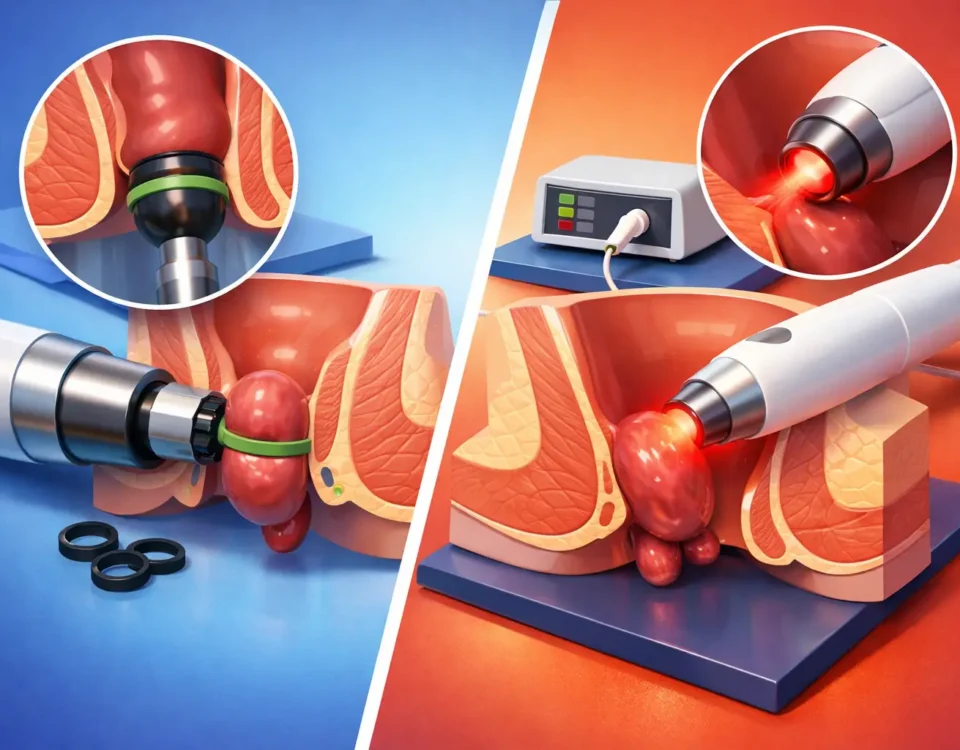


Hemorrhoid Banding Versus Infrared Coagulation
August 23, 2026
Mucus after a bowel movement can be alarming, especially when it appears on toilet paper, in the toilet, or in your underwear. So, can hemorrhoids cause mucus? Yes, they can – particularly internal hemorrhoids that are swollen, irritated, or beginning to protrude from the anus. But mucus is not specific to hemorrhoids, which is why a proper evaluation matters when the symptom is new, persistent, or accompanied by bleeding or pain.
Hemorrhoids are common and highly treatable. You do not need to live with ongoing irritation or assume that every rectal symptom will resolve on its own. A focused exam can identify what is causing the problem and help you move toward relief without automatically resorting to surgery.
Can Hemorrhoids Cause Mucus?
Internal hemorrhoids develop inside the lower rectum, where they are covered by tissue that can produce mucus. When these veins become enlarged or inflamed, they may interfere with the normal closure of the anal canal. That can allow small amounts of clear, whitish, or yellowish mucus to leak out.
Mucus is more likely when an internal hemorrhoid prolapses, meaning it bulges outside the anus during or after a bowel movement. The protruding tissue can become irritated by stool, wiping, moisture, and friction. In response, the area may produce more mucus. Some patients notice a damp feeling, staining in underwear, itching, or a sensation that they have not fully cleaned after using the restroom.
External hemorrhoids can cause itching, swelling, and discomfort around the anus, but mucus is more commonly associated with internal hemorrhoids or prolapsing tissue. The symptoms can overlap, and it is not always possible to tell what type of hemorrhoid is present without an exam.
Why Mucus Can Be So Irritating
Rectal mucus is not always painful by itself, but it can keep the skin around the anus moist. That moisture can lead to itching, burning, redness, and soreness. Frequent wiping may make matters worse by further irritating already sensitive skin.
Many people try to manage this cycle with scented wipes, harsh soaps, or repeated cleansing. Those approaches can backfire. Fragrances and alcohol-based products may irritate the skin, while excessive wiping can create tiny abrasions. Gentle cleaning with water, patting dry, and using plain, soft toilet paper can be more comfortable while you arrange care.
Mucus may also occur alongside other familiar hemorrhoid symptoms, including bright red bleeding with bowel movements, itching, pressure, swelling, and tissue that comes out during straining. Not every patient has all of these symptoms. Some have painless bleeding, while others are primarily bothered by moisture and irritation.
Other Conditions That Can Cause Rectal Mucus
Although hemorrhoids can produce mucus, they are not the only possible explanation. Rectal mucus can occur with anal fissures, inflammation of the rectum or colon, infections, inflammatory bowel disease, irritable bowel syndrome, rectal prolapse, and certain growths in the colon or rectum.
This does not mean mucus automatically signals a serious condition. It means self-diagnosis has limits. Hemorrhoid symptoms often resemble symptoms from other anorectal and digestive conditions. A clinician can examine the area and determine whether hemorrhoids are actually the source of the problem.
An anal fissure, for example, is a small tear in the lining of the anal canal. It more often causes sharp pain during or after a bowel movement, sometimes with bleeding, but irritation around a fissure may also lead to discharge or moisture. The treatment approach differs from hemorrhoid treatment, making an accurate diagnosis especially valuable.
When Mucus With Hemorrhoids Needs Prompt Attention
A small amount of mucus after straining may be related to irritated hemorrhoids. Still, persistent symptoms deserve medical attention, especially if they are affecting your comfort, workday, sleep, or confidence.
Seek prompt evaluation if you have any of the following:
- Rectal bleeding that is heavy, recurrent, or not clearly linked to a bowel movement
- Black or tar-like stools, dizziness, weakness, or fainting
- Severe anal or rectal pain, fever, or drainage that looks like pus
- Unexplained weight loss, a lasting change in bowel habits, or mucus that continues despite conservative care
Adults over 45, people with a personal or family history of colorectal cancer or polyps, and anyone who is overdue for recommended colorectal cancer screening should be especially careful not to assume bleeding or mucus is only from hemorrhoids.
What You Can Do While Waiting for an Evaluation
Reducing strain is one of the most practical ways to calm hemorrhoid symptoms. Constipation and prolonged sitting on the toilet place added pressure on hemorrhoidal tissue. Aim for soft, easy-to-pass stools by drinking enough water, gradually increasing dietary fiber, and staying physically active when possible.
Try not to force a bowel movement or sit on the toilet for extended periods scrolling on your phone. If you feel the urge, go when you can, but avoid pushing. A warm sitz bath may provide short-term comfort for itching or irritation. Over-the-counter creams can sometimes ease symptoms briefly, but they do not remove internal hemorrhoids or correct prolapse.
If mucus is causing skin irritation, keep the area clean and dry without scrubbing. Loose, breathable underwear may help reduce trapped moisture. These steps can make you more comfortable, but persistent mucus, bleeding, or prolapse should be assessed rather than managed indefinitely at home.
Non-Surgical Treatment Can Address the Cause
For many patients, office-based treatment can relieve symptomatic internal hemorrhoids without traditional surgery, anesthesia, or a lengthy recovery. Rubber band ligation, commonly called hemorrhoid banding, is a proven option for appropriate internal hemorrhoids. A small band is placed at the base of the hemorrhoid, cutting off its blood supply so the tissue shrinks over time.
The right treatment depends on the location, size, and severity of the hemorrhoids, as well as whether another condition is present. Some patients benefit from medication protocols and bowel-habit adjustments. Others need a procedure to address persistent bleeding, prolapse, mucus leakage, or recurrent irritation.
At Hemorrhoid Centers of America, board-certified providers focus on diagnosing and treating hemorrhoids and anal fissures with non-surgical options whenever appropriate. For eligible patients, treatment can often be performed in the office with minimal disruption to the day.
Do Not Let Embarrassment Delay Relief
Rectal symptoms are personal, but they are also extremely common. Delaying care can mean more weeks or months of discomfort, repeated bleeding, and uncertainty about what is causing the mucus. A specialized evaluation is discreet, straightforward, and designed to give you clear answers.
If mucus, itching, bleeding, or a feeling of prolapse keeps returning, it is reasonable to get checked. The goal is not simply to mask the symptom. It is to identify the cause and help you get back to comfortable, normal daily life.