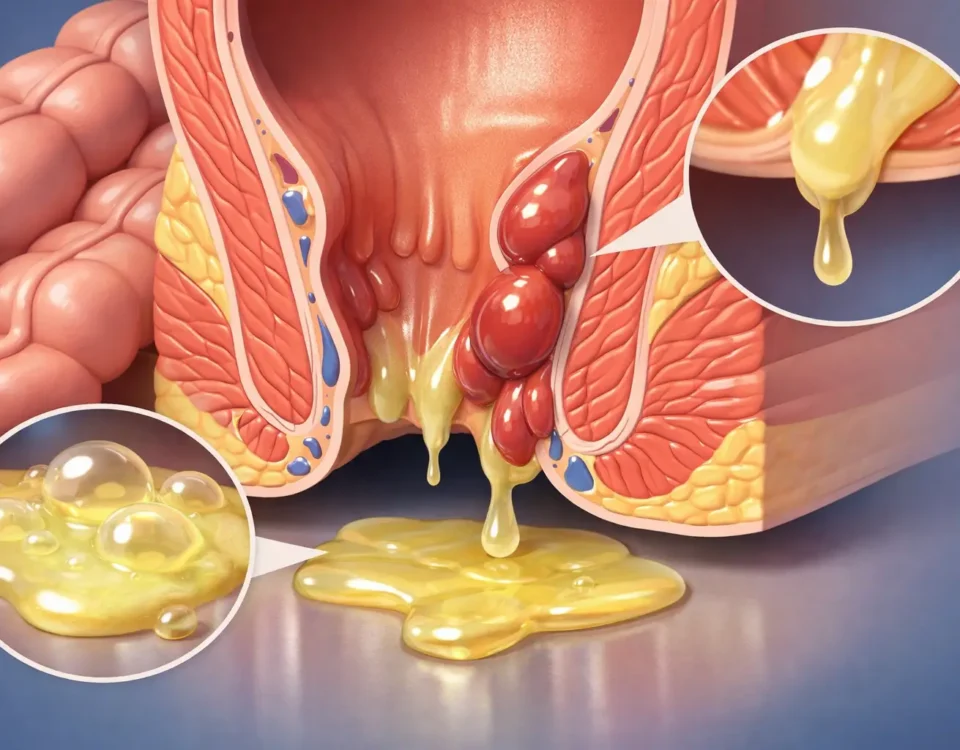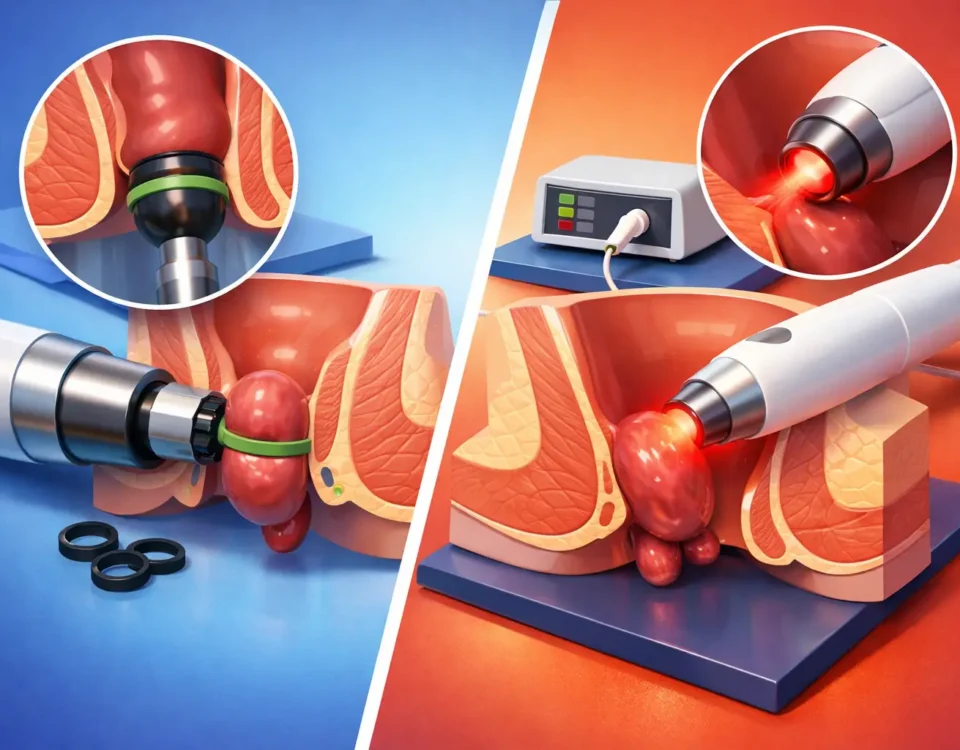


Scottsdale Anal Fissure Treatment Options
May 25, 2026
Rubber Band Ligation Review: What to Expect
May 29, 2026
Seeing blood after a bowel movement can make people hesitate for weeks, sometimes months, before scheduling an appointment. That delay is common. But when patients ask how doctors diagnose internal hemorrhoids, the answer is usually more straightforward – and much less intimidating – than they expect.
Internal hemorrhoids develop inside the rectum, so they are not always visible or painful in the way external hemorrhoids can be. Many people notice bright red bleeding, a sense of pressure, mucus, or tissue that seems to protrude during bowel movements. Because several other conditions can cause similar symptoms, a proper diagnosis matters. It helps confirm whether hemorrhoids are truly the issue and whether non-surgical treatment is likely to bring relief quickly.
Why diagnosis matters before treatment
A lot of patients assume rectal bleeding automatically means hemorrhoids. Sometimes that is true. Sometimes it is not. Anal fissures, polyps, inflammation, and more serious gastrointestinal conditions can overlap with hemorrhoid symptoms.
That is why an experienced physician does not rely on symptoms alone. The goal is not just to identify swollen internal hemorrhoids. It is to rule out other causes, determine how advanced the hemorrhoids are, and decide whether office-based treatment is appropriate. That level of specificity is what leads to faster relief and helps patients avoid unnecessary surgery.
How doctors diagnose internal hemorrhoids at a visit
The diagnostic process usually starts with a conversation, not a procedure. Your doctor will ask when bleeding started, whether it happens with every bowel movement, whether you feel pain, itching, swelling, or prolapse, and whether you have constipation, diarrhea, straining, or a history of similar symptoms.
They may also ask about pregnancy history, time spent sitting, heavy lifting, prior colonoscopy results, family history of colon disease, and any change in bowel habits. These questions are not filler. They help the physician tell the difference between a common hemorrhoid presentation and symptoms that deserve a broader workup.
After that, the physical exam begins. In many cases, diagnosis can be made in the office with a focused anorectal exam. This is typically brief and performed with attention to privacy and patient comfort.
Medical history comes first
The history often provides the first major clue. Bright red blood on toilet paper or in the bowl, especially without significant pain, often points toward internal hemorrhoids. By contrast, sharp pain during bowel movements may raise suspicion for an anal fissure. Darker blood, abdominal symptoms, weight loss, or a major shift in bowel habits may push the doctor to look beyond hemorrhoids.
This is one reason specialists tend to move efficiently during evaluation. They know what symptom patterns fit hemorrhoids and what patterns need more investigation.
External inspection and digital rectal exam
Even though the problem may be internal, the physician often starts by looking at the outside of the anal area. This can reveal external hemorrhoids, fissures, skin irritation, inflammation, or prolapsed internal hemorrhoids that have moved outward.
A digital rectal exam may follow. During this exam, the doctor gently inserts a gloved, lubricated finger into the rectum to feel for abnormalities. Patients often worry this will be painful, but for most people it is brief and tolerable. The exam can help identify masses, tenderness, muscle tone issues, or other findings that may not match a simple internal hemorrhoid diagnosis.
Anoscopy is often the key step
If you want the clearest answer to how doctors diagnose internal hemorrhoids, anoscopy is often the most useful part of the exam. An anoscope is a short, lighted instrument that allows the physician to view the lower rectum and anal canal directly.
Because internal hemorrhoids sit inside the rectum, they may not be detectable from the outside. Anoscopy gives the doctor a direct look at swollen hemorrhoidal tissue, bleeding points, and whether the hemorrhoids are prolapsing. It also helps determine severity. That matters because treatment decisions often depend on grading.
Internal hemorrhoids are commonly described in grades. Grade I hemorrhoids stay inside. Grade II may prolapse during a bowel movement but go back in on their own. Grade III prolapse and need to be pushed back manually. Grade IV remain prolapsed. This grading helps the physician decide whether lifestyle changes, medication, office-based banding, or another approach makes the most sense.
What the exam usually feels like
Most patients expect the visit to be more uncomfortable and more embarrassing than it really is. In a specialized setting, the exam is typically efficient, respectful, and focused on getting answers quickly.
You may be asked to change positions for the exam, often lying on your side. The doctor explains each step, and the actual hands-on portion usually takes only a few minutes. Pressure is more common than pain. If you already have irritation, tenderness may be present, but the exam is not designed to be a major ordeal.
For patients who have delayed care because they fear surgery, there is another important point: diagnosis does not automatically mean a hospital procedure is next. In many cases, internal hemorrhoids can be managed without traditional surgery, often through office-based treatment with minimal downtime.
When doctors order more than an office exam
Not every patient needs additional testing. If symptoms and exam findings clearly fit internal hemorrhoids, the office evaluation may be enough to make a diagnosis and start treatment.
Still, there are situations where a doctor may recommend further evaluation. Age matters. Personal and family history matter. So do red-flag symptoms. If bleeding is persistent, bowel habits have changed, anemia is present, abdominal symptoms are part of the picture, or the exam does not fully explain what is happening, a colonoscopy or other gastrointestinal evaluation may be recommended.
This does not mean the physician thinks the worst. It means they are being careful. Good hemorrhoid care is not just about treating what is common. It is about not missing what is less common but more serious.
Conditions that can be confused with internal hemorrhoids
One reason people should not self-diagnose for too long is that several anorectal conditions overlap. Anal fissures can cause bleeding and discomfort. Rectal polyps can bleed. Proctitis and other inflammatory conditions can irritate the rectal lining. Even skin irritation from frequent wiping can muddy the picture.
Then there is the pain question. Internal hemorrhoids often bleed more than they hurt, unless they prolapse or become significantly irritated. If pain is the leading symptom, doctors will think carefully about fissures, thrombosed external hemorrhoids, infection, or another source of inflammation.
That is where specialization helps. A focused anorectal exam can often sort out these differences quickly and keep patients from wasting more time on creams that are not addressing the real problem.
How diagnosis connects to non-surgical treatment
Once the doctor confirms internal hemorrhoids, the next step is choosing treatment based on severity and symptoms. Mild cases may improve with bowel habit changes, fiber support, hydration, and targeted medication. But if bleeding, prolapse, or recurring irritation continue, office-based procedures are often the more effective path.
For many patients, banding becomes part of that discussion. This is one reason the diagnostic visit matters so much. The same exam that identifies internal hemorrhoids can also show whether they are in the right stage and location for a non-surgical procedure performed in the office.
That focused approach is especially valuable for patients who want relief without anesthesia, a hospital stay, or a long recovery. At Hemorrhoid Centers of America, that combination of precise diagnosis and non-surgical treatment is central to care. It gives patients a clear answer, a practical treatment plan, and a faster return to normal routine.
When to schedule an evaluation
If you are seeing rectal bleeding, noticing tissue prolapse, or dealing with recurring itching, pressure, or irritation, it is time to stop guessing. Waiting does not usually make the process easier. In some cases, it allows hemorrhoids to become more symptomatic and harder to ignore.
A proper evaluation is not about overreacting. It is about getting a clear diagnosis from a physician who can tell whether you are dealing with internal hemorrhoids, a fissure, or something else entirely. Most patients feel better once they have an answer – and better still once they learn that effective treatment may be simpler than they thought.
If you have been putting off care because of embarrassment or fear of surgery, this is the part worth remembering: the first step is just getting the right diagnosis. Once you know exactly what is causing the bleeding or irritation, relief starts to feel a lot more within reach.