

Can a Fissure Heal Without Surgery? What to Know
July 12, 2026
Office Treatment vs Hospital Hemorrhoid Care
July 17, 2026
When hemorrhoid symptoms keep returning, the problem is rarely solved by buying another tube of cream. Recurrent bleeding, itching, swelling, pain, or tissue that protrudes can signal that the underlying hemorrhoid needs targeted care. Understanding how specialists treat recurrent hemorrhoids can replace uncertainty with a clear path toward relief that does not automatically involve traditional surgery.
Many people wait because symptoms are embarrassing or because they assume treatment will mean a hospital visit, anesthesia, and a long recovery. A focused hemorrhoid specialist evaluates the actual cause of the symptoms, determines the grade and location of the hemorrhoids, and recommends treatment designed to fit the condition and the patient’s daily life.
Why Hemorrhoids Return
Hemorrhoids are swollen vascular cushions in and around the anal canal. They can flare when there is repeated pressure from constipation, straining, prolonged sitting on the toilet, pregnancy, heavy lifting, chronic diarrhea, or simply the natural weakening of supporting tissue over time.
Over-the-counter products may calm irritation for a short period, but they do not remove enlarged internal hemorrhoids or correct hemorrhoids that repeatedly prolapse. Symptoms can also recur when a person treats only the latest flare rather than the hemorrhoid itself. That is why a patient may feel better for a few days or weeks, then see bleeding or swelling return.
Not every symptom that feels like a hemorrhoid is one. Anal fissures, skin irritation, inflammatory conditions, polyps, and other sources of rectal bleeding can cause similar concerns. Persistent or recurrent bleeding deserves a professional evaluation, particularly for adults over 45, people with a family history of colorectal cancer, or anyone with changes in bowel habits, unexplained weight loss, or fatigue.
How Specialists Treat Recurrent Hemorrhoids
Specialized care starts with diagnosis, not assumptions. A provider listens to the pattern of symptoms: whether bleeding appears on toilet paper, whether tissue comes out with bowel movements, whether it returns on its own, and whether pain is sharp, burning, or constant. This detail helps distinguish internal hemorrhoids, external hemorrhoids, fissures, and other conditions.
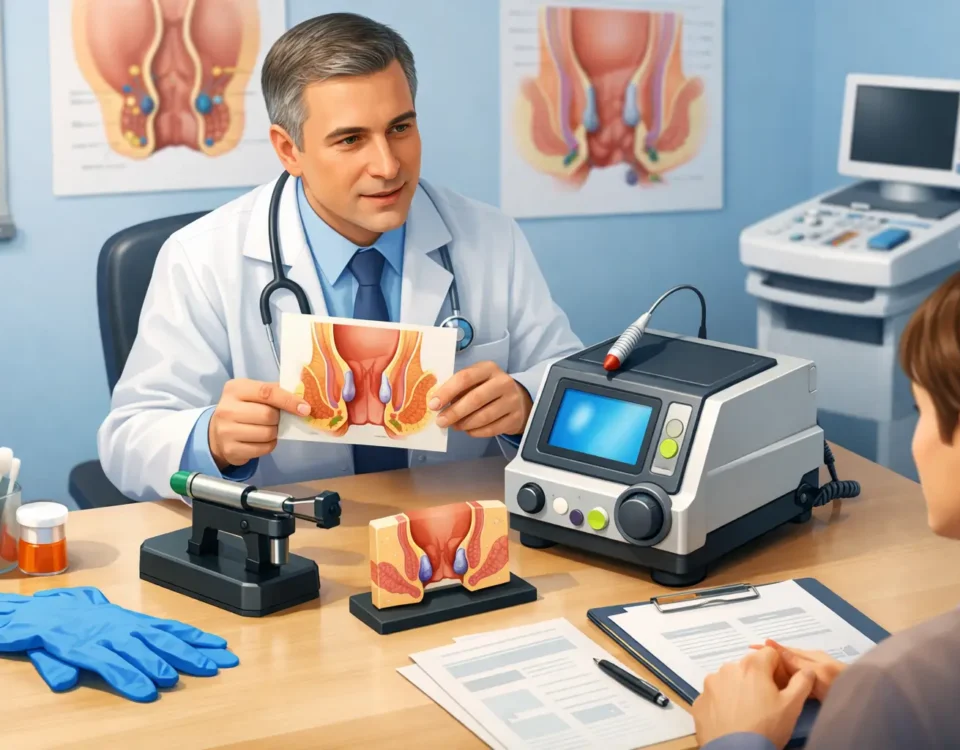
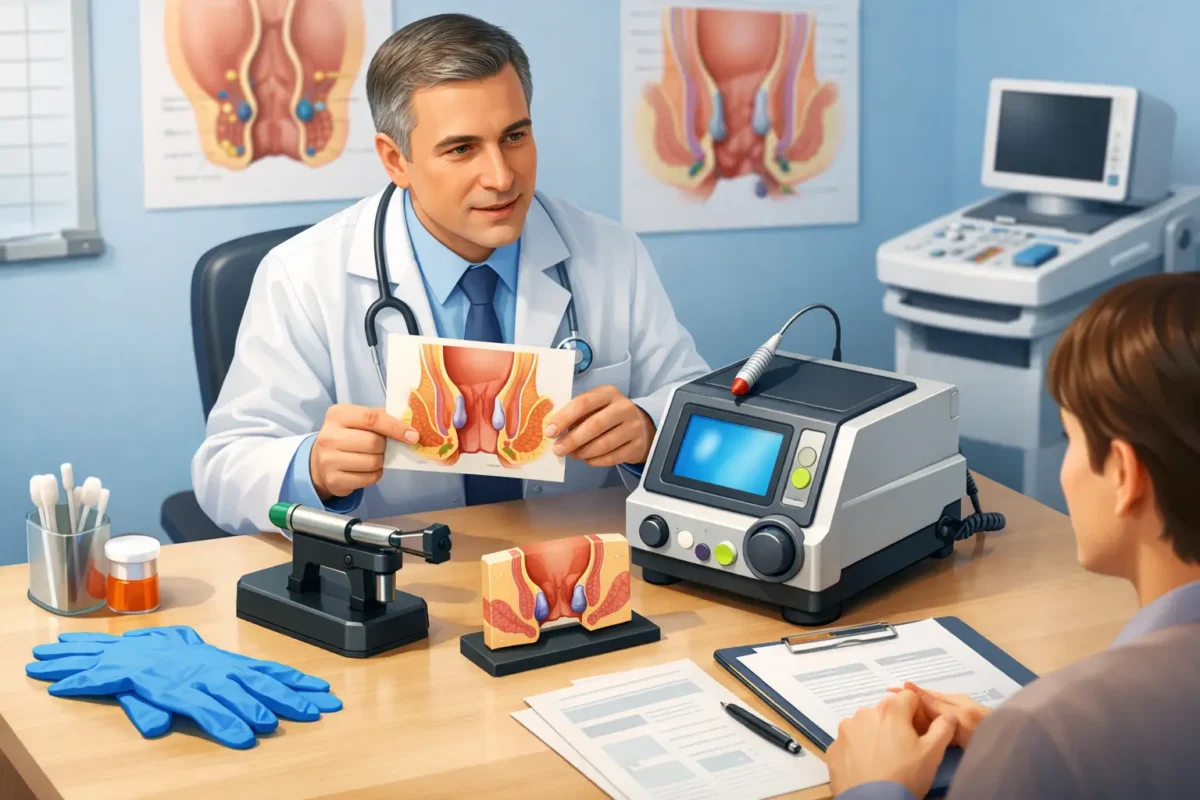
The exam is typically brief and private. Depending on symptoms, it may include an external inspection, digital exam, and anoscopy, which lets the provider view internal hemorrhoids directly. This focused approach matters because treatment is selected based on what is actually causing the recurring problem.
Office-based banding for internal hemorrhoids
For many recurring internal hemorrhoids, rubber band ligation is an effective non-surgical option. During this office procedure, a small band is placed around the base of an internal hemorrhoid. The band reduces blood flow to the treated tissue, allowing it to shrink and detach over time. The area then heals with scar tissue that helps secure the remaining tissue in place.
Because internal hemorrhoids are located above the area with pain-sensitive nerve endings, banding is generally well tolerated when performed correctly. Patients may notice pressure, fullness, or mild cramping afterward, but most do not need anesthesia and can return to normal activities the same day. A specialist may treat one area at a time or schedule more than one session, depending on the number, size, and grade of hemorrhoids.
Banding is not the right answer for every condition. It is primarily used for internal hemorrhoids, especially those causing recurrent painless bleeding or prolapse. A careful assessment helps prevent treating the wrong problem or recommending a procedure that is unlikely to deliver durable relief.
Medication protocols when irritation or fissures are involved
Recurring anal symptoms sometimes involve more than hemorrhoids. A fissure, which is a small tear in the lining of the anal canal, commonly causes sharp pain during or after bowel movements and may lead to bleeding. Treating a fissure as though it were only a hemorrhoid can prolong discomfort.
Specialists may prescribe custom medication protocols to relax the affected muscle, support healing, and reduce pain or spasm. Treatment may also include guidance on stool consistency and habits that reduce repeated trauma during bowel movements. The right medication plan depends on the diagnosis, the severity of symptoms, medical history, and whether previous treatments have helped.
Managing external swelling and acute flares
External hemorrhoids can cause a tender lump, itching, irritation, or swelling. When a clot develops in an external hemorrhoid, pain can be intense and may require timely evaluation. The best approach depends on how long symptoms have been present, the degree of pain, and whether the issue is a clot, a skin tag, or another condition.
Some external flares improve with conservative measures such as warm baths, short-term symptom relief, bowel habit adjustments, and avoiding straining. Others need a more targeted office-based plan. The key is not to assume that every painful lump should be managed the same way.
What Makes Treatment More Likely to Last
A procedure can treat an enlarged hemorrhoid, but long-term success also depends on reducing the pressures that contributed to the flare. Specialists give practical guidance that supports healing without making patients overhaul their entire routine.
The goal is to pass soft, formed stools without straining. For many people, that means gradually increasing dietary fiber, drinking enough fluids, staying physically active, and using a stool-softening strategy when clinically appropriate. Spending long periods on the toilet, repeatedly straining, and delaying the urge to have a bowel movement can all make recurrence more likely.
There is no single rule that fits every patient. Someone with constipation may need a different plan than someone whose hemorrhoids flare during frequent loose stools. People taking medications that affect bowel habits, including certain pain medicines or supplements, may need individualized recommendations. A specialist considers these details rather than offering generic advice alone.
What to Expect After Non-Surgical Treatment
One reason patients choose office-based care is the ability to avoid the disruption of traditional hemorrhoid surgery when it is not necessary. Most patients can leave after treatment and resume usual daily activities, though providers may recommend avoiding heavy lifting or strenuous exercise for a short time.
After banding, mild pressure or a dull ache can occur. Small amounts of bleeding may happen when the treated tissue separates, often several days later. Providers explain what is expected, what symptoms should prompt a call, and how to make bowel movements more comfortable during healing.
Severe pain, heavy bleeding, fever, difficulty urinating, or worsening symptoms should be addressed promptly. These are not symptoms to ignore or manage alone. Clear aftercare instructions and access to an experienced clinical team give patients confidence during recovery.
When Recurrent Symptoms Need a Different Plan
Some hemorrhoids are too advanced for simple banding, and some patients have conditions that require a different type of care. Large external hemorrhoids, extensive prolapse, certain blood-thinning medications, inflammatory bowel disease, pregnancy-related concerns, or a history of prior procedures can all affect treatment decisions.
That does not mean surgery is inevitable. It means the plan should be based on the patient’s anatomy, symptoms, health history, and goals. A specialist can explain the expected benefit of each option, the likely number of visits, and when a surgical referral may be appropriate rather than pushing a one-size-fits-all solution.
At Hemorrhoid Centers of America, care is centered on identifying the source of symptoms and using minimally invasive treatment whenever appropriate. Board-certified providers focus on the conditions that cause rectal pain, bleeding, itching, and swelling, so patients can receive direct answers without unnecessary delays.
You do not have to keep arranging your life around the nearest bathroom, a flare of pain, or the worry of seeing blood again. Recurrent symptoms are a reason to seek focused evaluation, not a reason to accept discomfort as normal.