


How Specialists Treat Recurrent Hemorrhoids
July 14, 2026
Banding vs Laser Hemorrhoid Treatment Compared
July 18, 2026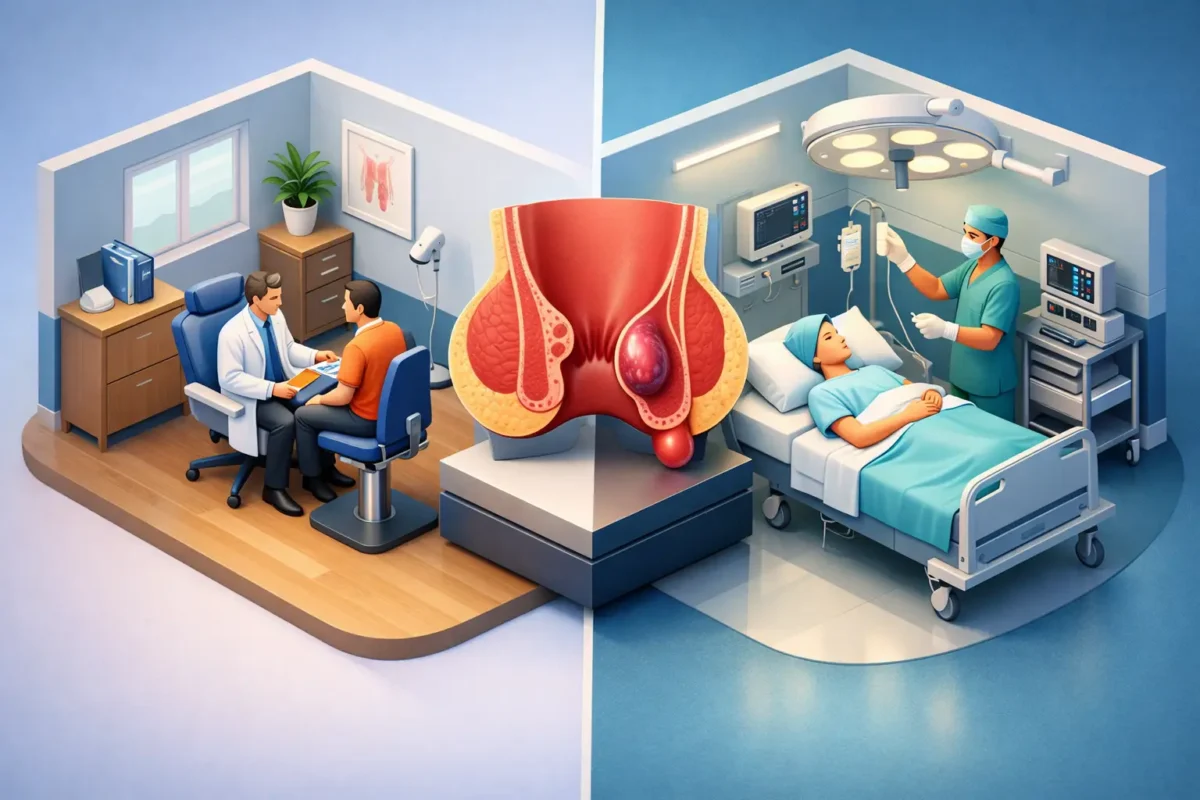
A painful bowel movement, blood on the toilet paper, or swelling that will not settle down can make one question feel urgent: where should I go for care? In the discussion of office treatment vs hospital hemorrhoid care, the right answer depends on your symptoms, the type of hemorrhoid involved, and whether a non-surgical procedure can address the problem effectively.
Many people assume hemorrhoid treatment automatically means a hospital, anesthesia, and a difficult recovery. That is not always the case. For many internal hemorrhoids, specialized office-based care can provide meaningful relief without traditional surgery or a major interruption to work and daily life.
The Difference Between Office and Hospital Care
Office-based hemorrhoid care is designed for patients whose symptoms can be evaluated and treated with minimally invasive methods. A focused specialist examines the area, confirms the likely source of symptoms, and recommends a treatment plan that may include hemorrhoid banding, medication, or other non-surgical measures.
Rubber band ligation, often called hemorrhoid banding, is commonly used for internal hemorrhoids that bleed, protrude, or cause persistent irritation. During this procedure, a small band is placed around the base of the hemorrhoid. This cuts off its blood supply so the tissue shrinks over time. Because internal hemorrhoids are located above the area with pain-sensitive nerve endings, banding is typically performed without general anesthesia.
Hospital-based care generally becomes part of the conversation when a patient needs surgery, has a more complex anorectal condition, requires anesthesia for another reason, or has symptoms that need urgent evaluation. Hospitals are essential for serious situations. They also offer surgical options when less invasive treatments are unlikely to provide adequate relief.
The goal is not to treat every hemorrhoid in an office or to avoid a hospital at all costs. The goal is to match the level of care to the condition – without escalating to surgery when an effective, lower-disruption option may be available.
Office Treatment vs Hospital Hemorrhoid Care: What Patients Notice
For most patients, the practical differences come down to time, recovery, comfort, and the type of procedure being considered.
Time in the office and time away from life
An office visit is usually far more streamlined than a surgical hospital pathway. After an evaluation, eligible patients may be able to receive treatment in the office rather than scheduling an operating room procedure weeks later. Many return to regular activities the same day, although a provider may recommend avoiding heavy lifting or strenuous exercise briefly.
Hospital surgery often involves more steps: pre-operative testing, anesthesia planning, a procedure date, post-anesthesia monitoring, and a longer recovery period. That level of care is appropriate when needed, but it can mean more time away from work, caregiving, travel, and normal routines.
Anesthesia and recovery expectations
A major advantage of office-based treatment is that it can often be performed without general anesthesia. Patients remain awake, avoid anesthesia-related preparation and recovery, and can usually leave shortly after the procedure.
Traditional hemorrhoid surgery may require general or regional anesthesia. Surgical recovery can involve more significant pain, prescription pain medication, wound care, and temporary limits on activity. For severe or complex cases, those trade-offs may be worthwhile. For treatable internal hemorrhoids, however, they may be more than a patient needs.
The type of hemorrhoid matters
Not all hemorrhoids are the same. Internal hemorrhoids occur inside the rectum and commonly cause painless bleeding, mucus, itching, or prolapse. They are often the type most suitable for office-based banding when symptoms continue despite conservative care.
External hemorrhoids occur under the skin around the anus. They can cause swelling, tenderness, and discomfort, particularly if a clot forms. A thrombosed external hemorrhoid can be intensely painful and may need prompt medical assessment. Some cases improve with non-surgical care, while others may require a different procedure or surgical approach.
That distinction is why a proper examination matters. Rectal bleeding, anal pain, and irritation can also be caused by anal fissures, skin conditions, infection, inflammatory disease, polyps, or other concerns. Self-diagnosis can delay the right treatment.
When Office-Based Care Is Often a Strong Option
Specialized office treatment may be a good fit when symptoms are caused by internal hemorrhoids and there is no indication of a surgical emergency or another serious condition. Patients often seek this care after over-the-counter creams, wipes, fiber supplements, and sitz baths have not solved recurring bleeding, itching, pressure, or prolapse.
At Hemorrhoid Centers of America, care is centered on diagnosing hemorrhoids and anal fissures and treating appropriate cases without traditional surgery. Board-certified providers focus on procedures and care pathways intended to reduce symptoms while helping patients avoid unnecessary downtime.
Office treatment can be particularly appealing for people who have postponed care because they are embarrassed, concerned about pain, or unable to take extended time away from their responsibilities. Hemorrhoid symptoms are common, and discussing them with a specialist is a medical conversation, not something to feel ashamed of.
Some patients need more than one banding session, especially when multiple hemorrhoids are involved. That does not mean treatment has failed. Staged care can be a deliberate approach that treats tissue safely while allowing the area to heal between visits.
When Hospital or Surgical Care May Be Necessary
Hospital care is the right choice in certain circumstances, and a reputable specialist should be clear about that. Surgery may be recommended for large external hemorrhoids, significant combined internal and external disease, recurrent symptoms that have not responded to office procedures, or advanced prolapse that cannot be adequately addressed with banding.
Urgent evaluation is important for heavy rectal bleeding, fainting or dizziness, black or tar-like stools, fever, severe worsening pain, pus or drainage, or an inability to pass stool or urine. These symptoms may not be caused by hemorrhoids alone and should not be managed with home remedies.
Patients taking blood thinners, those with bleeding disorders, and people with significant medical conditions also need individualized guidance. Do not stop prescribed medication on your own in preparation for hemorrhoid treatment. Your treating provider can coordinate the safest plan with the clinicians who manage your other health needs.
Questions to Ask Before Choosing a Treatment Setting
The best decision is based on diagnosis, not fear of surgery or a preference for convenience alone. Ask whether your symptoms are likely due to internal hemorrhoids, external hemorrhoids, an anal fissure, or another condition. Ask whether banding or medication is appropriate, what discomfort to expect afterward, whether repeat visits may be needed, and what recovery restrictions apply.
It is also reasonable to ask who will perform the procedure and how often they treat hemorrhoids. A focused practice can offer an advantage because its providers routinely evaluate the subtle differences between bleeding, fissure pain, prolapse, and irritation. That level of specialization supports clearer recommendations and can prevent a patient from being sent directly to surgery without first considering less invasive options.
Cost and insurance coverage matter as well, but they should be considered alongside the full impact of treatment. A procedure that requires less time away from work and avoids anesthesia may have practical value beyond the initial bill. Your care team can help explain expected charges, coverage questions, and any follow-up needs before treatment begins.
Do Not Let Symptoms Settle Into Your Routine
Hemorrhoids can gradually become a condition people learn to work around. They plan bathroom trips, carry wipes, avoid exercise, or accept bleeding as normal. Persistent symptoms deserve better than ongoing self-treatment.
A timely evaluation can clarify what is causing the problem and whether office-based care can provide relief without a hospital stay or traditional surgery. The most helpful next step is often simply making the appointment and getting a direct answer from a specialist.