
Office Treatment vs Hospital Hemorrhoid Care
July 17, 2026
Hemorrhoid Clinic Versus Hospital Care Compared
July 20, 2026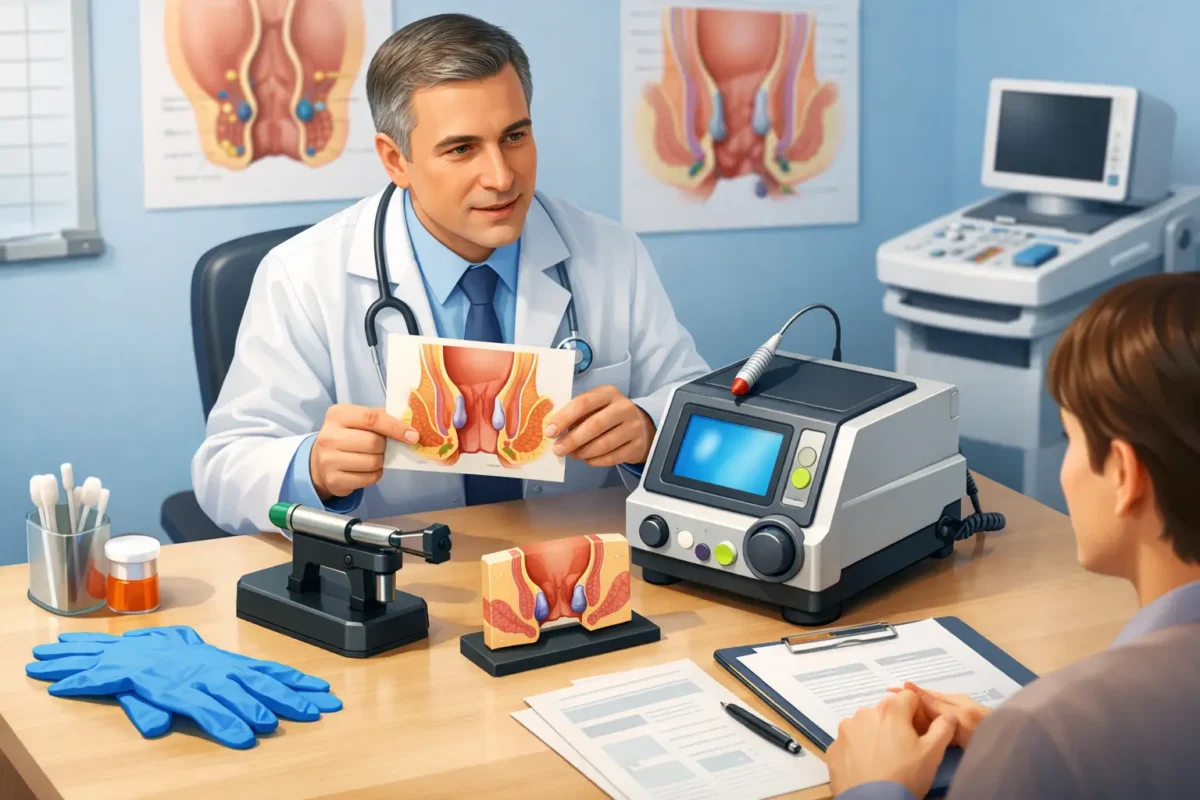
Bleeding after a bowel movement, persistent itching, or tissue that seems to bulge can make even ordinary routines feel difficult. When comparing banding vs laser hemorrhoid treatment, the best choice is not simply the newest-sounding procedure. It is the treatment that matches the type, location, and severity of your hemorrhoids while giving you meaningful relief with the least disruption to your life.
For many patients with internal hemorrhoids, office-based banding is a highly effective nonsurgical option. Laser treatment may be appropriate in select cases, but it is not automatically better because it uses newer technology. A focused evaluation can clarify what is causing your symptoms and whether a simple office procedure can address them.
What hemorrhoid banding treats
Rubber band ligation, commonly called hemorrhoid banding, treats internal hemorrhoids. These are hemorrhoids located inside the rectum, above the area with the most pain-sensitive nerves. During the procedure, a provider places a small rubber band around the base of the hemorrhoid. The band reduces blood flow to the tissue, allowing it to shrink and detach over time.
The appointment is typically brief and performed in the office without general anesthesia. Many patients describe a feeling of pressure or fullness rather than sharp pain. Because there is no surgical incision, most people can return to normal daily activities the same day, although strenuous exercise and heavy lifting may need to wait briefly.
Banding is often used for internal hemorrhoids that bleed, prolapse, or cause persistent irritation despite fiber, hydration, topical products, or other conservative measures. Some patients need more than one banding session, especially if multiple hemorrhoids are present. Treating one area at a time can help improve comfort and support a smooth recovery.
What laser hemorrhoid treatment involves
Laser hemorrhoid treatment is a broad term. Depending on the technique, a provider may use laser energy to shrink hemorrhoidal tissue, reduce blood flow within the hemorrhoid, or address prolapsing tissue. Procedures can vary considerably by practice, device, and the degree of hemorrhoid disease being treated.
Some laser approaches may require local anesthesia, sedation, or an operating-room setting. Recovery can still be shorter than traditional hemorrhoid surgery for certain patients, but it is not necessarily the same as walking into an office for a brief banding procedure and returning to routine activities that afternoon.
Laser treatment may be considered for selected patients with larger internal hemorrhoids, more significant prolapse, or circumstances in which banding is not the right fit. It can also be discussed when a clinician believes tissue reduction is needed beyond what a rubber band can accomplish. The appropriate use of laser treatment depends on a careful examination, not just the presence of hemorrhoid symptoms.
Banding vs laser hemorrhoid treatment: key differences
The central difference is how each treatment works. Banding mechanically cuts off blood flow to an internal hemorrhoid with a small rubber band. Laser procedures use heat energy to affect hemorrhoidal tissue and blood vessels. Both approaches are intended to reduce symptoms, but they differ in setting, recovery expectations, and the patients they may best serve.
Procedure setting and convenience
Hemorrhoid banding is commonly an office-based procedure. It usually does not require anesthesia, extensive preparation, or a hospital visit. That can be especially helpful for patients who want effective care without arranging a lengthy recovery or missing multiple days of work.
Laser procedures may be offered in an office, ambulatory surgery center, or hospital setting depending on the technique and provider. If sedation or anesthesia is involved, patients may need transportation home and additional recovery planning. That does not make laser treatment wrong, but it is a practical difference worth discussing before choosing a path.
Discomfort during and after treatment
Internal hemorrhoid banding is placed above the pain-sensitive portion of the anal canal. Patients may feel pressure, mild cramping, or the urge to have a bowel movement for a short period after treatment. More significant discomfort should always be reported to the treating provider.
Laser treatment can also be well tolerated, but the level of discomfort varies with the type of procedure and whether external hemorrhoidal tissue is involved. Healing may include soreness, drainage, or temporary bowel movement discomfort. A clinician should explain what sensations are expected and what symptoms warrant a call after either treatment.
Recovery time
Banding is often favored for its minimal downtime. Many patients resume desk work, errands, and typical household activities the same day. Light bleeding or spotting can occur when the treated tissue separates, often several days after the procedure. Following post-treatment instructions, including avoiding straining, helps support healing.
Laser recovery can range from relatively quick to more involved. Some patients return to regular activities promptly, while others need additional time depending on how much tissue was treated and whether anesthesia was used. If your priority is the least interruption possible, ask specifically about recovery restrictions rather than assuming all minimally invasive procedures have the same timeline.
Results and repeat treatment
Both treatments can reduce bleeding, swelling, prolapse, and irritation when used for the right condition. Banding has a long record of use for internal hemorrhoids and can be repeated in a planned series when needed. It does not treat every form of hemorrhoid disease, particularly certain large external hemorrhoids or advanced prolapse.
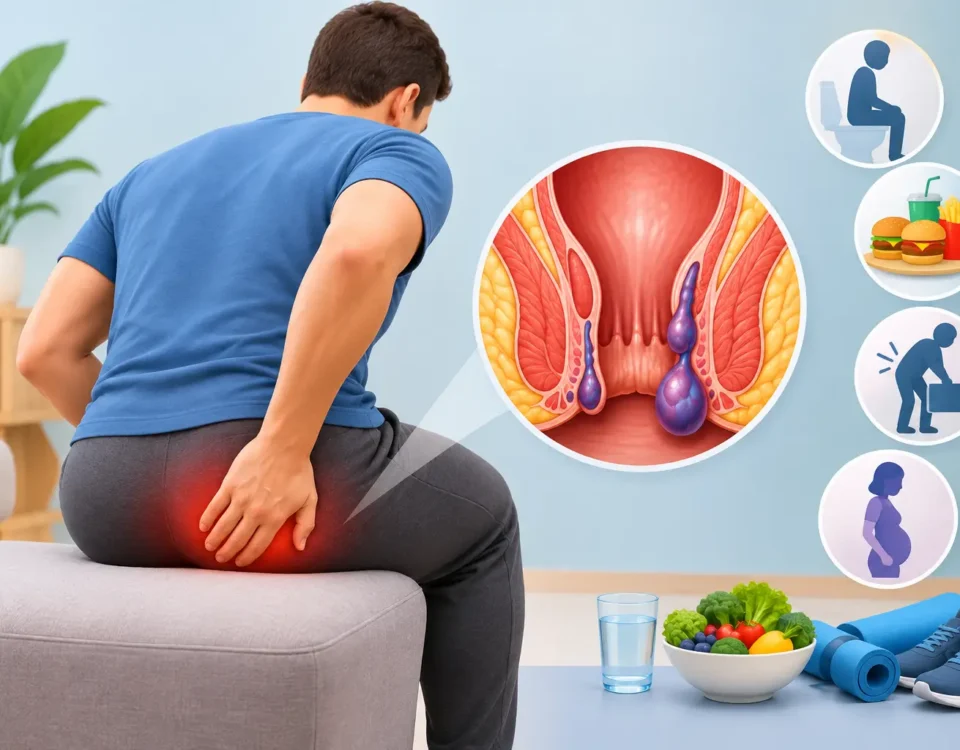
Laser treatment may be offered for more complex presentations, but outcomes still depend on proper patient selection and technique. No procedure can prevent future hemorrhoids if ongoing constipation, straining, prolonged toilet sitting, heavy lifting, pregnancy-related pressure, or chronic diarrhea continue to affect the area. Addressing bowel habits remains part of durable relief.
Who may be a good candidate for banding?
Banding is commonly a strong option for patients with symptomatic internal hemorrhoids, especially when bleeding or prolapse continues after conservative care. It may be particularly appealing if you want a nonsurgical procedure, no general anesthesia, and a fast return to normal activity.
Not every rectal symptom is caused by hemorrhoids. Anal fissures, skin conditions, inflammation, polyps, and other gastrointestinal concerns can cause bleeding, pain, or irritation. Bright red blood should not be dismissed as “just hemorrhoids,” particularly if bleeding is new, recurrent, heavy, accompanied by changes in bowel habits, or associated with unexplained weight loss or fatigue.
A specialist should also review medications and health history. Blood thinners, bleeding disorders, immune conditions, pregnancy, and prior anorectal procedures can affect the safest treatment plan.
When laser treatment may be worth discussing
Laser treatment may be worth discussing when hemorrhoids are larger, more prolapsed, recurrent after prior treatment, or not well suited to standard office banding. It may also be considered when a provider recommends a different level of tissue reduction than banding can provide.
The key question is not, “Is laser better?” A more useful question is, “What procedure is most likely to relieve my symptoms with an appropriate recovery for my specific diagnosis?” A provider should be able to explain why a particular treatment is recommended, what alternatives exist, and what you can realistically expect afterward.
The value of a focused hemorrhoid evaluation
Embarrassment causes many people to wait too long for care. Yet a focused evaluation is usually straightforward, private, and far more useful than trying another round of creams or suppositories without knowing what is actually causing the problem.
At Hemorrhoid Centers of America, board-certified providers focus on nonsurgical treatment pathways for hemorrhoids and anal fissures. For patients who are candidates for banding, the goal is direct, efficient care that addresses symptoms without the burdens of traditional surgery.
If pain, bleeding, itching, swelling, or prolapse is affecting your day, you do not have to keep planning around it. The right treatment starts with an accurate diagnosis and a conversation centered on relief, recovery, and what will help you get back to normal life.