

What Is Rubber Band Ligation?
March 18, 2026
Does Hemorrhoid Banding Hurt?
March 19, 2026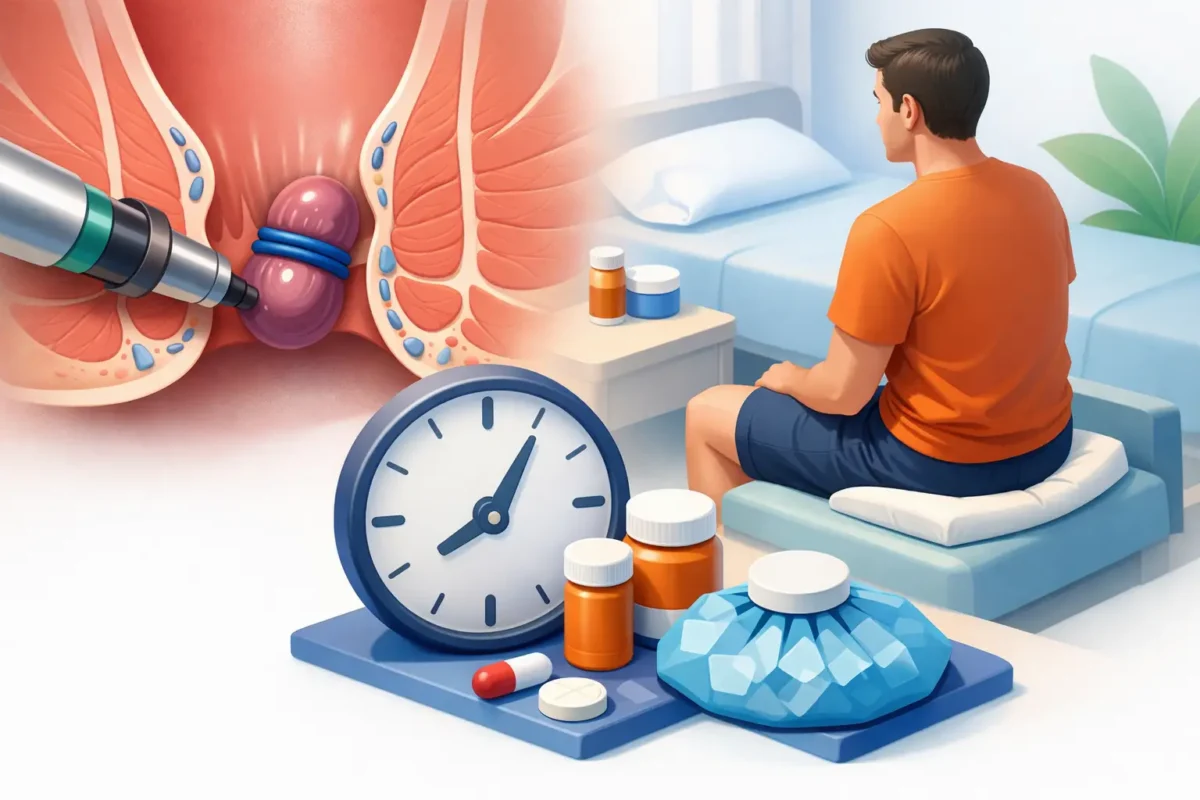
Most patients asking about rubber band ligation recovery time are really asking a more practical question: How quickly can I get back to normal without worrying that something is wrong? That is the right question to ask. Hemorrhoid banding is designed to treat internal hemorrhoids without the disruption of traditional surgery, so recovery is usually measured in days, not weeks, but the exact timeline depends on the size of the hemorrhoid, how many are treated, and how your body responds.
How long is rubber band ligation recovery time?
For many people, recovery after rubber band ligation is relatively quick. Most patients return to normal daily activity the same day or the next day, especially if they have a desk job or light routine. Mild pressure, a sense of fullness, or minor discomfort can happen for the first 24 to 72 hours.
The treated hemorrhoid does not disappear immediately. The band cuts off blood supply, and over several days the tissue shrinks and falls away. That process often happens within about one week, though it can vary. Full healing may continue over 1 to 2 weeks, and symptom improvement can be gradual rather than instant.
That said, not every recovery follows the exact same pattern. A patient who has one small internal hemorrhoid treated may feel almost back to normal by the end of the day. Someone with more significant hemorrhoids or a history of irritation may need several days before things feel completely settled.
What recovery usually feels like day by day
The first day is often more about awareness than pain. Many patients describe a dull pressure, the feeling that they need to have a bowel movement, or mild rectal soreness. This can be unsettling if you were expecting to feel nothing, but it is often a normal response after banding.
By days two and three, mild discomfort may continue, especially when sitting for long periods or during bowel movements. Some patients notice very light spotting. Others feel almost normal but remain cautious because the area is still healing.
Around days five to seven, the banded tissue often separates. You may not notice when this happens. Some people see a small amount of bleeding at that point, particularly with a bowel movement. Light bleeding can be expected, but heavy bleeding is not.
By the end of the first week, many patients are significantly more comfortable than they were before treatment, especially if bleeding and prolapse were their main symptoms. If more than one hemorrhoid needs treatment, your provider may schedule banding in stages, which means overall treatment may extend across more than one visit even though each recovery period is relatively short.
What affects rubber band ligation recovery time?
The biggest factor is how much tissue was treated. A single small internal hemorrhoid is different from multiple enlarged hemorrhoids that have been causing symptoms for months. The more irritation that existed before treatment, the more recovery can feel noticeable.
Your bowel habits also matter. Constipation can make recovery harder because straining increases pressure in the area and can trigger pain or bleeding. Loose stools can be just as irritating. The smoothest recoveries usually happen when stools stay soft, formed, and easy to pass.
Activity level plays a role too. Normal walking and light activity are usually fine, but heavy lifting, intense exercise, or anything that increases abdominal pressure too soon can make discomfort worse. Recovery is faster when patients respect the first few days instead of trying to power through them.
Pain tolerance and sensitivity vary from person to person. Some patients are surprised by how little they feel. Others are more sensitive to the pressure sensation even when the procedure is technically uncomplicated. That does not always mean something is wrong.
What is normal after hemorrhoid banding?
A normal recovery can include mild pressure, a sense of rectal fullness, minor soreness, and light bleeding. It is also common to feel anxious the first time you use the bathroom after the procedure. Many patients expect a sharp increase in pain and are relieved when that does not happen.
Temporary irritation with bowel movements can occur, especially if stools are hard. Some people feel intermittent spasms or a dull ache that comes and goes. These symptoms are usually manageable and improve as the tissue heals.
It is also normal for symptom relief to be incomplete right away. If your hemorrhoid has been swollen, inflamed, or bleeding for a long time, healing may not feel immediate. The goal of banding is to remove the problematic internal hemorrhoid over time, not in a single dramatic moment.
What is not normal during recovery?
Severe pain is not something to ignore. Rubber band ligation is intended for internal hemorrhoids, which are treated above the pain-sensitive area. If a band is causing intense pain, the placement may need to be evaluated.
Heavy rectal bleeding is another reason to call your provider promptly. A small amount of blood on the tissue or in the toilet can happen, especially several days after treatment, but persistent or significant bleeding needs medical attention.
You should also reach out if you develop fever, difficulty urinating, increasing swelling, or pain that gets worse instead of better. Those symptoms are less common, but they are not part of a routine recovery.
How to make recovery easier
The most useful thing you can do is protect your bowel movements. Drink enough water, follow your provider’s instructions about fiber, and avoid straining. If you are already prone to constipation, this matters even more than the day of the procedure itself.
Try to keep the first couple of days simple. Walking is usually helpful, but prolonged sitting, heavy workouts, and lifting can wait. If your job is physically demanding, ask your provider what timeline makes sense for your situation instead of assuming a one-size-fits-all answer.
Warm baths can be soothing if your provider recommends them. So can over-the-counter pain relief when appropriate. Just do not self-manage severe pain without checking in, because recovery discomfort should be mild to moderate, not extreme.
The other key piece is patience. Many patients seek treatment because they are tired of bleeding, itching, swelling, or prolapse disrupting daily life. Banding is effective, but healing still follows a process. Expect improvement, not instant perfection.
When can you return to work, exercise, and travel?
Most office work can be resumed quickly, often the same day or the next day. If your commute is long or sitting increases pressure, you may prefer a lighter schedule for a day or two.
Exercise depends on intensity. Gentle walking is usually fine. Heavy lifting, strenuous gym sessions, cycling, and high-impact workouts may need to wait several days, sometimes longer if your provider treated multiple hemorrhoids or if you are more uncomfortable than expected.
Travel is possible for many patients, but timing matters. If you are planning a long flight or car ride immediately after treatment, ask about it in advance. Sitting for long periods and managing bowel habits away from home can make early recovery less comfortable.
Why specialist care can change the experience
Recovery is not only about the procedure itself. It is also about proper diagnosis, correct band placement, and clear aftercare guidance. Symptoms that seem like hemorrhoids can overlap with other anorectal conditions, and not every patient is a good candidate for the exact same treatment approach.
That is why focused evaluation matters. A specialized center can help determine whether banding is appropriate, how many hemorrhoids should be treated, and what kind of recovery to expect based on your symptoms rather than generic advice. Hemorrhoid Centers of America centers its care on non-surgical treatment for this reason – accurate treatment planning usually leads to a smoother recovery and less disruption.
The question behind the question
When people ask about rubber band ligation recovery time, they are often weighing one fear against another. They want relief, but they do not want surgery, anesthesia, or a long period of being sidelined. In most cases, banding offers a middle path that is effective and manageable, with downtime that is far shorter than many people expect.
If you have been putting off care because you are worried about recovery, the better question may be how much longer you want to keep living around the symptoms. A short recovery is often easier to handle than ongoing bleeding, irritation, and the daily uncertainty of untreated hemorrhoids.