

Rubber Band Ligation Recovery Time: What to Expect
March 18, 2026
Office Based Hemorrhoid Treatment Explained
March 20, 2026
If you’re asking, does hemorrhoid banding hurt, you’re probably already dealing with enough discomfort as it is. Most patients want a straight answer before they schedule anything: what will it feel like, how long will it last, and will it be worse than the hemorrhoid itself?
The honest answer is that hemorrhoid banding can cause pressure or mild discomfort, but it is not typically described as severe pain when performed appropriately on internal hemorrhoids. For many patients, the procedure is brief, does not require anesthesia, and allows them to get back to normal daily activity the same day. That said, every patient experiences symptoms differently, and the first 24 to 48 hours can come with some temporary fullness, cramping, or an urge to have a bowel movement.
Does hemorrhoid banding hurt during the procedure?
In most cases, the procedure itself is more uncomfortable than painful. Rubber band ligation is used for internal hemorrhoids, which are located in an area with fewer pain-sensitive nerve endings than external hemorrhoids. That matters. When the band is placed in the correct position, patients often feel pressure, pinching, or a sense of rectal fullness rather than sharp pain.
The treatment is usually done in the office and takes only a few minutes. Because it is non-surgical and does not involve cutting tissue, the experience is very different from traditional hemorrhoid surgery. Many people are surprised by how fast it is.
Still, there is no reason to pretend every patient feels the exact same thing. Some people are more sensitive. If the hemorrhoid is larger, inflamed, or if multiple areas are treated, discomfort may be more noticeable. A specialized provider should explain what to expect in real terms, not vague reassurances.
What hemorrhoid banding feels like afterward
For most patients, the more noticeable sensations begin after the procedure rather than during it. A dull ache, pressure, or the feeling that you need to have a bowel movement is common. This usually improves over the first day or two.
Some patients also notice mild cramping or irritation. These symptoms are typically manageable and short-lived. The band cuts off blood flow to the hemorrhoid, and over several days the treated tissue shrinks and falls away. That process can create temporary awareness in the area, but it is usually far less disruptive than people fear.
A small amount of bleeding can happen, especially when the banded tissue separates. That can be normal. What matters is the degree of bleeding and whether it is accompanied by worsening pain, fever, or other symptoms that should be reported to your provider.
When discomfort may mean something is off
Severe or sharp pain is not considered the expected result of routine hemorrhoid banding. If that happens, the band may be too close to a pain-sensitive area, or there may be another issue that needs prompt attention. This is one reason specialist care matters. A provider who performs office-based hemorrhoid treatment regularly is in a better position to place bands accurately and respond quickly if something does not feel right.
Patients sometimes delay care because they assume every hemorrhoid procedure is painful. In reality, the goal of banding is to treat internal hemorrhoids effectively without the pain, anesthesia, and longer recovery associated with surgery.
Why some people say hemorrhoid banding hurts more than others
There is a reason you may hear very different stories. The discomfort level depends on several factors, including the size and location of the hemorrhoid, how many are treated, the patient’s pain tolerance, and whether the diagnosis is completely accurate.
Not every symptom in the anal area is caused by internal hemorrhoids alone. Anal fissures, external hemorrhoids, skin irritation, constipation, and pelvic floor tension can all affect how a patient feels before and after treatment. If someone has more than one issue going on, they may describe the recovery as harder than expected.
Bowel habits also make a difference. If you’re already straining, constipated, or having hard stools, the area can feel more irritated after the procedure. That does not necessarily mean the treatment failed. It often means the underlying bowel pattern also needs to be addressed so healing can be smoother.
How long does the discomfort last?
For many patients, the strongest sensations happen within the first 24 to 48 hours and then begin to ease. Some feel almost normal by the next day. Others have low-level pressure or irritation for several days. A sense of fullness can come and go while the banded hemorrhoid shrinks.
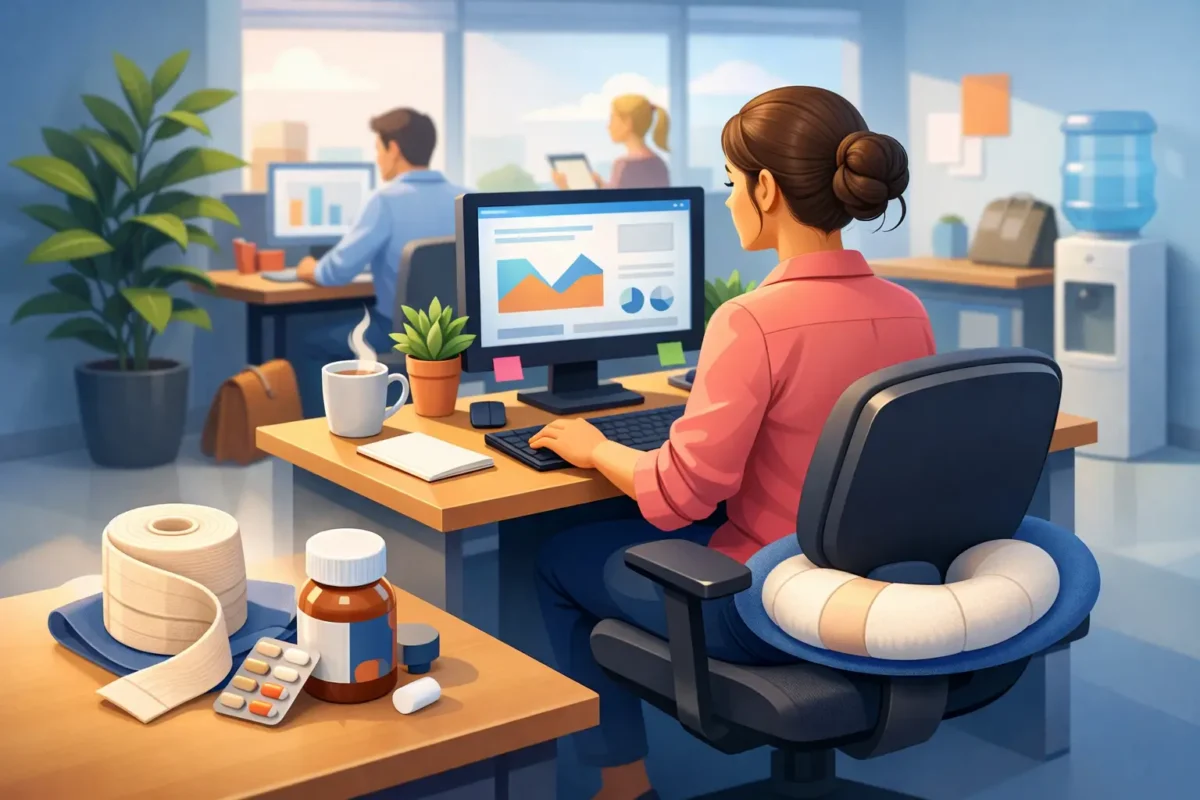
Most people are able to work, drive, walk, and handle regular daily activities without major interruption. Heavy lifting and intense exertion may need to wait briefly depending on your provider’s instructions and your symptoms.
The key point is that hemorrhoid banding is designed to have minimal downtime. If your current hemorrhoid symptoms include bleeding, prolapse, itching, or ongoing irritation, the short period of post-procedure discomfort is often a reasonable trade-off for lasting relief.
What helps after banding
Recovery tends to be easier when bowel movements stay soft and easy to pass. Hydration, fiber, and following your provider’s instructions on stool management can make a noticeable difference. Gentle activity is often fine, and many patients prefer to keep moving rather than sit for long periods.
Warm baths may help with the feeling of pressure or soreness. Some patients use over-the-counter pain relief if their provider says it is appropriate. The exact plan can vary based on your medical history, how many hemorrhoids were treated, and whether you are also dealing with fissures or other anorectal symptoms.
What usually makes recovery worse is straining. If the first bowel movement after treatment is hard or forced, discomfort tends to feel more pronounced. That is why good aftercare is not a side issue. It is part of the treatment outcome.
What not to ignore
While mild pressure and aching can be normal, severe pain, heavy bleeding, fever, difficulty urinating, or symptoms that rapidly worsen should not be brushed off. Patients do best when they know the difference between expected recovery and a reason to call.
A good practice does not leave you guessing. Clear discharge instructions and access to follow-up support are part of quality hemorrhoid care.
Why specialized treatment matters
When people search for hemorrhoid treatment, they are often comparing it in their mind to surgery. That comparison creates unnecessary anxiety. Office-based banding is a very different experience from a surgical hemorrhoidectomy.
The technique matters, but so does patient selection. Internal hemorrhoids are generally the right target for rubber band ligation. External hemorrhoids and fissures are different problems and may need a different treatment plan. Getting the diagnosis right is one of the biggest reasons patients can avoid unnecessary pain and unnecessary procedures.
That is where a focused hemorrhoid practice can offer real value. A specialized center is built around evaluating these symptoms quickly and matching the treatment to the actual cause, rather than sending every patient down a surgical pathway. At Hemorrhoid Centers of America, that means office-based care designed to relieve symptoms efficiently while helping patients avoid traditional surgery whenever possible.
So, does hemorrhoid banding hurt enough to avoid it?
For most patients, no. It is more accurate to expect temporary discomfort than significant pain. If your internal hemorrhoids are causing repeated bleeding, prolapse, itching, or irritation, avoiding treatment can keep you stuck in a cycle that is more disruptive than the procedure itself.
The better question is not simply whether hemorrhoid banding hurts. It is whether a short, manageable recovery is worth the chance to treat a problem that has already been affecting your daily life. For many people, the answer is yes, especially when the procedure is performed by an experienced provider who focuses on non-surgical hemorrhoid care.
If you have been putting off treatment because of embarrassment or fear, that reaction is common. But hemorrhoids are common too, and relief does not have to involve a hospital, anesthesia, or weeks away from your routine. A straightforward conversation with a specialist can give you a much clearer picture of what your specific case is likely to feel like – and how soon you may start feeling better.