

Can Hemorrhoids Cause Rectal Pain?
May 31, 2026
Seeing blood after a bowel movement is the kind of moment that can send your mind in two directions fast: hemorrhoids or colon cancer. That fear is understandable. Rectal bleeding is common with hemorrhoids, but it should never be brushed off automatically, especially if symptoms are new, changing, or not improving.
Most cases of rectal bleeding are not caused by colon cancer. Hemorrhoids are far more common, and they often cause bright red blood, itching, swelling, irritation, or pain around the anus. Still, symptoms can overlap enough that guessing at home is not the safest plan. The right next step is a proper evaluation so you know what you are dealing with and can get the right treatment quickly.
Hemorrhoids or colon cancer: why people confuse them
The confusion usually starts with one symptom: bleeding. Both hemorrhoids and colon cancer can lead to blood in or around the stool. Both can also be associated with changes in bathroom habits. From a patient perspective, that overlap can feel alarming.
The difference is that hemorrhoids are swollen veins in the lower rectum or anus, while colon cancer is a disease involving abnormal growth in the colon or rectum. One is very common and often treatable without surgery. The other requires a completely different level of medical workup and care. That is why symptom interpretation matters.
Hemorrhoids tend to cause symptoms right at the anal area. People often notice itching, burning, pressure, swelling, tenderness, or pain with wiping. External hemorrhoids may feel like a lump near the anus. Internal hemorrhoids may bleed without much pain. Colon cancer is less likely to cause itching or external swelling, but it may cause bleeding mixed with stool, abdominal discomfort, unexplained fatigue, or a persistent change in bowel habits.
Symptoms more consistent with hemorrhoids
Hemorrhoid symptoms often follow a familiar pattern. Bleeding is usually bright red and may appear on toilet paper, in the bowl, or on the outside of the stool. Many patients also notice irritation after bowel movements, discomfort from prolonged sitting, or a sense of fullness near the anus.
Pain can happen, but it depends on the type of hemorrhoid. External hemorrhoids, especially if thrombosed, can be quite painful. Internal hemorrhoids often cause bleeding and prolapse with less pain unless they become irritated. Symptoms may flare after constipation, straining, heavy lifting, long periods of sitting, or pregnancy.
Another clue is timing. Hemorrhoid symptoms often come and go. They may worsen during a bad stretch of constipation or after frequent bowel movements, then calm down. That does not mean they should be ignored, particularly if bleeding is recurring, but the pattern can be useful.
When symptoms raise concern for colon cancer
A few warning signs deserve prompt attention because they are less typical of hemorrhoids. Bleeding that is dark, mixed into the stool, or not clearly linked to wiping can be more concerning. A lasting change in bowel habits, such as new constipation, diarrhea, narrower stools, or a feeling that you cannot fully empty, also needs evaluation.
Unexplained weight loss, fatigue, weakness, or abdominal pain should not be written off as hemorrhoids. Neither should symptoms that continue despite standard hemorrhoid care. If you have been treating yourself for weeks and the bleeding is still happening, it is time to stop guessing.
Age and personal risk also matter. Colon cancer risk increases with age, family history, certain inherited conditions, inflammatory bowel disease, and a personal history of polyps. Younger adults can still develop colon cancer, so age alone does not rule it out. It simply changes how likely one cause may be compared with another.
Hemorrhoids or colon cancer: bleeding is not enough to tell
One of the biggest mistakes patients make is assuming that bright red blood always means hemorrhoids. Bright red bleeding is common with hemorrhoids, but cancers in the rectum or lower colon can also bleed red. On the other hand, not every hemorrhoid bleeds, and not every cancer causes obvious bleeding early on.
That is why diagnosis should not rely on a single symptom. Location of pain, bowel pattern changes, duration, physical findings, age, and risk factors all help build the picture. Sometimes the answer is straightforward. Sometimes it is not.
This is also why over-the-counter creams can create false reassurance. If symptoms improve a little, patients may delay care even when bleeding keeps returning. Temporary improvement does not confirm the cause. It only means irritation has eased.
How doctors tell the difference
A proper evaluation usually starts with a conversation about your symptoms, how long they have been happening, what the bleeding looks like, and whether you have pain, prolapse, bowel habit changes, or family history concerns. After that, the physical exam becomes important.
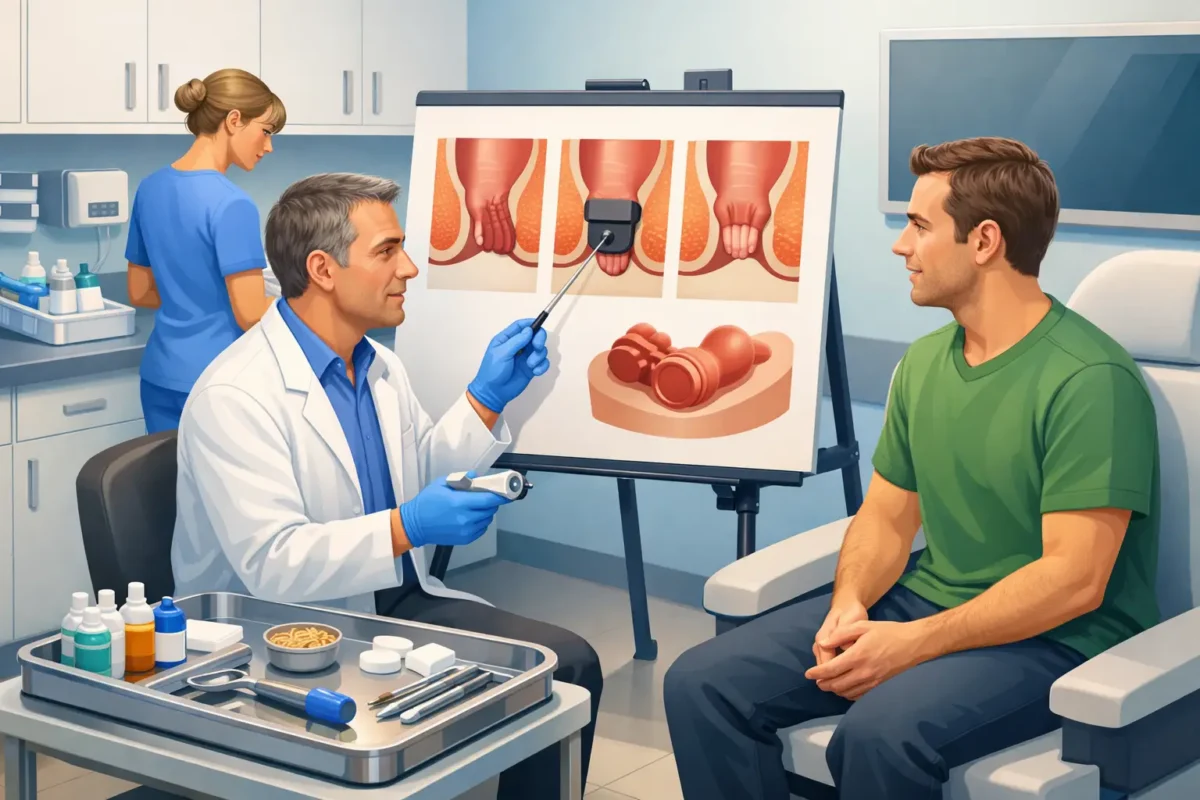
For hemorrhoids, a specialist can often identify external hemorrhoids on inspection and internal hemorrhoids with a focused anorectal exam. Depending on the situation, an anoscopy may be used to look inside the anal canal and lower rectum. This can be a fast, office-based way to identify hemorrhoids and other anorectal causes of bleeding.
If symptoms suggest something beyond hemorrhoids, or if you are due for screening based on age or risk, additional testing may be recommended. That can include colonoscopy or other diagnostic evaluation of the colon. The key point is simple: the exam should match the symptom pattern. Not every patient needs the same workup, but every patient with bleeding deserves a real assessment.
Why specialized evaluation matters
Patients often delay care because they worry they will be pushed toward surgery, anesthesia, or a hospital-based process for a condition that may be treatable much more simply. In reality, hemorrhoid care does not have to look like that.
When the problem is hemorrhoids, seeing a provider who focuses on anorectal conditions can make the path clearer. A specialized exam helps confirm whether hemorrhoids are truly the source of the symptoms and whether non-surgical treatment is appropriate. That matters because persistent bleeding, swelling, prolapse, and irritation often do not respond well to endless cycles of creams and home remedies.
At a focused hemorrhoid practice, treatment may be office-based and designed around minimal disruption to your day. For the right patient, options such as hemorrhoid banding can address the source of symptoms without traditional surgery or a long recovery. That is a very different situation from trying to manage recurring symptoms on your own while wondering if something more serious is being missed.
When to schedule an evaluation
You should be evaluated if you have any rectal bleeding that is new, recurring, or unexplained. You should also make an appointment if you have hemorrhoid symptoms that are painful, prolapsing, interfering with daily life, or not improving with basic self-care.
More urgent evaluation is appropriate if bleeding is heavy, you feel lightheaded, you develop significant abdominal pain, or you notice symptoms such as unexplained weight loss, fatigue, or a clear change in bowel habits. If you are asking yourself whether it is hemorrhoids or colon cancer, that question alone is often reason enough to stop self-diagnosing.
There is no advantage to waiting and worrying. If it is hemorrhoids, you can move toward effective relief. If it is something that needs broader medical attention, earlier evaluation gives you more options and a clearer plan.
The most reassuring answer is not the one you give yourself in the bathroom. It is the one you get from a qualified exam. If you are dealing with bleeding, pain, itching, or swelling, getting checked is a practical step toward relief and peace of mind.