

Best Office Procedures for Hemorrhoids
July 7, 2026
How Anal Fissure Medication Works to Ease Pain
July 10, 2026
Seeing blood after a bowel movement can be alarming. For many adults, that moment leads to the same question: how serious is this, and can it be treated without surgery? This guide to internal hemorrhoid grades explains how doctors classify internal hemorrhoids, what each grade can feel like, and when office-based treatment may be the next right step.
Internal hemorrhoids are swollen veins inside the rectum. Because they are located above the area with more pain-sensitive nerves, they often cause bleeding, pressure, mucus, or prolapse before they cause significant pain. That said, symptoms can still disrupt daily life, especially when flare-ups become frequent or over-the-counter products stop helping.
Why internal hemorrhoid grades matter
Grading helps providers describe how far internal hemorrhoids have progressed. It is not just a label. The grade often shapes treatment recommendations, helps explain why symptoms are changing, and gives patients a clearer idea of whether home care is likely to help or whether a procedure is more appropriate.
A lower grade does not always mean symptoms are minor, and a higher grade does not always mean surgery is necessary. The full picture matters, including bleeding, swelling, bowel habits, how often prolapse occurs, and whether symptoms are interfering with work, exercise, sleep, or travel.
The 4 internal hemorrhoid grades
Grade 1 internal hemorrhoids
Grade 1 internal hemorrhoids stay inside the rectum and do not prolapse, which means they do not push out through the anus. These often cause painless rectal bleeding, usually seen as bright red blood on toilet paper, in the bowl, or on the stool surface. Some patients also notice mild irritation or a feeling of incomplete cleaning after a bowel movement.
At this stage, symptoms may come and go. Constipation, straining, prolonged sitting on the toilet, dehydration, and low fiber intake commonly trigger flare-ups. Some people improve with conservative care, especially if the problem is new. Others continue to bleed despite trying creams, wipes, stool softeners, or diet changes.
Grade 2 internal hemorrhoids
Grade 2 hemorrhoids prolapse during bowel movements or straining but go back inside on their own. This is often the point where patients begin to notice more than occasional bleeding. They may describe a bulging sensation, pressure, mucus, or irritation that fades after the bowel movement ends.
Grade 2 hemorrhoids can still respond well to non-surgical office treatment. In fact, many patients seek care at this stage because symptoms become harder to ignore, yet they still want a simple solution with minimal downtime.
Grade 3 internal hemorrhoids
Grade 3 hemorrhoids prolapse out of the anus and do not go back in by themselves. They need to be gently pushed back manually. Patients often report tissue protruding after a bowel movement, exercise, lifting, or even standing for long periods.
This grade tends to be more disruptive. Bleeding may continue, but prolapse, moisture, irritation, and hygiene problems often become the bigger complaint. Some patients also feel aching or fullness, especially if external swelling develops alongside the internal hemorrhoids. Grade 3 symptoms usually signal that home remedies are unlikely to give lasting relief.
Grade 4 internal hemorrhoids
Grade 4 hemorrhoids are prolapsed all the time and cannot be pushed back in. These are the most advanced internal hemorrhoids. They can cause persistent swelling, irritation, mucus leakage, bleeding, and significant discomfort.
In some cases, grade 4 hemorrhoids are associated with thrombosis or strangulation, where the blood supply is compromised. That can make symptoms more urgent and more painful. Even so, the right treatment depends on the actual exam findings. Not every advanced case is managed the same way, which is why an in-person evaluation matters.
Symptoms can overlap between grades
One reason patients get confused is that internal hemorrhoid grades do not perfectly predict how miserable someone feels. A grade 1 hemorrhoid can bleed enough to be frightening. A grade 2 hemorrhoid can cause frequent prolapse and irritation. A grade 3 hemorrhoid may bother one patient only during bowel movements and another throughout the day.
That is why grading is only one part of the diagnosis. Providers also look at how long symptoms have been present, whether there is pain, whether there are external hemorrhoids too, and whether another condition could be causing the problem.
When bleeding is not something to ignore
People often assume rectal bleeding is “just hemorrhoids,” especially if they have had hemorrhoid symptoms before. That assumption can delay the right diagnosis. Bright red bleeding is common with internal hemorrhoids, but it should still be evaluated, particularly if it is new, heavy, recurrent, or paired with changes in bowel habits.
A proper exam helps confirm whether hemorrhoids are actually the source. Anal fissures, polyps, inflammatory conditions, and colorectal disease can also cause bleeding. Getting clarity is not overreacting. It is the safest way to move from guessing to treatment.
How internal hemorrhoids are diagnosed
A specialist usually diagnoses internal hemorrhoids through a medical history and a focused anorectal exam. Because internal hemorrhoids are inside the rectum, they are not always visible externally. A simple office evaluation may include visual inspection, digital exam, and anoscopy, which allows the provider to directly view the lower rectum and anal canal.
For patients, the important point is that diagnosis is usually straightforward and fast. You do not need to keep self-diagnosing from symptoms alone, and you do not have to assume the only next step is surgery.
Treatment depends on the grade, but also on your goals
A practical guide to internal hemorrhoid grades should include treatment, because most patients are not looking for anatomy lessons. They want relief that works and fits real life.
For grade 1 and some grade 2 internal hemorrhoids, treatment may begin with reducing straining and improving stool consistency. That can mean more fiber, better hydration, less time on the toilet, and addressing constipation or diarrhea. These measures matter, but they are not always enough once bleeding or prolapse becomes recurrent.
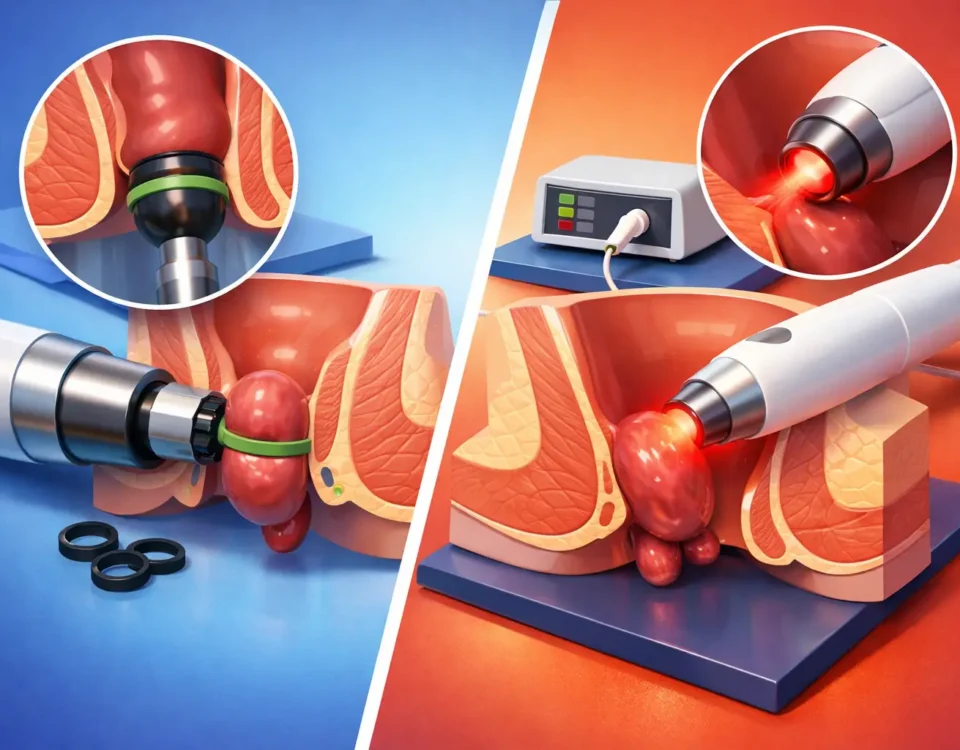
Office-based procedures are often an effective next step for grade 1, grade 2, and many grade 3 internal hemorrhoids. Hemorrhoid banding is a common non-surgical treatment that targets the internal hemorrhoid directly. The goal is to cut off its blood supply so the tissue shrinks and symptoms improve. For the right patient, this can offer meaningful relief without anesthesia, hospital admission, or a long recovery.
Grade 4 hemorrhoids and mixed internal-external disease may require a more individualized plan. Sometimes non-surgical care is still part of symptom control. In other cases, surgical management may need to be discussed. The key is not to assume the worst before you are examined. Many patients delay care because they fear an operation, when a less invasive option may still be appropriate.
Signs it is time to move beyond home remedies
If you have tried creams, suppositories, sitz baths, or diet changes and symptoms keep returning, that usually means the underlying hemorrhoid tissue has not been adequately treated. Repeated flare-ups are common, but they are not something you have to simply live with.
It is time to consider specialist care if you have bleeding that keeps happening, prolapse during bowel movements, tissue that needs to be pushed back in, persistent itching or mucus, or symptoms that interfere with work and normal routines. It is also time to be seen if you are not sure hemorrhoids are truly the cause.
For many people, the biggest relief is finally getting a clear answer. Specialized evaluation can separate temporary irritation from a condition that is unlikely to improve on its own.
What patients often want to know about recovery
Most adults seeking treatment are not asking only, “Will this work?” They are also asking, “How much will this disrupt my week?” That is a reasonable concern.
Non-surgical, office-based treatment is often appealing because it is designed around speed and convenience. In the right cases, patients can avoid traditional surgery, avoid anesthesia, and get back to normal activity quickly. That does not mean every case feels the same or follows the same timeline. Symptom severity, hemorrhoid grade, and the treatment chosen all affect recovery. But for many patients, the path to relief is simpler than they expected.
A guide to internal hemorrhoid grades is only the first step
Understanding grades can help you make sense of bleeding, prolapse, and irritation, but it cannot replace an exam. If your symptoms have moved from occasional to frequent, or from annoying to disruptive, there is value in getting a precise diagnosis and a treatment plan built around relief rather than guesswork.
Embarrassment keeps a lot of people waiting longer than they should. The good news is that hemorrhoids are common, treatable, and often manageable without traditional surgery. When symptoms keep coming back, getting expert care is not a big step. It is usually the most direct one.