
How to Apply Fissure Ointment the Right Way
August 9, 2026
Can Anal Fissures Cause Bleeding? What It Means
August 13, 2026
A cream that has not helped after several days can leave you wondering whether you chose the wrong product, used it incorrectly, or simply have to live with the discomfort. Hemorrhoids after failed creams are common, and they often signal that it is time for a focused examination rather than another over-the-counter purchase. Persistent bleeding, itching, swelling, pain, or a lump deserves a clear diagnosis and a treatment plan built around the actual cause.
Why hemorrhoid creams do not always provide relief
Over-the-counter hemorrhoid products can temporarily calm mild irritation. Depending on the formula, they may reduce itching, numb the area briefly, or lessen minor swelling. That can be useful during a short flare-up, especially when paired with fiber, hydration, and gentler bowel habits.
But creams have limits. They generally do not remove an internal hemorrhoid, correct a hemorrhoid that protrudes during a bowel movement, or address a clot in an external hemorrhoid. They also cannot reliably treat a condition that only appears to be hemorrhoids, such as an anal fissure, skin irritation, infection, or another source of rectal bleeding.
Using certain medicated creams for too long can create another problem. Products containing steroids may thin or irritate delicate skin when used beyond the recommended period. Reapplying cream more frequently is rarely the answer when symptoms are unchanged.
When hemorrhoids after failed creams need an exam
A specialist exam is the practical next step when symptoms continue despite home care or return repeatedly. The goal is not simply to confirm that hemorrhoids are present. It is to determine the type, location, and severity of the problem, then rule out other causes of discomfort or bleeding.
Internal hemorrhoids are located inside the rectum and commonly cause painless bright-red bleeding, fullness, or tissue that comes out with a bowel movement. External hemorrhoids occur under the skin around the anus and may cause a tender lump, swelling, itching, or pain. Some patients have both.
An anal fissure can be mistaken for hemorrhoids, particularly when pain occurs during or after a bowel movement. Fissure pain is often sharp, burning, or intense, while hemorrhoid symptoms can feel more like pressure, itching, swelling, or bleeding. The distinction matters because treatment is different.
Do not assume rectal bleeding is hemorrhoids without medical evaluation. Bright-red blood can occur with hemorrhoids, but bleeding can have other causes. New bleeding, frequent bleeding, bleeding with a change in bowel habits, unexplained weight loss, abdominal pain, fatigue, or a family history of colorectal cancer should be evaluated promptly.
What to expect from a focused hemorrhoid evaluation
Many people delay care because they expect a hospital visit, anesthesia, or a long recovery. A specialized hemorrhoid evaluation is typically much more straightforward. Your provider reviews your symptoms, bowel habits, medical history, and prior treatments, then performs an exam designed to identify the source of the problem.
For suspected internal hemorrhoids, the provider may use a small in-office instrument to view the lower rectum. This helps determine whether hemorrhoids are enlarged, prolapsing, bleeding, or accompanied by another condition. It also helps avoid treating symptoms based on guesswork.
Be direct about what you have tried. Bring the names of creams, suppositories, stool softeners, and pain medications you have used, as well as how long you used them. Details such as whether bleeding happens only with bowel movements, whether pain lingers for hours, and whether tissue must be pushed back inside can guide the treatment decision.
Nonsurgical treatments that may work when creams do not
The right treatment depends on the diagnosis. Not every hemorrhoid requires a procedure, and not every procedure is appropriate for every type of hemorrhoid. A focused plan may include dietary and bowel-habit changes, prescription medication, or office-based treatment.
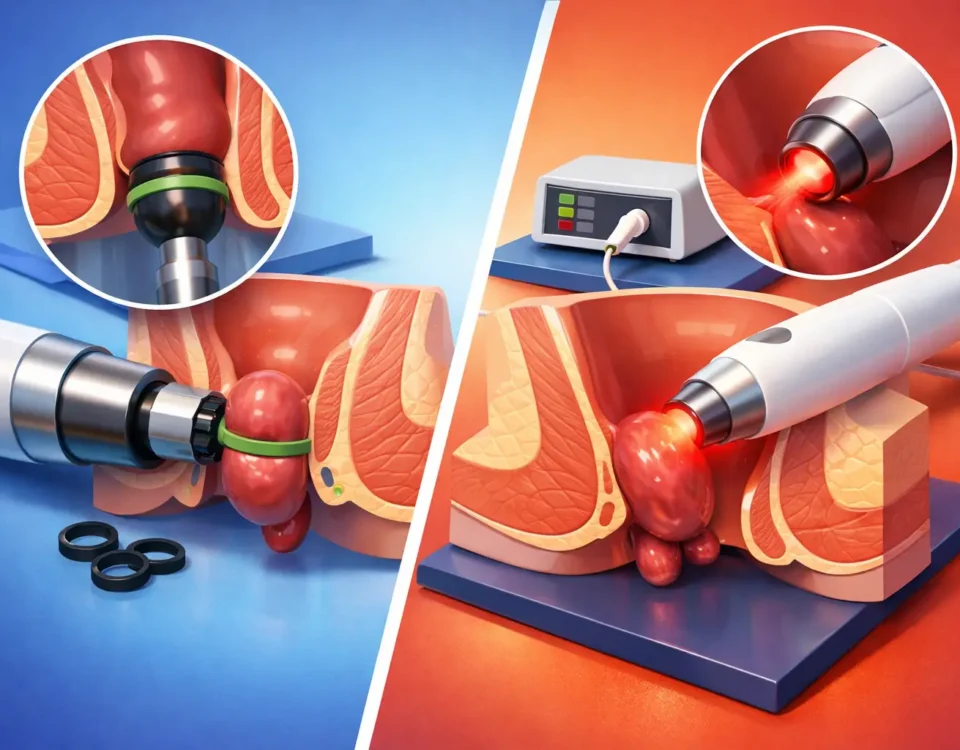
For internal hemorrhoids, hemorrhoid banding is often an effective nonsurgical option. During banding, a small band is placed at the base of the internal hemorrhoid. The band reduces blood flow to the hemorrhoid, allowing it to shrink over time. Because internal hemorrhoids are located above the area with pain-sensitive nerve endings, many patients tolerate the procedure well.
Banding is performed in the office and does not require traditional surgery or general anesthesia. Patients can often return to normal daily activity the same day, though individual instructions vary. You may feel pressure or fullness for a short time afterward, and your provider will explain what symptoms are expected and what would warrant a call.
Medication can also play a role, especially when an anal fissure or significant irritation is present. Custom medication protocols may help relax the anal muscle, improve blood flow to a fissure, or reduce inflammation in the appropriate situation. The key is matching the medication to the diagnosis instead of cycling through products that have already failed.
External hemorrhoids require a different approach. If an external hemorrhoid is swollen but not severely painful, conservative care may be appropriate. A sudden, very painful lump can sometimes indicate a thrombosed external hemorrhoid, meaning a blood clot has formed. Timing, symptom severity, and examination findings determine the best next step.
What you can do while waiting for care
You do not need to suffer without any support while arranging an appointment. The goal is to make bowel movements easier and reduce friction or straining. Drink adequate fluids, gradually increase fiber through food or a fiber supplement if your clinician says it is appropriate, and avoid sitting on the toilet for long periods.
Try not to strain or force a bowel movement. If constipation is contributing, a stool-softening strategy may be helpful, but ask a healthcare professional which option fits your medical history and current medications. Warm water soaks can provide comfort for some patients, and gentle cleansing with water or unscented products can reduce irritation from aggressive wiping.
Avoid prolonged use of topical steroid products unless a clinician directs you to continue. Also avoid assuming that severe pain is normal. Hemorrhoids can be uncomfortable, but intense or worsening pain may point to a clot, fissure, abscess, or another condition that needs timely care.
When to seek urgent medical attention
Seek urgent evaluation for heavy rectal bleeding, dizziness or fainting, black or tarry stool, fever, rapidly worsening swelling, pus-like drainage, or severe pain that is not controlled with basic measures. These symptoms may not be caused by a routine hemorrhoid flare and should not be managed with cream alone.
If your symptoms are not urgent but have continued for more than a week, recur often, or interfere with work, sleep, exercise, or bowel movements, schedule an evaluation. Relief does not have to mean accepting a surgical pathway. At Hemorrhoid Centers of America, board-certified providers focus on diagnosing hemorrhoids and anal fissures accurately and providing office-based, nonsurgical treatment when appropriate.
Questions patients often ask
Should I keep trying different hemorrhoid creams?
A different cream may offer short-term symptom relief, but switching products repeatedly is unlikely to solve persistent bleeding, prolapse, a clot, or a fissure. After a reasonable trial without improvement, an exam is more useful than another tube.
¿Duele la ligadura de hemorroides?
Banding treats internal hemorrhoids in an area with fewer pain-sensitive nerve endings. Many patients describe pressure or fullness rather than significant pain. Your provider can explain what to expect based on the hemorrhoid being treated and your individual situation.
Can hemorrhoids come back after treatment?
They can, particularly when constipation, straining, prolonged toilet sitting, pregnancy, heavy lifting, or chronic diarrhea continue to place pressure on the hemorrhoidal veins. Treatment addresses the current hemorrhoid, while consistent bowel habits and early attention to returning symptoms can lower the chance of another disruptive flare-up.
Persistent symptoms are not a personal failure, and they are not something you need to keep managing in private. A prompt, specialized evaluation can replace uncertainty with a diagnosis and a realistic path toward relief.