
Best Questions Before Banding Hemorrhoids
August 15, 2026
How to Choose a Hemorrhoid Specialist Near You
August 19, 2026
A bowel movement should not become the most stressful part of your day. Yet when hemorrhoids are swollen or irritated, even a routine trip to the bathroom can bring pain, pressure, itching, bleeding, or the feeling that you are not finished. Understanding how hemorrhoids affect bowel movements can help you recognize what is happening and decide when it is time to seek focused treatment.
Hemorrhoids are swollen veins in or around the anus and lower rectum. Internal hemorrhoids develop inside the rectum, while external hemorrhoids form under the skin around the anus. Either type can interfere with comfortable bowel movements, especially when straining, constipation, diarrhea, or prolonged sitting keeps the area inflamed.
How Hemorrhoids Affect Bowel Movements
The effect depends on the type, size, and severity of the hemorrhoid. Some people notice only bright red blood on the toilet paper. Others feel sharp discomfort, swelling, or a persistent sense of rectal fullness that makes them hesitate to use the bathroom.
Pain can lead to holding stool
External hemorrhoids are more likely to cause pain because they occur in an area with many nerve endings. If a blood clot develops in an external hemorrhoid, called a thrombosed hemorrhoid, pain and swelling may be sudden and significant.
When bowel movements hurt, many people start delaying them. That understandable response can make stool harder and drier, which leads to more straining the next time. The result is a frustrating cycle: pain causes withholding, withholding contributes to constipation, and constipation aggravates hemorrhoids.
Internal hemorrhoids are often painless, particularly in earlier stages. But they can become uncomfortable if they enlarge, prolapse outside the anus, or cause irritation and mucus leakage. A prolapsing hemorrhoid may create pressure or the sensation that something is still there after you have finished a bowel movement.
Straining makes symptoms worse
Straining is one of the most common ways hemorrhoid symptoms become more noticeable. Pushing hard increases pressure in the veins around the rectum and anus. This can make existing hemorrhoids swell, bleed, or protrude.
Constipation is not the only cause. Sitting on the toilet for extended periods, frequent loose stools, pregnancy, heavy lifting, and a low-fiber diet can also increase pressure in the area. Some patients spend extra time on the toilet because they feel incomplete evacuation, but that added time can worsen swelling rather than solve the problem.
A useful goal is a soft, formed stool that passes without pushing. There is a trade-off, however: overusing laxatives or suddenly adding large amounts of fiber without enough fluids can cause cramping, urgency, or loose stool, all of which may irritate the area. A gradual, consistent approach is usually easier on your system.
Bleeding may appear during or after a bowel movement
Bright red blood on toilet paper, on the stool, or in the bowl is a common symptom of internal hemorrhoids. Hard stool and straining can scrape or irritate delicate hemorrhoidal tissue, causing bleeding. In many cases, the bleeding is painless.
Still, rectal bleeding should not automatically be assumed to be hemorrhoids. Anal fissures, polyps, inflammatory bowel conditions, colorectal cancer, and other conditions can also cause bleeding. A medical evaluation is the right next step when bleeding is new, recurrent, heavy, associated with changes in bowel habits, or accompanied by weakness, dizziness, unexplained weight loss, or dark, tarry stool.
Swelling can cause a feeling of blockage
Larger internal hemorrhoids can prolapse, meaning they bulge out through the anal opening during a bowel movement. They may go back inside on their own, need gentle manual reduction, or remain outside. This swelling can make it feel as though stool is blocked or a bowel movement is incomplete.
That sensation is real and uncomfortable, but it does not always mean there is a true obstruction. Repeated straining to force another bowel movement can increase swelling. If the feeling continues, a specialist can determine whether hemorrhoids are the cause or whether another issue needs attention.
Itching, moisture, and irritation can linger afterward
Hemorrhoids do not always cause pain. Some patients primarily notice itching, dampness, burning, or irritation after wiping. Prolapsing internal hemorrhoids can produce mucus, which irritates the surrounding skin. Frequent wiping, scented products, and harsh soaps can make the irritation worse.
Gentle cleaning with water or unscented wipes, followed by patting rather than rubbing, may reduce irritation. Avoid aggressively scrubbing the area. If symptoms persist despite careful hygiene and stool changes, the underlying hemorrhoid may need direct treatment rather than more over-the-counter creams.
Are Hemorrhoids Causing Constipation?
Hemorrhoids do not usually slow the bowel itself or directly cause constipation. More often, they contribute indirectly because discomfort makes people avoid bowel movements. Fear of bleeding or pain can also lead someone to strain differently, sit too long, or ignore the urge to go.
Constipation can also predate the hemorrhoids. Hard stools, infrequent bowel movements, and repeated straining are major contributors to hemorrhoid flare-ups. Treating both sides of the problem matters: improving stool consistency helps prevent further irritation, while treating symptomatic hemorrhoids helps make bathroom trips less painful and stressful.
If constipation is new, severe, or lasts more than a few weeks, do not self-diagnose. Medications, diet changes, thyroid problems, pelvic floor dysfunction, and other medical conditions can affect bowel habits.
What Can Make Bowel Movements Easier
For mild symptoms, small changes can reduce strain and irritation. Drink enough water throughout the day, increase dietary fiber gradually, and respond to the urge to have a bowel movement rather than waiting. Regular movement can also support more predictable bowel habits.
Limit your time on the toilet. A bathroom visit should not become a long sitting session. Put the phone away, avoid pushing, and get up if nothing happens after a few minutes. Some people find that placing their feet on a small stool helps them assume a more natural position for passing stool with less effort.
Warm sitz baths may temporarily soothe soreness, and short-term over-the-counter products can provide symptom relief for some people. But these measures do not remove internal hemorrhoids or correct prolapse. If bleeding, pain, swelling, or bowel-movement difficulty keeps returning, it is reasonable to move beyond temporary management.
When Hemorrhoid Treatment Can Help
Specialized evaluation can identify whether symptoms are caused by internal hemorrhoids, external hemorrhoids, an anal fissure, or another condition. This matters because fissures often cause sharp, tearing pain during and after bowel movements, while internal hemorrhoids more commonly cause painless bleeding and prolapse. The right diagnosis leads to the right treatment plan.
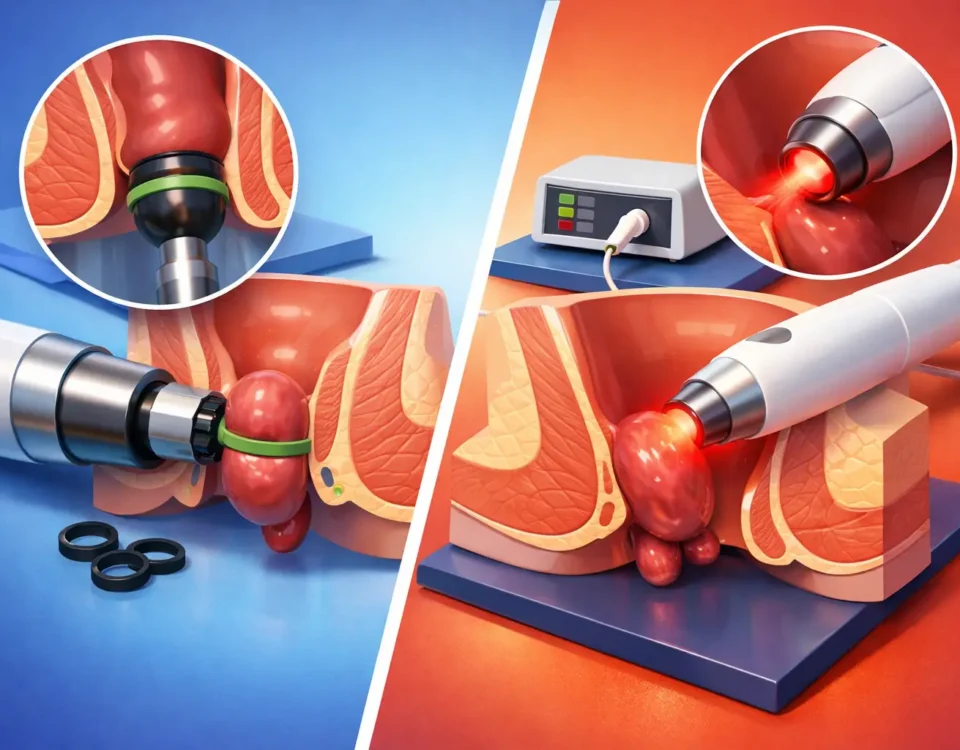
For many patients with symptomatic internal hemorrhoids, office-based banding can be an effective non-surgical option. During hemorrhoid banding, a small band is placed at the base of the internal hemorrhoid, cutting off its blood supply so the tissue shrinks over time. Because the treatment is performed above the pain-sensitive area, many patients tolerate it well and can return to normal daily activity the same day.
At Hemorrhoid Centers of America, board-certified providers focus specifically on non-surgical treatment pathways for hemorrhoids and anal fissures. Depending on your symptoms and exam, care may include banding, custom medication protocols, or another focused approach designed to relieve the problem without traditional surgery or a lengthy recovery.
When to Seek Prompt Medical Care
Schedule an evaluation if you have persistent rectal bleeding, recurrent painful bowel movements, a growing lump, prolapse, or symptoms that have not improved with conservative care. Do not wait if bathroom visits are affecting work, sleep, travel, exercise, or your willingness to eat normally.
Seek urgent medical care for heavy bleeding, black or maroon stools, severe abdominal pain, fainting, fever, or a painful anal swelling that rapidly worsens. These symptoms may point to something other than routine hemorrhoids and deserve prompt attention.
You do not need to keep arranging your day around the bathroom or accepting bleeding and discomfort as normal. A focused evaluation can provide clarity, discreet care, and a path back to bowel movements that feel routine again.