

Hemorrhoids or Colon Cancer? Key Differences
June 2, 2026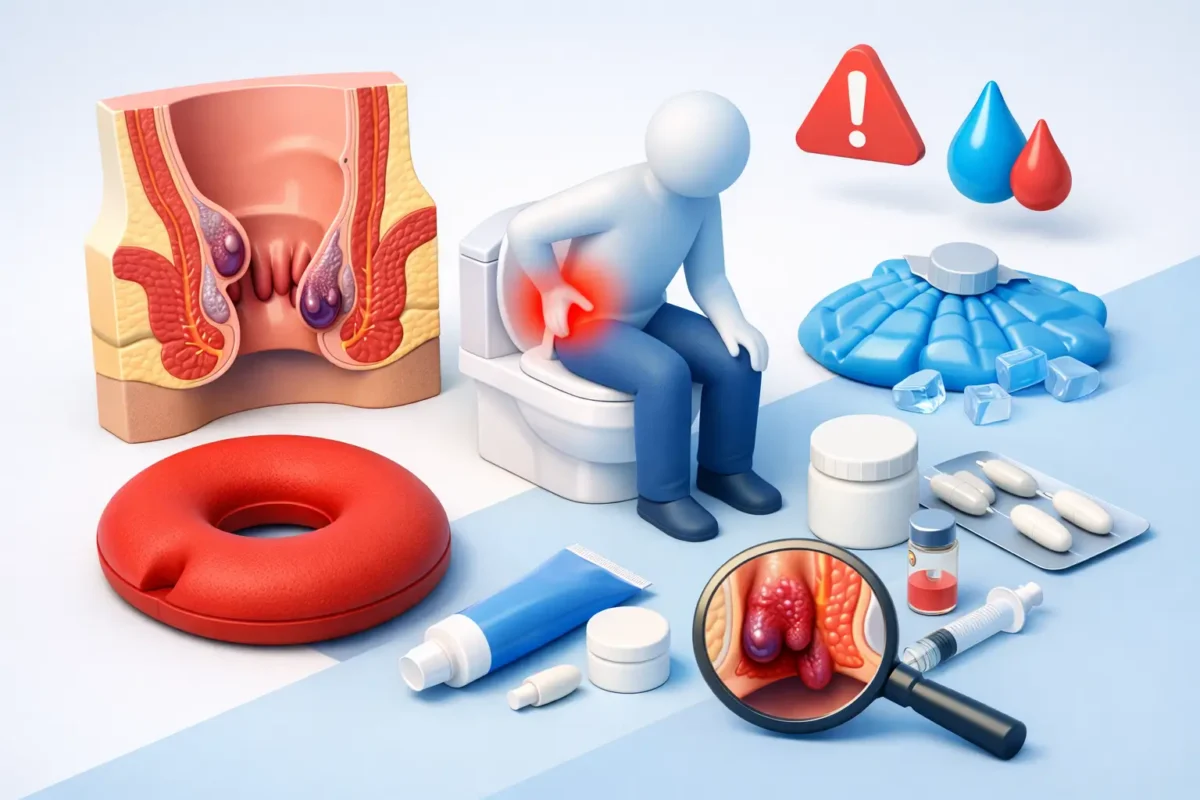
That bright red blood on the toilet paper gets your attention fast. So does the itching that will not let up, the swelling you can feel, or the pain that makes sitting through a workday miserable. The top signs you need hemorrhoid treatment are usually not subtle for long, and waiting rarely makes life easier.
Many people try to push through hemorrhoid symptoms because they feel embarrassed, assume the problem will go away on its own, or worry treatment means surgery. In reality, hemorrhoids are common, and many patients can be treated effectively with non-surgical care. The key is knowing when symptoms have moved beyond a minor irritation and into something that deserves evaluation by a specialist.
Top signs you need hemorrhoid treatment
Hemorrhoids can cause a range of symptoms depending on whether they are internal, external, or both. Some symptoms are mostly annoying. Others are disruptive, painful, or persistent enough that they signal the need for medical treatment rather than another round of over-the-counter creams.
Rectal bleeding that keeps happening
Occasional light spotting can happen with hemorrhoids, especially after a bowel movement. But if you are seeing bright red blood repeatedly, that is one of the clearest signs you should be evaluated. Even when hemorrhoids are the cause, ongoing bleeding is not something to ignore.
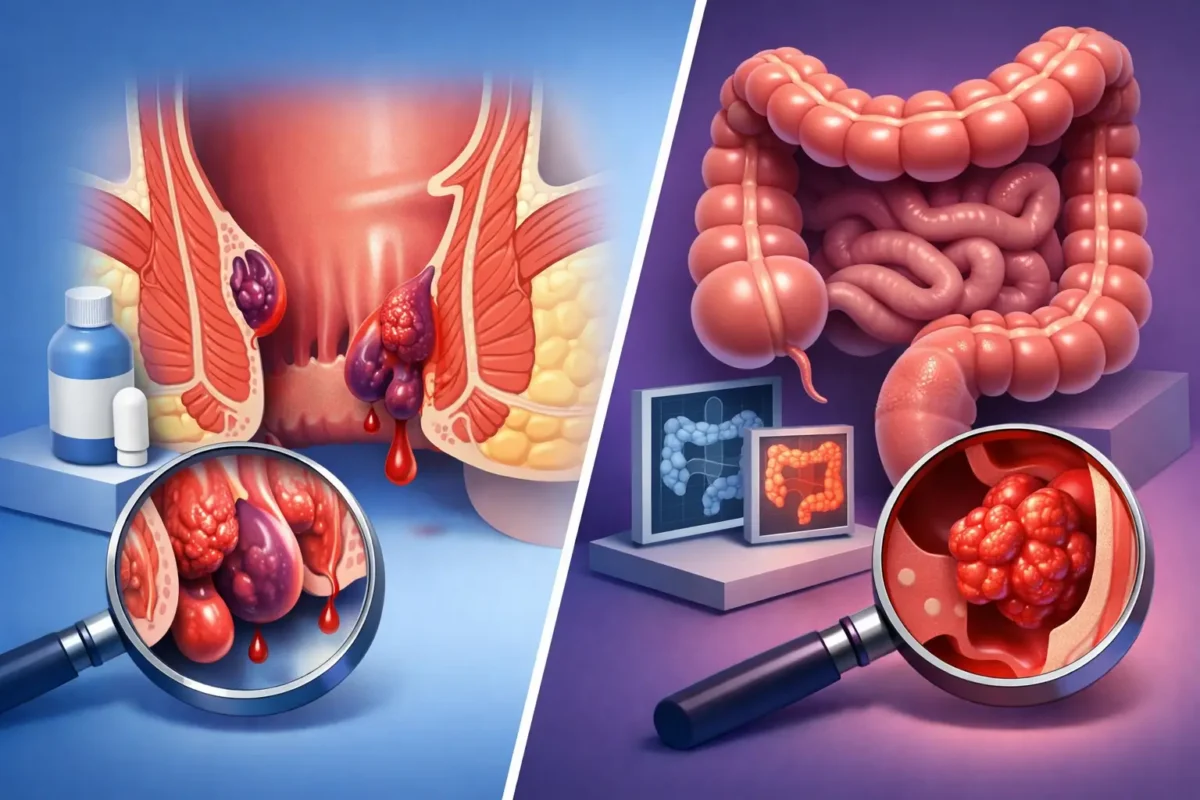
There is another reason this matters. Not every case of rectal bleeding is caused by hemorrhoids. Bleeding can overlap with other anorectal or gastrointestinal conditions, so a proper diagnosis matters. If you are assuming it is hemorrhoids without being examined, you could miss a different problem.
Pain during bowel movements or while sitting
Internal hemorrhoids do not always hurt, but external hemorrhoids and irritated tissue around the anus often do. Pain during bowel movements, pain that lingers afterward, or discomfort when sitting can mean the area is inflamed, swollen, or complicated by a clot or fissure.
Pain is one of the biggest reasons patients finally seek care, and for good reason. If symptoms are starting to shape how you sit, work, exercise, or use the bathroom, home care is no longer doing enough.
Itching, burning, and irritation that will not stop
Persistent anal itching is easy to dismiss at first. People often assume it is hygiene, sweat, diet, or a temporary flare-up. But when itching becomes a frequent problem, especially if it comes with burning, moisture, or irritation after bowel movements, hemorrhoids may be involved.
This symptom can become surprisingly disruptive. It affects sleep, concentration, and daily comfort. More importantly, ongoing irritation can mean the underlying hemorrhoid tissue is continuing to swell or prolapse instead of settling down.
A lump, swelling, or tissue you can feel
A swollen area near the anus can point to an external hemorrhoid. Tissue that bulges during a bowel movement and then goes back in, or has to be pushed back in manually, may suggest a prolapsing internal hemorrhoid. Either way, a visible or palpable lump is one of the top signs you need hemorrhoid treatment if it keeps recurring or becomes painful.
The details matter here. A small temporary flare-up may improve with conservative measures. A larger lump, sudden severe swelling, or tissue that stays outside the anal opening often needs prompt evaluation. The longer swelling persists, the less likely it is that self-care alone will solve the problem.
Symptoms that keep coming back
A lot of patients do get temporary relief from wipes, ointments, sitz baths, or dietary changes. But temporary relief is not the same as resolving the problem. If your symptoms improve for a week and then come back, or if every bowel movement seems to restart the cycle, that is a strong sign you may need targeted treatment.
Recurring symptoms usually mean the underlying hemorrhoid has not been adequately addressed. This is especially true when bleeding, prolapse, or swelling are part of the pattern. At that point, a more definitive non-surgical treatment approach may make far more sense than repeating the same home remedies.
When home treatment is no longer enough
Home care has a place. Increasing fiber, drinking more water, avoiding straining, and using short-term symptom relief products can help mild cases. But there is a difference between managing a brief flare and living around a condition that keeps interfering with your routine.
If you are planning your day around bathroom discomfort, carrying wipes and creams everywhere, or avoiding exercise and travel because symptoms might flare, it is time to move beyond self-treatment. The same is true if symptoms last longer than a week, worsen instead of improving, or begin affecting work and sleep.
Another common turning point is when patients start changing bowel habits out of fear. If you are dreading bowel movements because of pain or bleeding, that can lead to more straining and more irritation, which keeps the cycle going.
Signs your symptoms may be more than hemorrhoids
Hemorrhoids are common, but they are not the only cause of anorectal discomfort. Anal fissures can cause sharp pain, especially during and after bowel movements, and they may also cause bleeding. Other conditions can create similar symptoms as well.
That is why diagnosis matters. Pain that feels cutting or tearing, bleeding that seems heavier than expected, drainage, fever, or symptoms that change quickly should not be self-diagnosed. A focused exam by an experienced provider can identify whether you are dealing with hemorrhoids, a fissure, or another condition that needs a different treatment plan.
Cuándo es mejor acudir al médico cuanto antes
Some symptoms should push you to schedule an evaluation promptly. These include frequent bleeding, worsening pain, a hard painful lump, tissue that stays prolapsed, or symptoms that have not improved with conservative care. If you feel weak, dizzy, or have significant bleeding, urgent medical attention is appropriate.
It also makes sense to be evaluated earlier if you have never had hemorrhoid symptoms before and are not sure what you are dealing with. Guessing can delay relief.
What treatment can look like
For many adults, the biggest fear is surgery. That fear keeps people waiting months or even years before getting help. But hemorrhoid treatment does not automatically mean a hospital, anesthesia, or a long recovery.
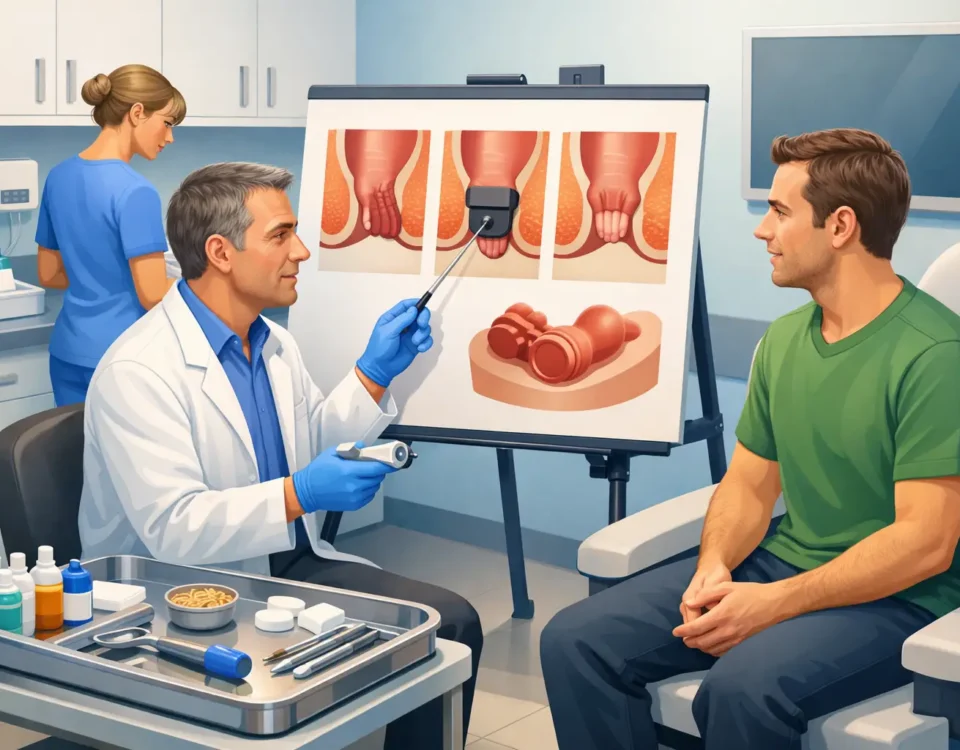
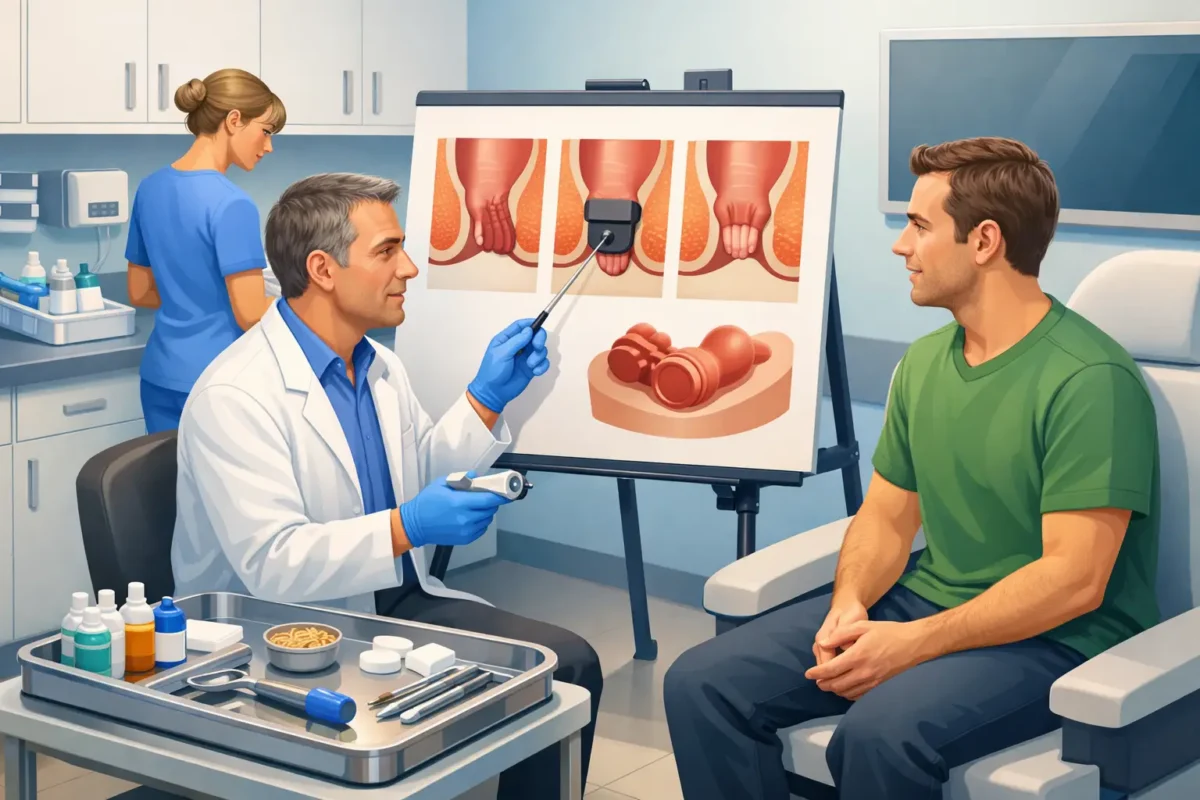
Specialized non-surgical treatment can often address internal hemorrhoids effectively in an office setting. Depending on the findings, treatment may include hemorrhoid banding, medication-based care, or a customized plan based on the type and severity of symptoms. The benefit of seeing a focused specialist is that the treatment is designed around the specific problem rather than a one-size-fits-all approach.
This is where it depends on the source of your symptoms. A prolapsing internal hemorrhoid may respond well to office-based banding. Irritated external tissue may need a different strategy. A fissure requires its own treatment pathway. The right answer starts with an accurate diagnosis.
Why early treatment tends to be easier
Patients often wait until symptoms become unbearable. That is understandable, but it is not ideal. In general, earlier treatment means less ongoing irritation, less disruption to your routine, and a better chance of addressing the issue before it becomes more severe.
There is also a practical advantage. When symptoms are treated before they become constant, patients often avoid the cycle of chronic flare-ups, repeated over-the-counter spending, and ongoing anxiety about bleeding or pain. Relief becomes less about managing around the problem and more about fixing it.
At Hemorrhoid Centers of America, that often means an office-based, non-surgical path focused on speed, privacy, and getting patients back to normal daily activity without the burden of traditional surgery.
Embarrassment keeps a lot of people silent longer than they should be. But hemorrhoids are a medical condition, not a personal failure, and persistent symptoms deserve real treatment. If bleeding, pain, itching, or swelling are continuing to take up space in your day, getting expert care is not overreacting. It is a smart next step toward feeling normal again.