
Internal and External Hemorrhoids Explained
October 26, 2026
Are Fissures Dangerous? When Pain Needs Care
October 30, 2026
Painful bleeding after a bowel movement, persistent itching, or a swollen lump can make it hard to focus on anything else. If you have put off care because the problem feels embarrassing or you are worried that treatment means surgery, understanding your hemorrhoid appointment expectations can make the next step feel far more manageable.
A focused hemorrhoid visit is private, straightforward, and centered on finding the cause of your symptoms. The goal is not to make you endure a long hospital process. It is to identify what is happening, discuss effective options, and, when appropriate, begin minimally invasive treatment that can fit into a normal day.
Before Your Hemorrhoid Appointment
You generally do not need major preparation for an office visit. Most patients can eat and drink normally unless the office gives different instructions. Wear comfortable clothing, and bring your photo ID, insurance information, a list of medications, and details about any treatments you have already tried.
It can also help to write down when your symptoms started and what makes them better or worse. Note whether you have seen bright red blood on toilet paper or in the bowl, felt a lump, had pain during bowel movements, or experienced itching, drainage, or swelling. Bowel habits matter too. Constipation, straining, prolonged time on the toilet, diarrhea, and pregnancy can all contribute to hemorrhoid symptoms.
There is no need to feel awkward about the conversation. Hemorrhoids and anal fissures are common conditions, and a specialized provider discusses these symptoms every day. Clear answers help your clinician determine whether hemorrhoids are the likely cause and whether another condition needs attention.
What Happens During a Hemorrhoid Evaluation
Your appointment usually begins with a medical history and a discussion of your symptoms. Your provider may ask about bleeding, pain, changes in bowel habits, prior colonoscopy results, family history of colorectal disease, pregnancy history, and medications such as blood thinners.
Bleeding should never be dismissed automatically as hemorrhoids. While bright red rectal bleeding can occur with hemorrhoids or fissures, it can have other causes. Your provider will consider your age, symptoms, personal history, and screening history to decide whether additional evaluation is appropriate.
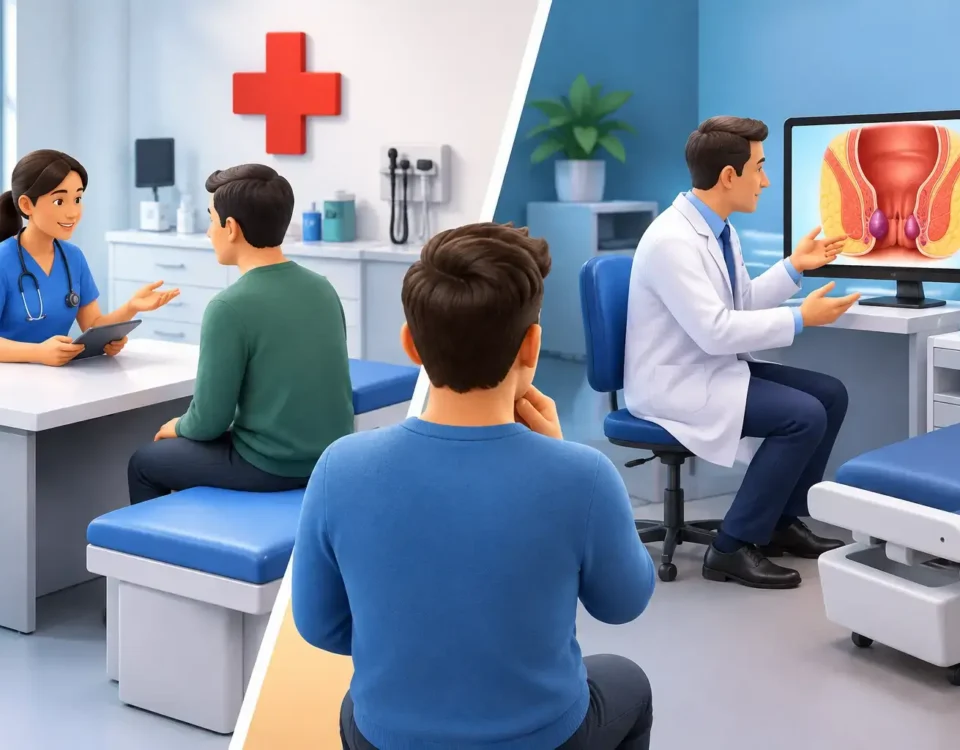
Next comes a focused examination of the anal area. This is performed discreetly and efficiently. Depending on your symptoms, the clinician may inspect the area, perform a gentle digital rectal exam, or use a small lighted instrument called an anoscope to view the lower rectum and internal hemorrhoids.
The exam is often shorter than patients expect. It may feel uncomfortable or create pressure, but it should not be unnecessarily painful. If you have severe pain, especially from a fissure or thrombosed external hemorrhoid, tell the provider before the exam begins. The approach can be adjusted to protect your comfort while still getting the information needed for an accurate diagnosis.
Why a Specialized Exam Matters
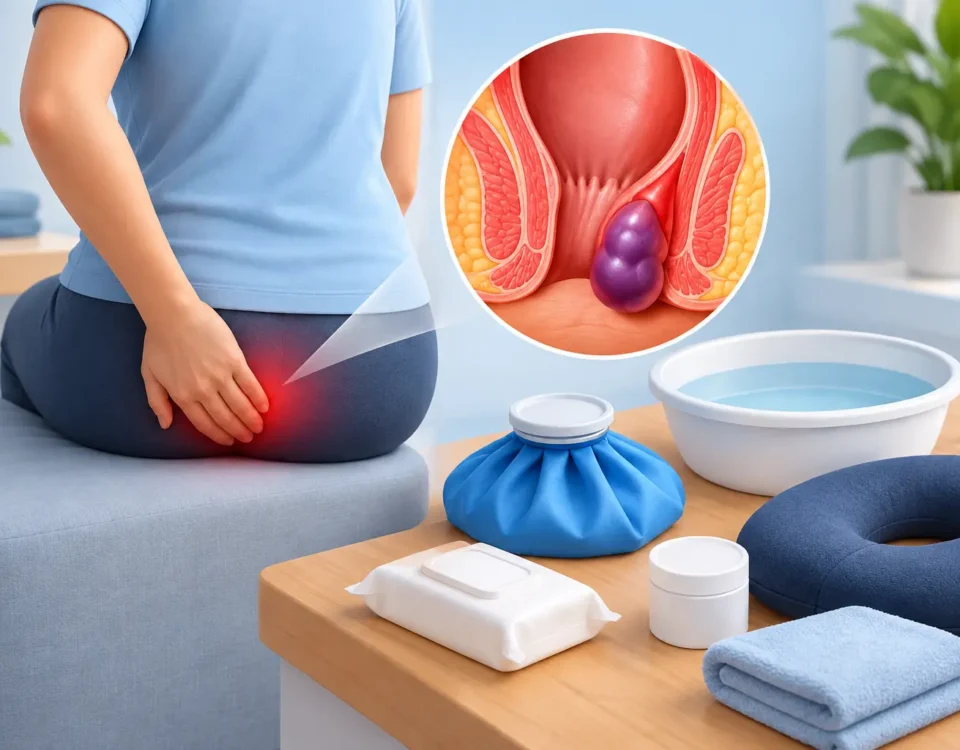
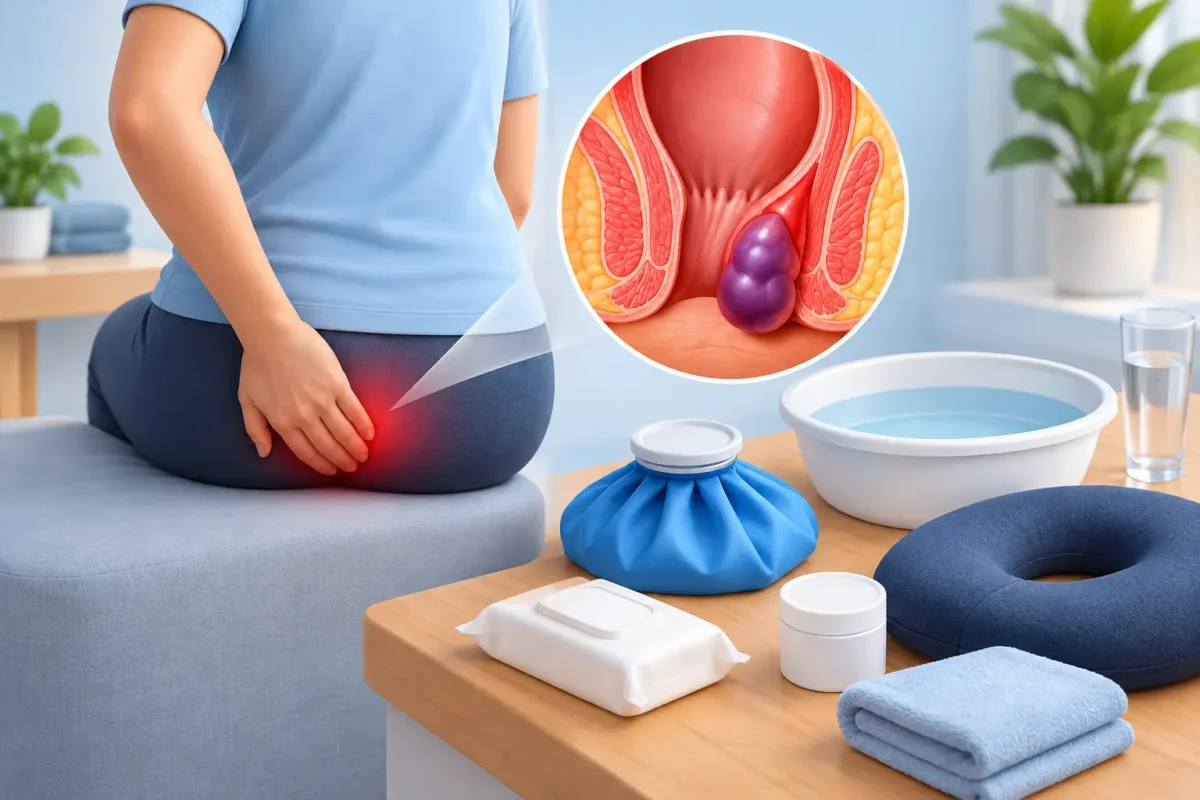
Not every anal symptom is a hemorrhoid, and not every hemorrhoid requires the same treatment. Internal hemorrhoids commonly cause painless bleeding or prolapse. External hemorrhoids may cause swelling, irritation, or pain. An anal fissure, which is a small tear in the lining of the anal canal, often causes sharp pain during or after a bowel movement.
A precise diagnosis prevents wasted time on treatments that do not match the problem. It also helps your provider recommend care based on the hemorrhoid type, severity, your health history, and how much symptoms are affecting your daily life.
When Treatment May Happen the Same Day
Many patients want to know whether they will leave the appointment with an actual solution. The answer depends on the diagnosis, but same-day treatment may be possible for eligible internal hemorrhoids.
Office-based rubber band ligation, commonly called hemorrhoid banding, is one non-surgical option. During the procedure, a small band is placed at the base of an internal hemorrhoid, cutting off its blood supply. The hemorrhoid shrinks over time. Because internal hemorrhoids are located above the area with pain-sensitive nerves, banding is often well tolerated and does not require anesthesia or a hospital stay.
Not everyone is a candidate for immediate banding. Active infection, certain bleeding risks, use of some anticoagulant medications, severe external disease, or uncertainty about the diagnosis can change the plan. Some patients need a custom medication protocol, bowel habit support, or further evaluation before a procedure is the right choice.
At Hemorrhoid Centers of America, care is designed around non-surgical treatment pathways when clinically appropriate, with the aim of providing effective relief without the prolonged recovery associated with traditional hemorrhoid surgery.
What Hemorrhoid Banding Feels Like
Patients often expect a painful procedure because the condition itself can be painful. In reality, banding for internal hemorrhoids typically feels more like pressure, fullness, or the sensation that you need to have a bowel movement. The procedure itself is usually brief.
Some people have mild cramping or discomfort later that day. Your provider may recommend simple measures for relief and give specific instructions based on your health needs. Severe or escalating pain is not something to ignore. Contact the office promptly if it occurs.
You may be able to return to work, drive yourself home, and resume many regular activities the same day. Still, recovery is individual. Heavy lifting, strenuous exercise, and prolonged straining may need to wait briefly, depending on the treatment performed and your provider’s instructions.
What to Expect After the Visit
Your care plan should be clear before you leave. That may include a procedure, prescription medication, dietary guidance, a recommendation to increase fiber and fluids, stool-softening strategies, or a follow-up appointment. If multiple hemorrhoids need treatment, care may be staged over more than one visit to support comfort and safety.
After banding, it is common to notice a small amount of bleeding several days later as the treated tissue separates. Your office will explain what is expected and what requires a call. Seek urgent medical attention for heavy bleeding, dizziness, fainting, fever, inability to urinate, or severe worsening pain.
Preventing straining is a major part of protecting your results. Aim for soft, easy bowel movements rather than forcing a bowel movement or sitting on the toilet for long periods. For some people, increasing fiber slowly and drinking more water is enough. Others may need a stool softener or a more personalized plan, especially if constipation is chronic or medication-related.
Questions Worth Asking at Your Appointment
You do not need to memorize medical terms to have a productive visit. Ask whether your symptoms are caused by internal hemorrhoids, external hemorrhoids, a fissure, or another issue. Ask which treatment is recommended, why it fits your situation, how many visits may be needed, and what recovery will look like for work, exercise, and bowel movements.
It is also reasonable to ask about expected discomfort, medication instructions, possible side effects, and when to contact the office. If you take blood thinners or have a history of bleeding problems, make sure this is part of the conversation before any procedure is scheduled or performed.
Do Not Wait for Symptoms to Become Disruptive
You do not have to keep planning your day around pain, itching, bleeding, or fear of the next bowel movement. A hemorrhoid appointment is a practical opportunity to replace uncertainty with a clear diagnosis and a treatment plan that respects your time and comfort.
The hardest part for many patients is making the appointment. Once you are there, the conversation is clinical, discreet, and focused on helping you get back to normal life with as little disruption as possible.