

Guide to Internal Hemorrhoid Treatment
May 7, 2026
Guide to Anal Fissure Recovery
May 11, 2026
If you are searching for the best doctor for hemorrhoids, you probably do not want a long medical lecture. You want to know who can stop the bleeding, itching, swelling, or pain and help you get back to work, sleep, and normal routines as quickly as possible. That usually means finding a provider who treats hemorrhoids every day, not one who only sees them occasionally.
What kind of doctor is best for hemorrhoids?
The short answer is this: the best doctor for hemorrhoids is usually a specialist with focused experience diagnosing and treating anorectal conditions, especially hemorrhoids and anal fissures. In many cases, that means a board-certified surgeon with specific expertise in office-based, minimally invasive hemorrhoid treatment.
This surprises some patients. They assume surgery is the default if a surgeon is involved. It is not. In fact, the right specialist often helps patients avoid traditional surgery altogether by using targeted, non-surgical treatments such as hemorrhoid banding and custom medication plans.
A primary care doctor can be a reasonable first stop if you are unsure what is causing your symptoms. But if you already know you are dealing with ongoing hemorrhoid pain, bleeding, itching, or swelling, a general evaluation may only delay definitive care. The real question is not just who can identify hemorrhoids. It is who can treat them effectively and efficiently.
Why specialization matters
Hemorrhoids are common, but they are not all the same. Some are internal and bleed without much pain. Others are external and cause swelling, irritation, or sudden discomfort. Some patients also have anal fissures, skin tags, or other anorectal issues that can look similar at first.
That is why specialization matters. A provider who focuses on this area is more likely to distinguish between similar conditions, recommend the right treatment pathway, and avoid overtreating or undertreating the problem. Experience matters not only in diagnosis, but also in choosing whether a patient needs medication, an office procedure, or a different level of care.
There is also a practical advantage. A specialist center that is built around hemorrhoid treatment usually has a more streamlined process. Patients are often seen, evaluated, and treated without being pushed into a hospital setting or a more invasive surgical pathway than they actually need.
The best doctor for hemorrhoids is not always the first doctor you see
Many people start with over-the-counter creams, sitz baths, fiber supplements, and the hope that the problem will go away. Sometimes mild symptoms improve. But when bleeding keeps happening, discomfort returns, or the hemorrhoid becomes harder to manage, it is time to move past temporary relief.
That is where provider choice makes a difference. A generalist may confirm the diagnosis and recommend more home care. A hemorrhoid-focused specialist is more likely to say, clearly and confidently, whether the issue can be treated in the office and how fast you can expect relief.
For patients who have delayed care because of embarrassment, this matters even more. You do not want to repeat the same conversation in multiple offices before reaching someone who can actually solve the problem.
Which specialists treat hemorrhoids?
Several types of medical professionals may evaluate hemorrhoids, but their roles are not identical.
A primary care physician can assess symptoms and refer you if needed. A gastroenterologist may evaluate rectal bleeding, especially if there are concerns about digestive or colon-related issues. A colorectal surgeon has advanced training in anorectal conditions and may treat hemorrhoids surgically or non-surgically.
For many patients, the best fit is a specialist practice that focuses heavily on hemorrhoid and fissure care, especially one that offers office-based procedures designed to avoid traditional surgery whenever possible. That focused experience often leads to faster decisions and a more efficient treatment plan.
What to look for in the best hemorrhoid doctor
Credentials matter, but they are only part of the picture. The best hemorrhoid doctor should have experience with the full range of common symptoms, including pain, bleeding, itching, swelling, and irritation. More importantly, the provider should be able to explain what type of hemorrhoid you have, whether another condition may be contributing, and what treatment is most likely to work for your case.
It also helps to ask practical questions. Does the office provide in-house treatment, or only consultations? Are non-surgical options available? Is the provider experienced in hemorrhoid banding? Will you likely need anesthesia, or can treatment be done during a routine office visit? How much downtime should you expect?
A good specialist will not make everything sound identical. Some hemorrhoids respond well to conservative treatment. Others are better treated with banding or a structured procedural plan. The best care is specific, not one-size-fits-all.
Non-surgical treatment should be part of the conversation
Patients often search for the best doctor for hemorrhoids because they are trying to avoid surgery. That is a reasonable goal. Not every hemorrhoid requires an operation, and many patients can get meaningful relief through non-surgical treatment performed in the office.
Hemorrhoid banding is one of the most common examples. For appropriately selected internal hemorrhoids, banding can address the source of bleeding and prolapse without the recovery burden associated with traditional surgery. Patients are often relieved to learn that treatment may be quick, require no hospital stay, and involve little interruption to normal life.
Medication can also play a role, especially when inflammation, irritation, or fissure-related pain is part of the picture. The right doctor will explain when medication is enough and when a procedure is the better option.
This is where a highly specialized practice stands apart. The goal is not to funnel every patient into surgery. The goal is to match the least invasive effective treatment to the patient in front of you.
Signs you should see a hemorrhoid specialist soon
Some symptoms should not be brushed off or managed indefinitely at home. Persistent rectal bleeding deserves medical evaluation, even if you suspect hemorrhoids. Ongoing pain, swelling that does not improve, a lump that becomes increasingly tender, or symptoms that keep returning are all signs you should be seen.
If you have already tried creams, wipes, stool softeners, hydration, and diet changes without lasting relief, that is another clue. Home care can help mild flare-ups, but it should not become a long-term substitute for proper diagnosis and treatment.
There is also a quality-of-life factor. If sitting is uncomfortable, bowel movements are stressful, or you are planning your day around hemorrhoid symptoms, you do not need to keep waiting for things to get better on their own.
What happens at your appointment
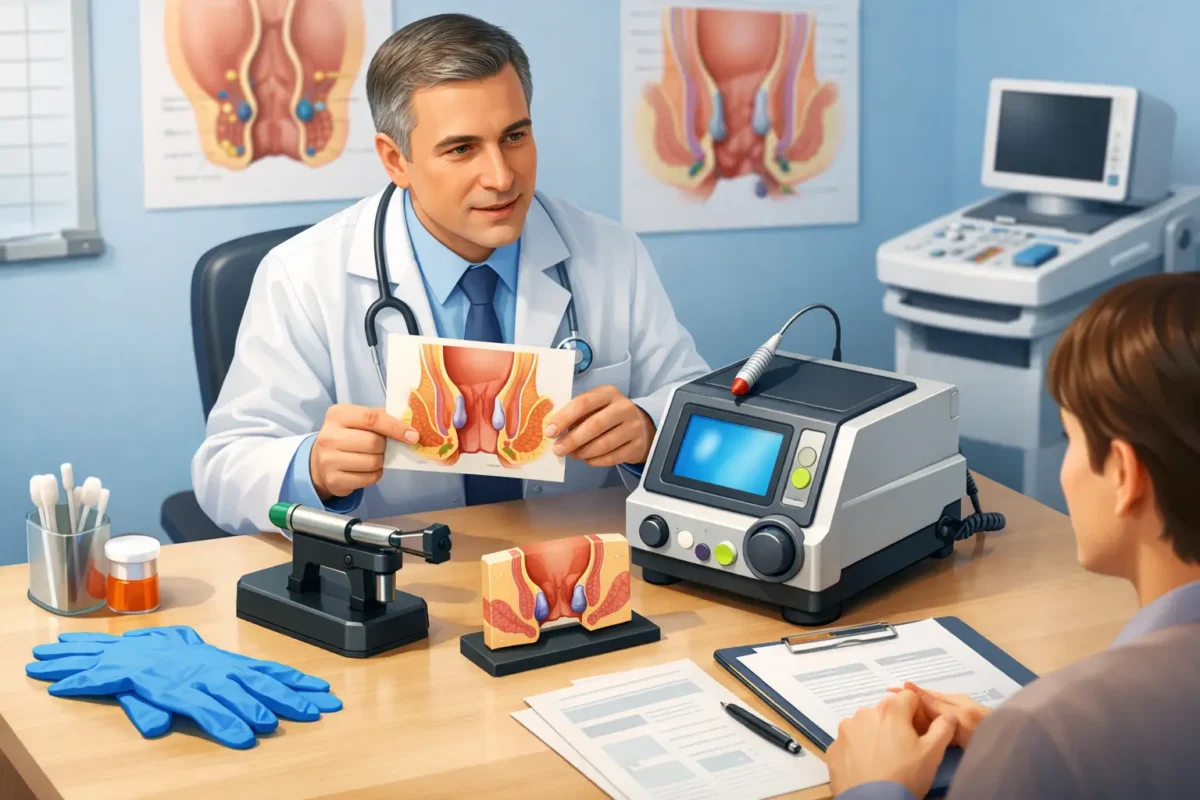
A good hemorrhoid appointment is usually more straightforward than patients expect. The visit starts with a review of your symptoms, how long they have been happening, whether you have bleeding or pain, and what treatments you have already tried. A focused exam follows so the provider can determine whether the issue is internal hemorrhoids, external hemorrhoids, an anal fissure, or another condition.
From there, the conversation should become practical. If an office-based procedure is appropriate, the provider should explain what it involves, how uncomfortable it may be, and when you can return to normal activity. If medication is the better first step, you should leave knowing what the treatment is intended to do and how quickly you should expect improvement.
This kind of visit works best when the provider is comfortable talking plainly. Hemorrhoids are uncomfortable enough. The care process should not feel confusing or overly complicated.
Choosing care based on results, not just specialty labels
A provider can have the right title and still not be the right fit. What matters most is whether the practice is set up to deliver prompt, effective treatment for hemorrhoids without unnecessary steps. That includes accurate diagnosis, access to non-surgical options, and a clear plan for relief.
For many patients, a specialized center such as Hemorrhoid Centers of America offers that combination. The model is built around fast access, office-based treatment, and board-certified expertise focused specifically on hemorrhoids and anal fissures. That kind of focus can make a real difference when you want relief now, not months from now.
If you have been waiting because you hoped the symptoms would fade, or because you assumed treatment would mean surgery, it may be time to rethink that assumption. The best doctor for hemorrhoids is usually the one with the experience, tools, and treatment approach to help you feel better quickly and with as little disruption as possible.
You do not need to keep adapting your life around pain, bleeding, or irritation. The right specialist can make this a much smaller problem than it feels today.