

Best Doctor for Hemorrhoids: Who to See
May 9, 2026
How to Shrink Prolapsing Hemorrhoids
May 13, 2026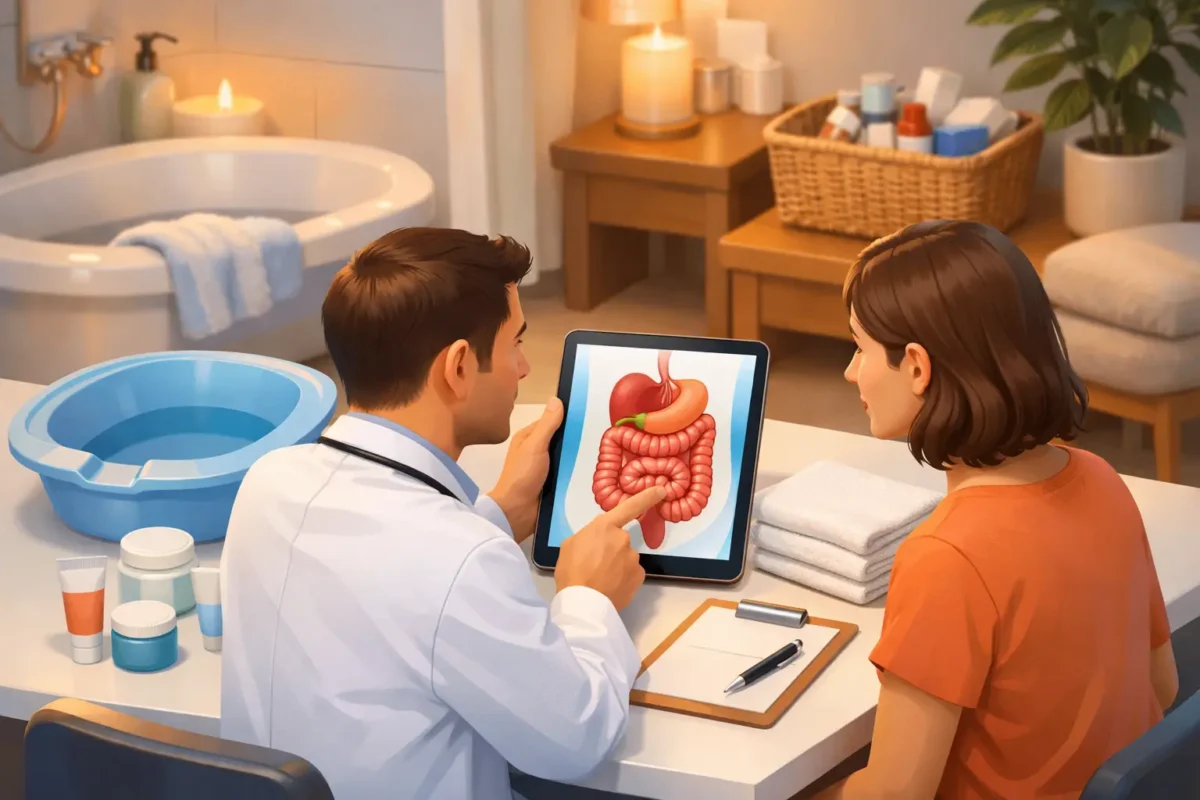
That sharp, tearing pain after a bowel movement can make the rest of the day feel impossible. If you are looking for a guide to anal fissure recovery, the most useful place to start is this: recovery depends on reducing repeated trauma to the area while helping the fissure heal. For many patients, that means softening stools, easing spasm, lowering irritation, and knowing when home care is no longer enough.
An anal fissure is a small tear in the lining of the anus. Even though the tear is small, the pain can be significant because the area is highly sensitive and the internal anal sphincter can go into spasm. That spasm reduces blood flow, which can make healing slower. This is why fissures often become a frustrating cycle of pain, constipation, fear of bowel movements, and re-injury.
What recovery from an anal fissure usually feels like
Recovery is rarely a straight line. Some people improve within a few days once stools become softer and irritation decreases. Others feel better for a week, then have one hard bowel movement and feel the pain return. That does not always mean the problem is getting worse, but it does mean the tissue is still vulnerable.
In the early stage, pain often peaks during and after bowel movements. You may also notice bright red blood on toilet paper, burning, itching, or a lingering ache when sitting. As healing begins, the pain usually becomes shorter in duration and less intense. Bleeding tends to decrease as well.
Acute fissures, which are newer tears, often respond better to conservative treatment. Chronic fissures have usually been present longer and may be harder to heal without prescription treatment or office-based care. That distinction matters because the longer a fissure lasts, the more likely it is that muscle spasm and poor blood flow are keeping it open.
A practical guide to anal fissure recovery at home
The goal of home care is simple: make bowel movements easier and reduce anything that keeps the fissure irritated. The biggest factor is stool consistency. Hard, dry stool can reopen the tear, while repeated diarrhea can also inflame the area. Recovery usually goes best when stools are soft, formed, and easy to pass.
Hydration helps, but water alone is not always enough. Many patients also need more dietary fiber or a stool-softening plan. Fiber can be helpful, but it depends on how your body responds. For some people, adding too much fiber too quickly causes bloating and more straining. A gradual increase is usually better than making a sudden change.
Warm sitz baths can reduce discomfort and help relax the sphincter muscle. They are not a cure by themselves, but they often make recovery more manageable, especially after bowel movements. Gentle hygiene matters too. Aggressive wiping, scented products, and harsh soaps can keep the area inflamed.
Pain relief needs some judgment. Over-the-counter options may help, but they do not address the underlying spasm that often drives fissure pain. Topical products can also be hit or miss. Some soothe irritation, while others can sting or cause more sensitivity. If a cream makes symptoms worse, stop using it rather than pushing through.
One practical point that patients often overlook is timing. Do not ignore the urge to have a bowel movement for long periods, but also do not sit on the toilet and strain. Both habits can make recovery harder. The less pressure and friction on the fissure, the better the chance for healing.
The bowel habits that help fissures heal
Most fissure recovery plans succeed or fail based on daily bowel habits. Straining is one of the most common reasons a fissure stays painful. Even mild straining, repeated day after day, can prevent the tissue from closing.
A footstool under your feet can help by changing your position and reducing the need to push. Taking your time is fine, but lingering on the toilet scrolling on your phone is not helpful. The goal is a relaxed, efficient bowel movement without prolonged pressure on the anal canal.
Constipation gets most of the attention, but frequent loose stool can also delay healing. If you are having repeated urgency, irritation, or wiping trauma from diarrhea, the fissure may not get a chance to recover. That is one reason treatment is not one-size-fits-all. Some patients need more softening. Others need better stool regulation overall.
Food triggers vary. Spicy foods do not cause fissures, but they can increase burning for some people once a fissure is already present. Alcohol and dehydration can make stools harder the next day. If a certain pattern clearly makes symptoms worse, it is reasonable to avoid it during recovery.
Anal fissure recovery timeline: what is normal
A mild, recent fissure may improve within a few days and heal over several weeks. If symptoms are steadily easing, that is encouraging. If you still have severe pain, ongoing bleeding, or recurring tearing after a few weeks, the fissure may need more than home care.
Chronic fissures often require medical treatment because the underlying muscle spasm keeps interrupting healing. In those cases, patients can spend months trying ointments, diet changes, and home remedies without getting durable relief. The issue is not a lack of effort. It is that the fissure has moved beyond what self-care can reliably fix.
Another important point is that not every painful anal symptom is a fissure. Hemorrhoids, skin irritation, infections, abscesses, and other anorectal conditions can overlap. If you are treating yourself for a fissure but not improving, the diagnosis may need to be confirmed by a specialist.
When to seek treatment sooner
There is no benefit in waiting indefinitely if symptoms are intense or recurring. You should seek medical evaluation sooner if pain is severe, bleeding continues, bowel movements are becoming something you dread, or symptoms keep returning despite your best efforts.
You should also get checked if you notice a lump, drainage, fever, or pain that becomes constant rather than mostly related to bowel movements. Those features can point to something other than a simple fissure. Persistent symptoms deserve a proper exam, especially when they are interfering with work, travel, exercise, or sleep.
Many patients delay care because they assume surgery is the next step. In reality, that is not always the case. Office-based, non-surgical treatment options may help relieve spasm, reduce pain, and support healing without the downtime people often fear.
What medical treatment can change in recovery
A specialist does more than confirm the diagnosis. Treatment can directly target the reasons a fissure is not healing. Prescription medications may help relax the internal anal sphincter and improve blood flow to the area. For some patients, this creates the shift that home treatment could not achieve.
If a fissure is chronic or particularly painful, a focused treatment plan can shorten the cycle of repeated re-injury. That matters because prolonged fissure pain often changes behavior. Patients eat less to avoid bowel movements, become constipated, strain more, and end up stuck. Effective treatment breaks that pattern.
At Hemorrhoid Centers of America, the emphasis is on specialized, non-surgical care designed to provide relief quickly and avoid unnecessary surgery. For patients who have been trying to manage symptoms on their own, expert evaluation can bring clarity and a more direct path forward.
Protecting healing after symptoms improve
Feeling better is not the same as being fully healed. This is where many fissures relapse. Once pain drops, it is easy to go back to low water intake, inconsistent fiber, prolonged sitting, or delaying bowel movements. The tissue may still be fragile even if symptoms are much milder.
Try to keep the same bowel-supportive habits in place for at least a few weeks after pain improves. If travel, schedule changes, or medication use tends to constipate you, plan ahead rather than waiting for symptoms to return. Prevention is far easier than restarting recovery after a setback.
If you have repeated fissures, look for the bigger pattern. Some patients are dealing with chronic constipation, pelvic floor dysfunction, medication side effects, or frequent irritation from hemorrhoids. In those cases, lasting improvement usually comes from treating the underlying issue, not just the tear itself.
The good news is that anal fissures are treatable, and relief does not have to involve a long, disruptive recovery. If your symptoms are not improving, getting expert care is often the fastest way back to normal life.